
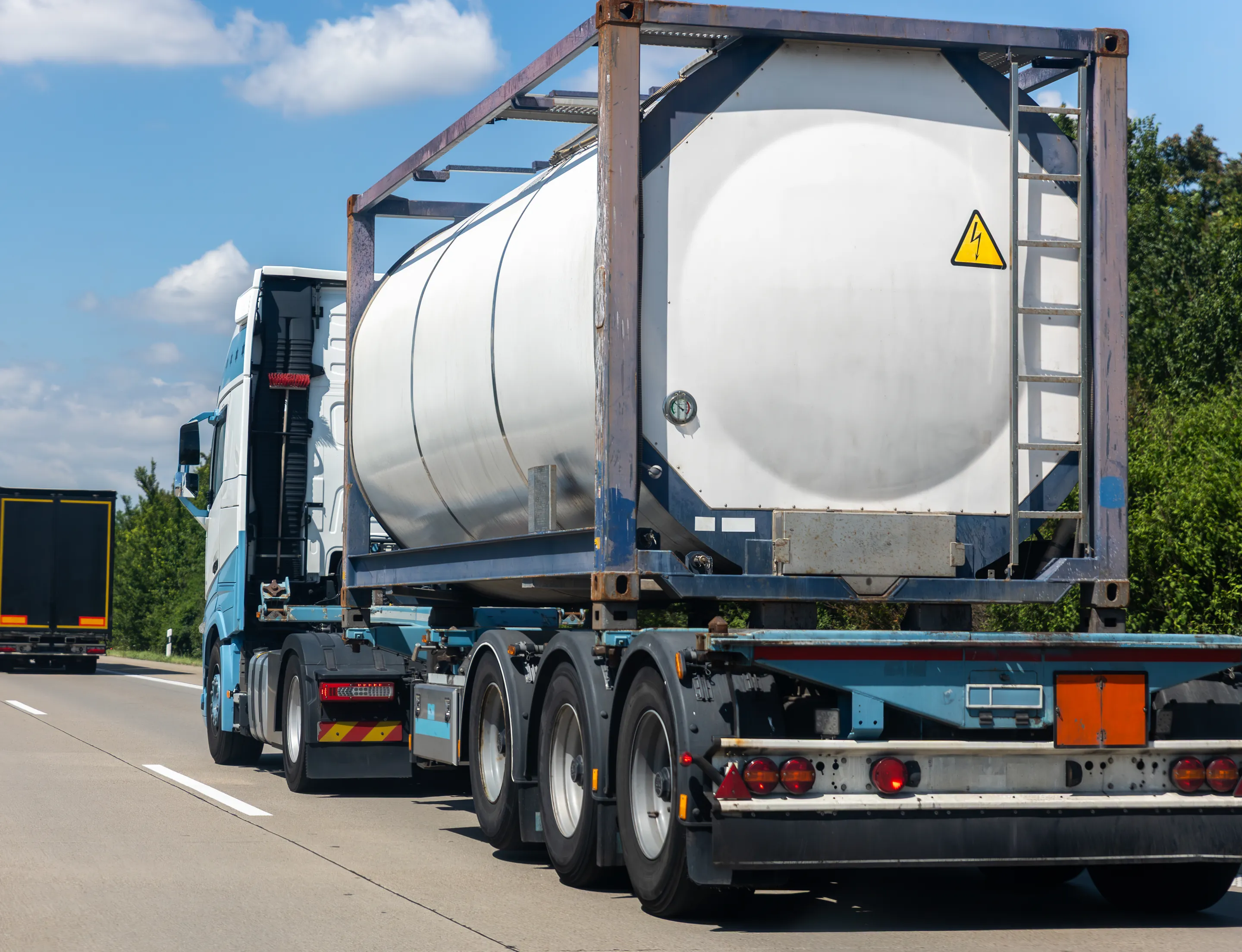
Road transport · dangerous goods
ADR transport for dangerous goods, domestic and international
We organise ADR transport through ADR-authorised carriers, with equipped vehicles and drivers holding an ADR certificate. Send us the UN number, the class and the safety data sheet (SDS): we check the data before quoting.
- ADR classes 1–9 Cargo data, checked UN number, class, packing group and SDS, before the quote.
- Domestic and international Romania and Europe By road under ADR; by sea, air or rail under IMDG, IATA DGR or RID.
- Carriers ADR-authorised Equipped and marked vehicle, driver with an ADR certificate, instructions in writing on board.
- The 1.1.3.6 exemption Calculation by category We check whether the calculated value of the load does not exceed 1,000.
On this page
Dangerous goods
Which goods fall under the ADR rules
Paints, adhesives, aerosols, lithium batteries, chemicals or fuel in IBCs may fall under the ADR rules — the European Agreement concerning the International Carriage of Dangerous Goods by Road — depending on their classification (SDS, section 14). In that case, the transport requires a correctly equipped and marked vehicle, a driver with a valid ADR certificate, specific documents and, sometimes, route restrictions. The HONEXPRES team organises the transport with ADR-authorised carriers that meet these requirements, and checks before quoting that the ADR cargo data is complete and consistent.
- Paints, varnishes, thinners and adhesives (flammable liquids)
- Aerosols and gas cylinders
- Lithium batteries and battery-powered equipment
- Corrosive substances: acids, alkalis, industrial cleaning products
- Fertilisers classified under ADR (for example those based on ammonium nitrate) and oxidising substances
- Fuels (petrol, diesel) in IBCs or drums
- Products packed in limited quantities (LQ), including cosmetics and household products
ADR classes
The ADR classes at a glance
The class is determined by the consignor; you will find it on the label or in section 14 of the safety data sheet (SDS).
-

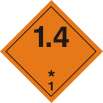
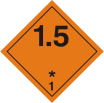
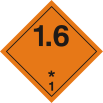 Class 1: Explosive substances and articles
-
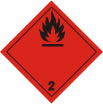

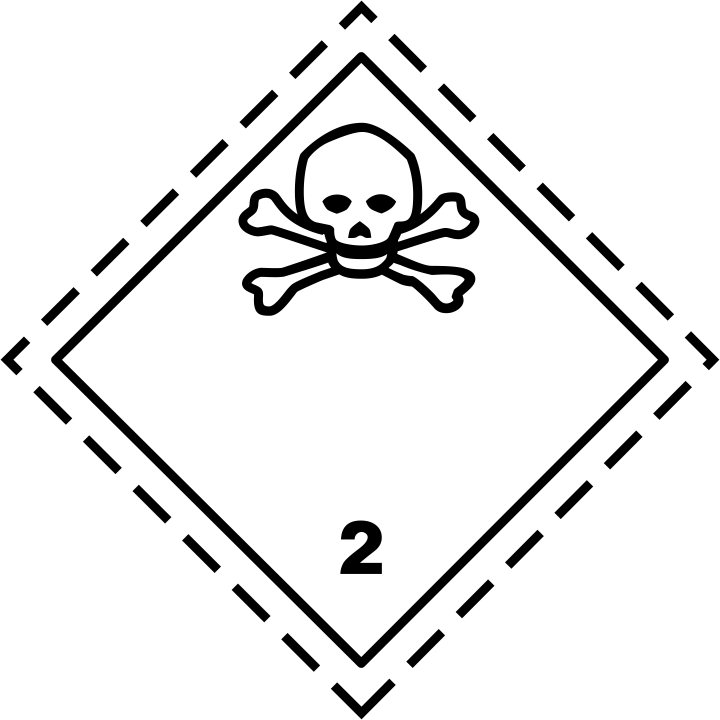 Class 2: Gases: compressed, liquefied (including refrigerated liquefied), dissolved or adsorbed; aerosols, cylinders, chemicals under pressure
-
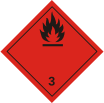 Class 3: Flammable liquids (paints, thinners, fuels, adhesives)
-


 Class 4.1–4.3: Flammable solids, self-reactive substances and solid desensitised explosives; substances liable to spontaneous combustion; substances which, in contact with water, emit flammable gases
-
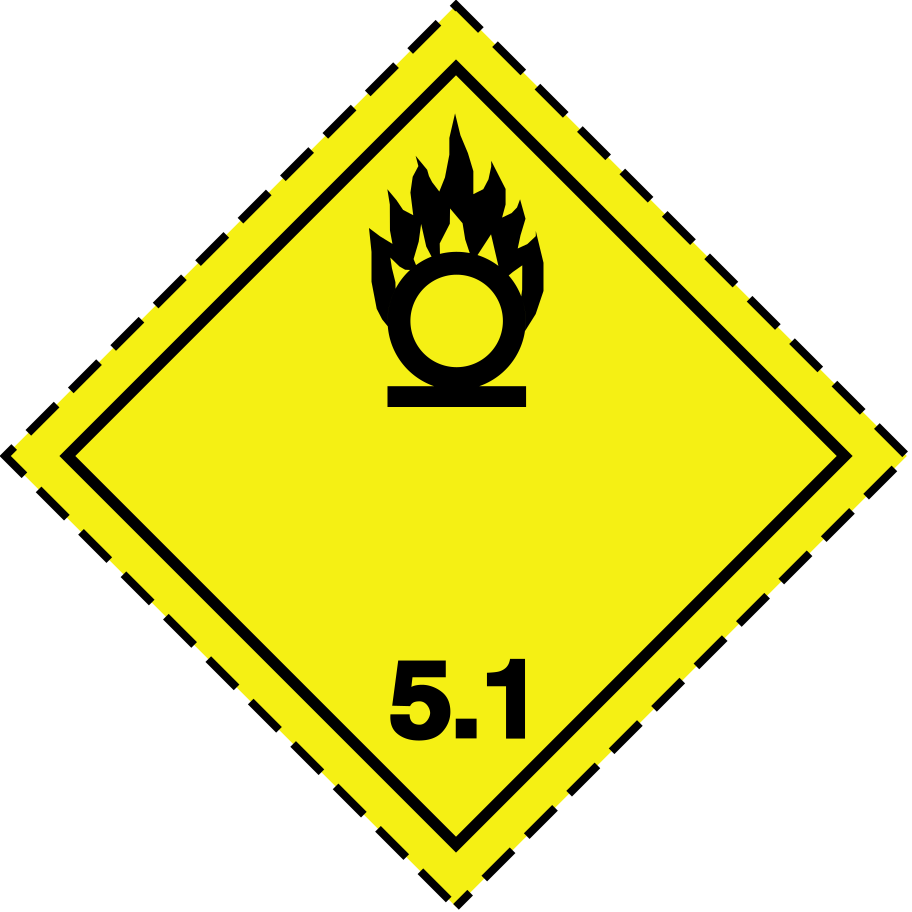
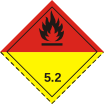 Class 5.1–5.2: Oxidising substances and organic peroxides
-
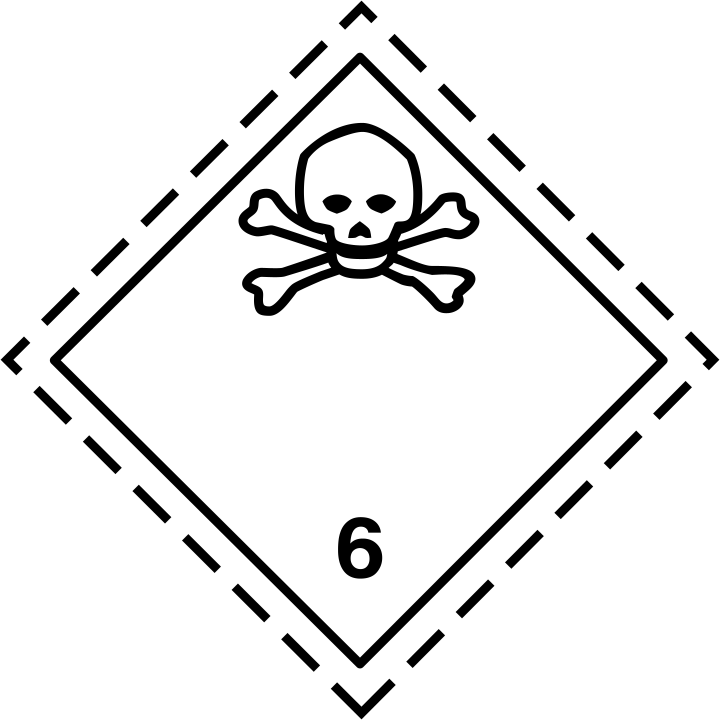
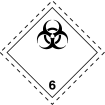 Class 6.1–6.2: Toxic substances · infectious substances
-
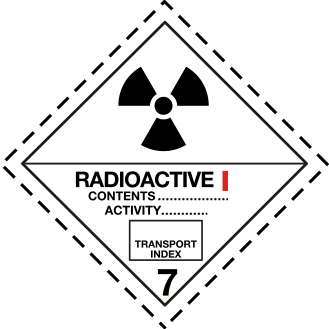
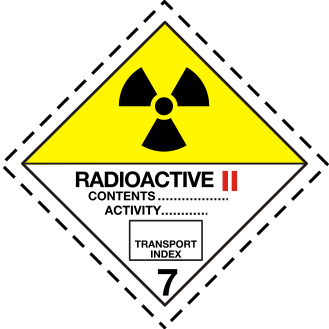
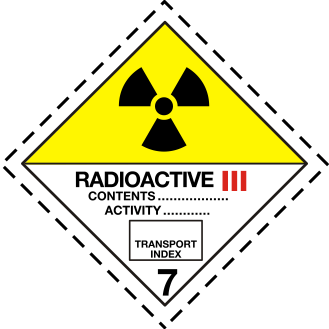
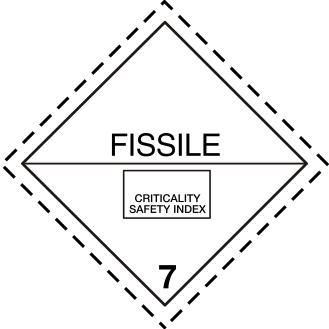 Class 7: Radioactive material
-
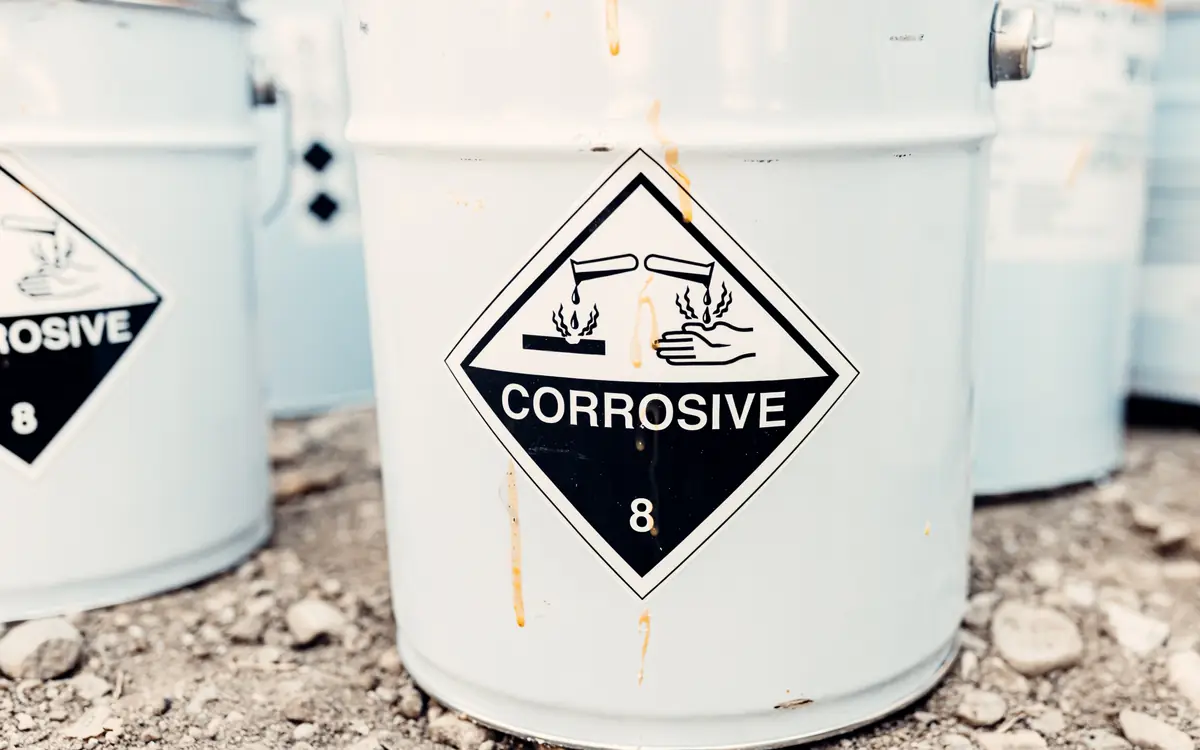
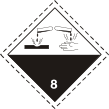 Class 8: Corrosive substances (acids, alkalis)
-

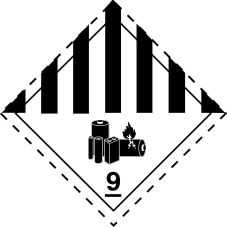 Class 9: Miscellaneous dangerous substances and articles (lithium batteries, environmentally hazardous substances)
Labels and markings
Labels, placards and orange plates
Hazard markings show at a glance what danger the goods present: for the driver, for those handling the packages and for the emergency services. The packer marks and labels the packages, and the consignor makes sure the consignment complies; the placards and orange-coloured plates are affixed by the loader or the filler, and the carrier checks that they are on the vehicle.
-
UN number on the package
The letters “UN” followed by the four-digit number, on every package, visible and durable.
-
Hazard labels
Diamonds of at least 100 × 100 mm, following the model for the class and, where applicable, for the subsidiary hazard.
-
Orange plates
Retroreflective, 40 × 30 cm, at the front and rear. On tanks and bulk vehicles they show the hazard identification number and the UN number.
-
Placards
Large labels of at least 250 × 250 mm, on containers, tanks and bulk vehicles; for some classes, also on vehicles carrying packages.
-
Special marks
Limited quantities (LQ), excepted quantities (EQ), environmentally hazardous substance, orientation arrows, lithium batteries.
-
What we check
The data in the request must match the labels and the documents. Where they do not match, we ask before quoting.
Packaging
Approved packaging and packing groups
Dangerous goods are generally carried in UN-approved packaging suited to the goods and to their packing group (exceptions: limited or excepted quantities and a few articles). The group shows the degree of danger: I — high, II — medium, III — low. Approved packaging bears a mark with the UN symbol, the packaging code and the groups it accepts.
- 1A1 · 4G · 3H1Packaging codes: for example a steel drum with a non-removable head, a fibreboard box, a plastic jerrican.
- X · Y · ZAccepted groups: X for I, II and III; Y for II and III; Z for III only.
- Combination packagingInner packagings (bottles, vials, boxes) placed in an approved outer packaging.
- IBCIntermediate bulk containers, usually for liquids or powders; metal, rigid plastic and composite IBCs are periodically inspected.
- Bulk and tankNo packages: the goods are loaded directly into the container, vehicle or tank, only where ADR allows it.
- Empty, uncleaned packagingEmpty packaging that has contained dangerous goods generally remains subject to the ADR rules.
Obligations
Obligations of the participants in an ADR transport
ADR sets obligations for every participant in the transport chain. They belong to each participant and are not transferred by contract or by a quote.
- Consignor
The consignor
Classifies the goods, chooses approved packaging, makes sure the packages are marked and labelled, prepares the transport document and passes on the necessary data.
- Carrier
The carrier
Checks the goods and the documents; provides the equipped and marked vehicle, the instructions in writing and a driver with an ADR certificate.
- Consignee
The consignee
Does not delay accepting the goods without good reason and, after unloading, checks the requirements that apply to it.
- Loader · packer · filler
Those who prepare the goods
Each is responsible for their own part: packing and marking, loading and securing, filling tanks or containers.
- Unloader
The unloader
Unloads the goods correctly, cleans the vehicle or container and removes markings that are no longer needed.
- Freight forwarder
HONEXPRES
Organises the transport through ADR-authorised carriers, checks the data before quoting and coordinates the documents and the route.
The exact obligations are set out in ADR, Chapter 1.4. The carrier’s obligations lie with the carrier that performs the journey.
Safety adviser
The ADR safety adviser: what the role involves
Undertakings whose activities include the consignment or carriage of dangerous goods, or the related operations — packing, loading, filling, unloading — appoint at least one safety adviser. ADR allows national authorities to provide for exceptions, for example for certain small quantities.
The adviser’s role
- Monitors compliance with the ADR rules within the undertaking and advises it.
- Checks the procedures: classification, packaging, loading, documents, staff training.
- Prepares the annual report on the undertaking’s activities involving dangerous goods.
- Prepares a report after serious accidents or incidents.
- Holds a vocational training certificate, valid for five years.
Small quantities and exemptions
Limited quantities, excepted quantities and the 1.1.3.6 exemption
Not all dangerous goods require the full set of ADR rules. Three regimes reduce the requirements, each with its own conditions. Whether one of them applies depends on the data of the actual goods: we check it before quoting.
-
Ch. 3.4 · LQ
Limited quantities (LQ)
Small inner packagings, within the limit in column 7a of Table A. The package bears the LQ mark and weighs no more than 30 kg gross (20 kg for shrink-wrapped trays). No orange plates, instructions in writing or driver’s ADR certificate are required. Vehicles over 12 t carrying more than 8 t of LQ goods display the LQ mark at the front and rear.
ADR transport in limited quantity: everything you need to know!
-
Ch. 3.5 · EQ
Excepted quantities (EQ)
Very small quantities, according to codes E1–E5 in column 7b. Strong inner, intermediate and outer packaging, with the EQ mark, the class and the name of the consignor or the consignee. Almost none of the ADR requirements apply; one vehicle may carry no more than 1,000 EQ packages.
-
1.1.3.6 · calculated value ≤ 1,000
Exemption per transport unit
Each entry in Table A has, as a rule, a transport category (0–4). The quantity is multiplied by 50 (category 1; 20 for a few entries), 3 (category 2) or 1 (category 3); category 4 is not counted. If the sum does not exceed 1,000, the goods are in packages and there are no category 0 goods, the partial exemption applies: some requirements remain, others do not.
Transport categories and multipliers
| Category | Multiplier | Maximum quantity, on its own |
|---|---|---|
| 0 | — | 0 · no exemption |
| 1 | × 50 | 20 |
| 1 (note a) | × 20 | 50 |
| 2 | × 3 | 333 |
| 3 | × 1 | 1,000 |
| 4 | × 0 | unlimited |
Quantity: net mass in kg for solids and for liquefied, refrigerated liquefied or dissolved gases; litres for liquids; the water capacity of the receptacle for compressed gases, adsorbed gases and chemicals under pressure; for articles, the total mass without packaging (for class 1, the net mass of explosive substance). Note a: a few category 1 entries (for example UN 0081, UN 1005, UN 1017) have the multiplier 20 and a maximum of 50 kg. The category of each entry is given in Table A, column 15.
What the partial exemption means
Still mandatory
- classification and approved packaging
- marking and labelling of the packages
- the transport document, with the total quantity per category
- a portable fire extinguisher of at least 2 kg
- staff training (Chapter 1.3)
- the rules on mixed loading and securing the load
Mainly no longer applicable
- orange plates and placards
- instructions in writing
- the driver’s ADR certificate
- the vehicle’s certificate of approval
Informative summary. The full list is in ADR 1.1.3.6.2; the official text prevails.
ADR toolAvailable
Calculator 1.1.3.6: check the calculated value (threshold 1,000)
Enter the UN number, the packing group and the quantity. The tool finds the entry in Table A of ADR 2025, applies the multiplier of the category and adds up the calculated value per transport unit; it also has separate checks for limited (LQ) and excepted (EQ) quantities. The result is indicative and does not replace the safety adviser.
Total: 900 of 1,000Under the threshold
Illustrative example. The categories come from Table A of ADR 2025 (ECE/TRANS/352, UNECE).
Documents
The documents for an ADR transport
- The ADR transport document Prepared by the consignor. For each entry: “UN” and the UN number, the proper shipping name, the label (class), the packing group, the tunnel code where applicable, the number and type of packages, the total quantity, the consignor and the consignee.
- Instructions in writing The four-page ADR model, in the cab, in the languages the crew can read. They are provided by the carrier.
- Safety data sheet (SDS) It comes from the consignor or the manufacturer. It is not an ADR document, but section 14 contains the transport data; we ask for it so we can check the data before quoting.
- Driver’s ADR training certificate The carrier’s, valid for five years. We check it when the transport is assigned.
- Vehicle certificate of approval For vehicles that require one (for example tanks, EX/II, EX/III, FL and AT vehicles); the carrier’s.
- Photo identity document For each crew member.
- CMR consignment note For international transport; the ADR data can be entered directly in the CMR.
- Container packing certificate When the road leg is followed by a sea leg (IMDG Code).
Equipment
Vehicle and crew equipment
The exact list depends on the classes and the vehicle and is given in the instructions in writing. In short, an ADR transport without exemptions carries on board:
On board
- Portable fire extinguishers: at least one of 2 kg for the cab and engine, plus additional capacity depending on the vehicle mass (over 7.5 t: at least 12 kg, including one extinguisher of at least 6 kg).
- A wheel chock suited to the vehicle and two self-standing warning signs.
- Eye rinsing liquid (not required for classes 1 and 2).
- For each crew member: a high-visibility vest, a portable torch, gloves and eye protection.
- For some classes: an emergency escape mask (labels 2.3 and 6.1); for solids and liquids with labels 3, 4.1, 4.3, 8 and 9: a shovel, a drain seal and a collecting container.
Vehicles
Suitable vehicles for ADR transport
We choose the vehicle by class, packaging and quantity; the team confirms it in the quote.
-
Standard curtainsider 13.6 m
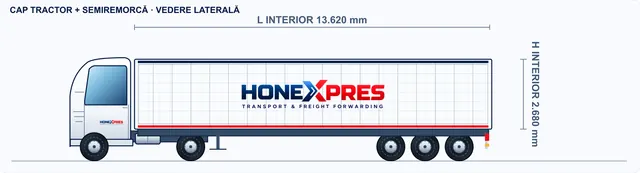
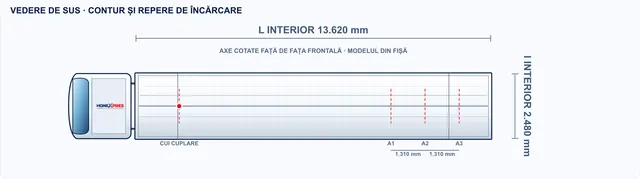
~13.6 m · ~2.45–2.48 m · ~2.7 m · 33 EUR pallets · 24 t
Indicative Sketch: Curtainsider semi-trailer
-
Box semi-trailer (dry van) 13.6 m
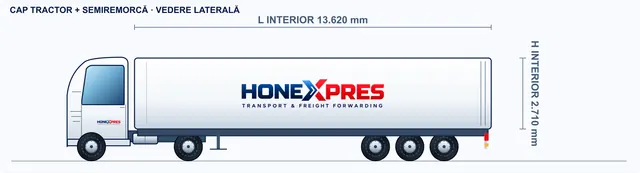
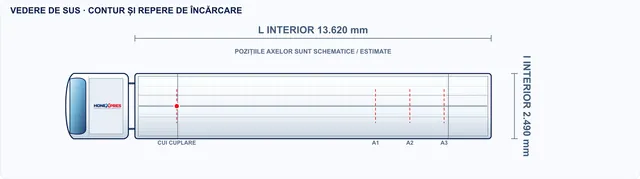
~13.6 m · ~2.46 m · ~2.65 m (through the door) · 33 EUR pallets · 22 t
Indicative Sketch: Box semi-trailer (closed body)
-
ADR tanker
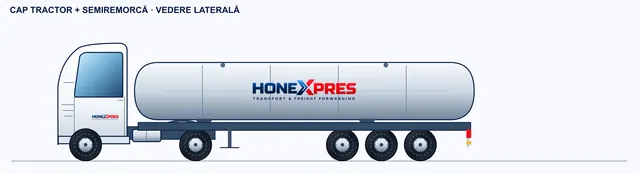
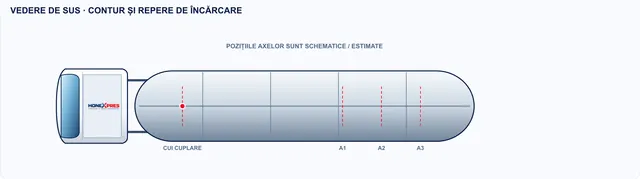
25 t
Indicative Sketch: Tank semi-trailer for liquids
-
12 t rigid truck (curtain or box)

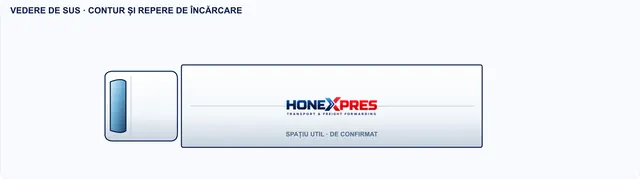
~7.3 m · ~2.48 m · ~2.5 m · 18 EUR pallets · ~5.5 t
Indicative Sketch: 12 t rigid truck with closed body
Suitable containers
-
20' Dry Van
~5.9 m · ~2.35 m · ~2.39 m · ~33 m³ · 11 EUR pallets · ~26 t on the road (40 t)
-
40' Dry Van
~12.0 m · ~2.35 m · ~2.39 m · ~67 m³ · 25 EUR pallets · ~23 t on the road (40 t)
Practical reference values. We confirm the exact dimensions in the quote. Honexpres organises transport with this vehicle, on request.
Tunnels
Tunnels: categories and restriction codes
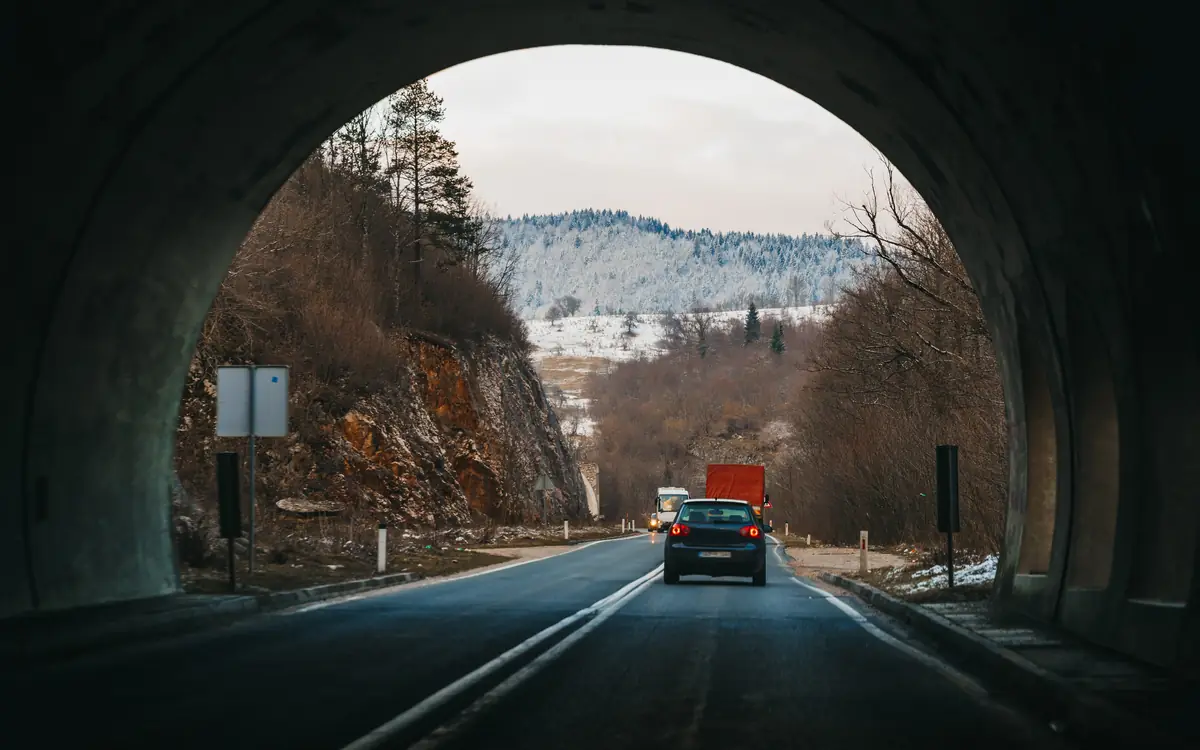
The authorities of each country assign road tunnels to categories A–E. Most dangerous goods have a tunnel restriction code (for example B, C/D or D/E; some entries have “(-)”, meaning no restriction), entered in the transport document when the route passes through tunnels with restrictions. The most restrictive code in the load determines where the vehicle may pass; sometimes the detour adds kilometres and transit time.
-
Category A
No restrictions for dangerous goods.
-
Category B
Restrictions for goods that may cause a very large explosion.
-
Category C
In addition to B: goods that may cause a large explosion or a major toxic release.
-
Category D
In addition to C: goods that may cause a large fire.
-
Category E
Restrictions for almost all dangerous goods, with a few exceptions provided for by ADR.
Restrictions
Restrictions on driving, parking and mixed loading
- Some countries restrict the movement of ADR vehicles (for example at weekends, on public holidays or on certain routes); we check this when planning the route.
- For large quantities of some classes, ADR requires the vehicle to be supervised when parked, or secure parking.
- Packages bearing certain labels are not loaded together in the same vehicle, and toxic and infectious substances are kept separate from foodstuffs and animal feed.
- The load is secured so that it cannot shift; smoking and naked flames are prohibited during handling.
- Class 1, class 6.2, class 7 and substances requiring temperature control have special requirements for the vehicle, packaging or authorisation; the availability of authorised carriers is checked on request.
- Tank or bulk transport is organised only after checking that the product is compatible with the tank or the vehicle.
- Guide: ADR speed limits and parking
- Guide: Can ADR goods and general cargo be loaded on the same vehicle?
Domestic and international
Domestic and international ADR transport
In Romania, the ADR rules apply to both domestic and international transport: Directive 2008/68/EC extends ADR to national road transport in EU member states. We organise ADR transport as a full truckload or, for certain classes and quantities, as groupage — not every groupage network accepts every class. When the route combines several transport modes, we follow the rules of each.
-
ADR · road
Road — ADR
The European Agreement concerning the International Carriage of Dangerous Goods by Road, administered by UNECE and updated every two years (edition in force: ADR 2025).
-
IMDG · sea
Sea — IMDG Code
The International Maritime Dangerous Goods Code (IMO). The shipping line confirms acceptance, and the container receives a container packing certificate.
-
IATA DGR · air
Air — IATA DGR
The IATA Dangerous Goods Regulations, based on the ICAO Technical Instructions. The airline confirms acceptance; some goods fly only on cargo aircraft.
-
RID · rail
Rail — RID
The Regulations concerning the International Carriage of Dangerous Goods by Rail (OTIF), largely harmonised with ADR. The rail operator confirms acceptance on the route.
How it works
How it works: from the SDS to delivery, in five steps
-
You send the data and the SDS
The UN number, the name, the class, the packing group, the quantity and the packaging. Section 14 of the safety data sheet (SDS) contains the transport information.
-
We check and plan
We check the consistency of the data, loading compatibility, tunnel restrictions and whether exemptions apply. Where something is missing, we ask you specifically for what is missing.
-
The quote and the carrier
We send you the quote; after confirmation we assign an ADR-authorised carrier and let you know the vehicle.
-
Documents and loading
The consignor issues the ADR transport document; the carrier checks the goods, the packaging and the labels before departure.
-
Transport and delivery
We notify you at loading, of any deviation from the plan and at delivery; you receive a copy of the signed documents.
What we need for a quote
Information needed for an ADR quote
With exact data we check whether the goods can be loaded on the route you want, which vehicle fits and which documents need to be prepared. If you do not have all the data, send the SDS: we read it together.
You can upload the SDS directly in your request.
- The UN number (four digits) for each product
- The proper shipping name, the hazard class and the packing group
- The quantity per UN number (net kg or litres) and the number of packages
- The type of packaging: IBCs, drums, jerricans, combination boxes, bulk
- Whether the goods are in limited (LQ) or excepted (EQ) quantities
- The safety data sheet (SDS) for each product
- Addresses, dates, dimensions and total weight, as for any road transport
- Whether temperature control is needed
Costs
What affects the cost of ADR transport
We do not publish fixed rates: each ADR quote is calculated on the actual class, quantity, packaging and route, and is sent by the HONEXPRES team.
- 01
UN entry (transport category) and quantity: transport with partial exemptions or with all the ADR requirements
- 02
Packaging: packages, IBCs, bulk or tank
- 03
Full truckload or groupage (not every groupage network accepts every class)
- 04
Route: tunnels, ferries, national restrictions
- 05
Availability of ADR vehicles on the route in question
- 06
Distance, dates and loading times, as for any road transport
Frequently asked questions
Frequently asked questions about ADR transport
I do not know the ADR class of my goods. What should I do?
Look on the label or the packaging for “UN” followed by four digits, or open section 14 of the safety data sheet (SDS). Send us the SDS with your request: we help you read the transport information. Under ADR, classification remains the consignor’s responsibility.
What does limited quantities (LQ) mean?
It is a simplified regime for dangerous goods in small inner packagings, marked with the LQ symbol; the package weighs no more than 30 kg gross. No orange plates, instructions in writing or driver’s ADR certificate are required, but the marking and the quantity limits must be respected. Tell us in your request whether your goods are packed as LQ. Details in the section limited quantities, excepted quantities and the 1.1.3.6 exemption.
Can ADR goods be loaded together with general cargo?
Yes, generally, provided the load is correctly secured; the exception is toxic and infectious substances, which are not placed next to foodstuffs or animal feed. Among dangerous goods, packages bearing certain labels are not loaded together in the same vehicle. ADR transport can also be organised as groupage, but not every groupage network accepts every class; we check loading compatibility before quoting.
Do you transport lithium batteries?
Lithium batteries are dangerous goods, usually in class 9, with packaging and marking requirements; damaged or defective batteries have special rules. Send us the UN number and the SDS: we check them and confirm in the quote whether and how the transport can be organised through ADR-authorised carriers.
Can you transport dangerous goods by sea or by air?
Yes, once acceptance has been checked. By sea the IMDG Code applies: the shipping line confirms acceptance, and the container receives a container packing certificate. By air the IATA DGR rules apply: the airline confirms acceptance, and some goods fly only on cargo aircraft. Details on the sea freight and air freight pages.
What happens if the ADR data is wrong?
The carrier may refuse to load, and a truck kept waiting costs money. That is why we check the data before quoting and ask you exactly what is missing.
What does the 1.1.3.6 exemption mean?
It is a partial exemption per transport unit, only for goods in packages. Each entry in Table A has, as a rule, a transport category (0–4), and the quantity is multiplied by 50 (category 1; 20 for a few entries), 3 (category 2) or 1 (category 3); category 4 is not counted. If the sum does not exceed 1,000 and there are no category 0 goods, some requirements no longer apply (for example the orange plates and the instructions in writing), while others remain (the transport document, a portable fire extinguisher of at least 2 kg). Whether the exemption applies depends on the data of the actual goods: we check it before quoting and do not promise it before we have seen the data.
Who prepares the ADR transport document?
The consignor. For each entry, the document contains “UN” and the UN number, the proper shipping name, the label (class), the packing group, the tunnel code where applicable, the number and type of packages, the total quantity, the consignor and the consignee. For international transport, the ADR data can be entered directly in the CMR consignment note; the carrier checks the goods and the documents before departure.
ADR guides
ADR guides
All HONEXPRES guides on dangerous goods: classes, packaging, documents, tunnels, limited quantities and other transport modes. Below is the full list, by topic.
-
ADR transport in limited quantity: everything you need to know!
An ADR transport can be classed both as a limited quantity and as an excepted quantity.
-
Classification of dangerous goods
In this Honexpres article, we will look at the classification of dangerous goods. Manufacturers of chemical substances that meet the…
-
Restrictions on passing through tunnels with dangerous goods
The transport of dangerous goods often involves passing through tunnels. Most dangerous goods are subject to restrictions on passing…
25 ADR guides
All ADR guides, by topic
-
Classification, packaging, quantities6
All ADR guides in the category Road transport of dangerous goods (ADR)
Quote request
Do you have ADR goods to transport?
Send the UN number, the class and the SDS. The HONEXPRES team checks the data and comes back to you with a quote.
Automatic translation, automatically checked. This page was translated automatically from Romanian and passed the automatic checks for language, terminology, figures and links. If there is any difference, the Romanian version prevails. How we use automatic translation