ADR dangerous goods by road · Guides
Restrictions on passing through tunnels with dangerous goods
Article translated automatically from Romanian and checked automatically. If there is any difference, the original prevails. See the original in Romanian · How we use automatic translation
In short
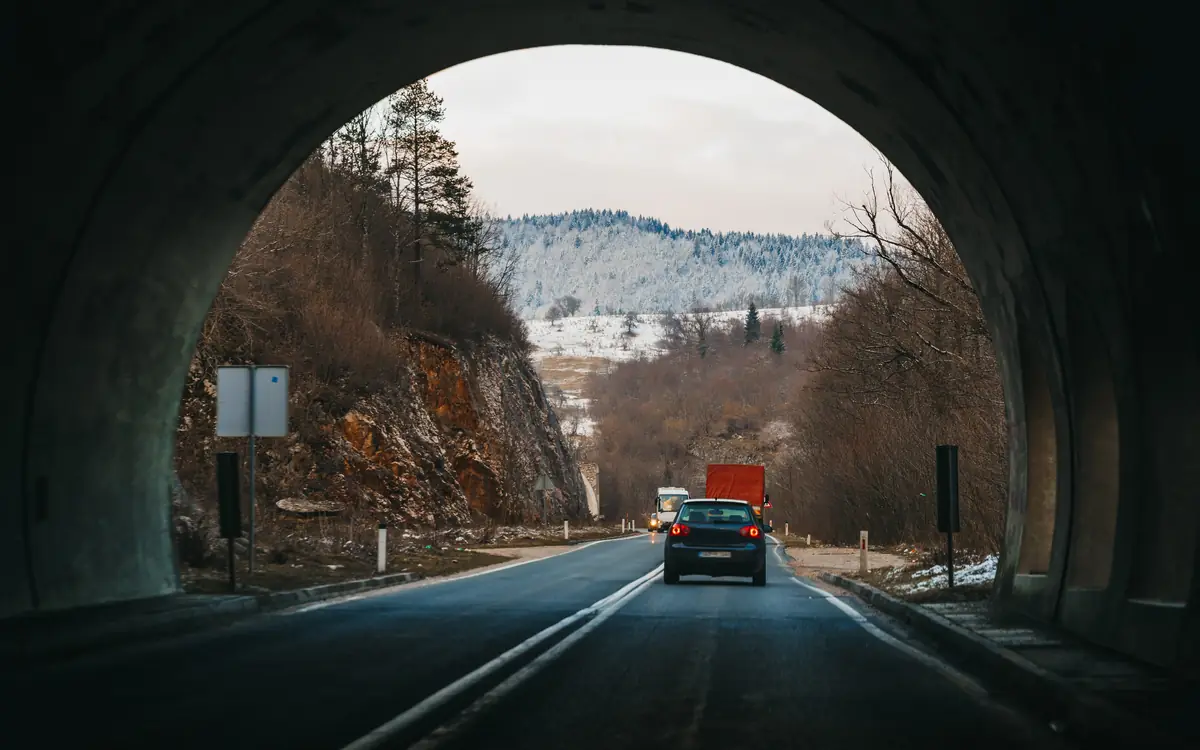
The transport of dangerous goods often involves passing through tunnels. Most dangerous goods are subject to restrictions on passing through tunnels with dangerous goods depending on how hazardous the dangerous goods are, that is, restrictions related to the safety and security of the tunnels.
Contents
The transport of dangerous goods often involves passing through tunnels. Most dangerous goods are subject to restrictions on passing through tunnels with dangerous goods depending on how hazardous the dangerous goods are, that is, restrictions related to the safety and security of the tunnels.
Restrictions on passing through tunnels with dangerous goods
The following types of transport are exempt from the application of the requirements on tunnel restrictions:
- Dangerous goods packed in limited quantities, when the gross quantity does not exceed 8000 kg,
- Dangerous goods packed in excepted quantities, a maximum of 1000 packages,
- Dangerous goods which, in accordance with 1.1.3.6, do not exceed the exempted limits that may be carried partly exempt from the provisions of the ADR agreement (ADR transport under 1000 points).
The tunnel restriction applies to the carriage of:
- Dangerous goods packed in limited quantities if the gross mass of the load exceeds 8000 kg,
- Dangerous goods that exceed the limits prescribed by ch.1.1.3.6 (over 1000 ADR points).
Types of tunnel
Here are the types of tunnel you may come across when carrying out an ADR transport:
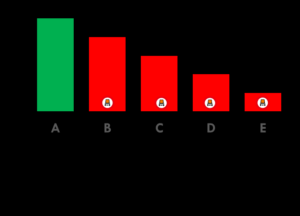
All tunnels are classified into 5 categories: A, B, C, D, E.
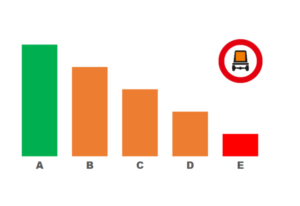
Type A – no restrictions Type E – also restricted for LQ>8t
Where do we find the tunnel restriction code?
- In column (15) of Table A of Chapter 3.2 of ADR, or
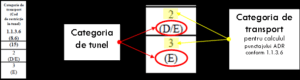
2. In the transport document, if the dangerous goods have been declared in accordance with ADR in the transport document by the consignor of the goods.
Example:
UN 1263 PAINT, 3, PG II, (B/D) 20 drums (1A1) 4000 litres
The meaning of the tunnel codes
- A code made up of a single element
For example, code B:
It prohibits passage through tunnels with codes from B to E, that is, everything that comes after the indicated code in the hierarchy.
- A code made up of 2 parts
___ /___, for example, B/D
The difference from the simple code is this: the code on the left-hand side must be observed when the carriage is performed in tanks, and the code on the right for any other carriage (packaged/in bulk).
Note: When restriction code D is indicated in the position of the restriction code for tanks, it also applies to carriage in bulk.
- A code made up of 3 elements
____ 00000 ____, for example B5000D
The value indicated between the two restriction codes shows the quantity limit for the total net mass of explosive substances per transport unit above which the more restrictive code applies, that is, the one on the left, while below the indicated limit the less restrictive code will apply, that is, the one on the right.
When different dangerous goods with different tunnel restriction codes are loaded/carried on one transport unit, the most restrictive of all the codes will apply.
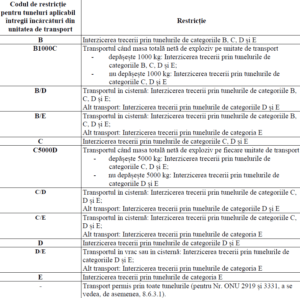
You can read the exact meaning of each code in the table below:
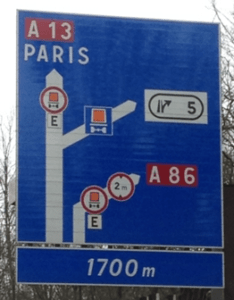
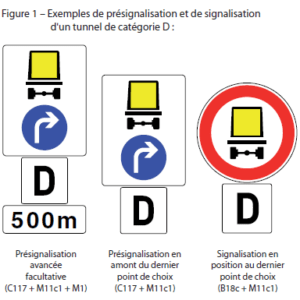
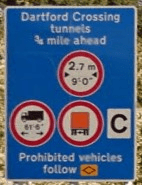
Examples of the signs used for categorised tunnels:
Honexpres – ADR freight transport
We know that the legislation on ADR freight transport can sometimes be rather tangled. That is why, thanks to our experience and to the professional drivers who carry out the trips, we can offer ADR freight transport services in the best conditions, in the shortest time and at the friendliest prices. Rely on Honexpres, your trusted partner in domestic and international freight transport!
Photo source: peakpx.com
Have something similar to move? Request a quote →
All guides in ADR dangerous goods by road (22)
Related services