
Rail freight · intermodal
Rail freight and intermodal transport
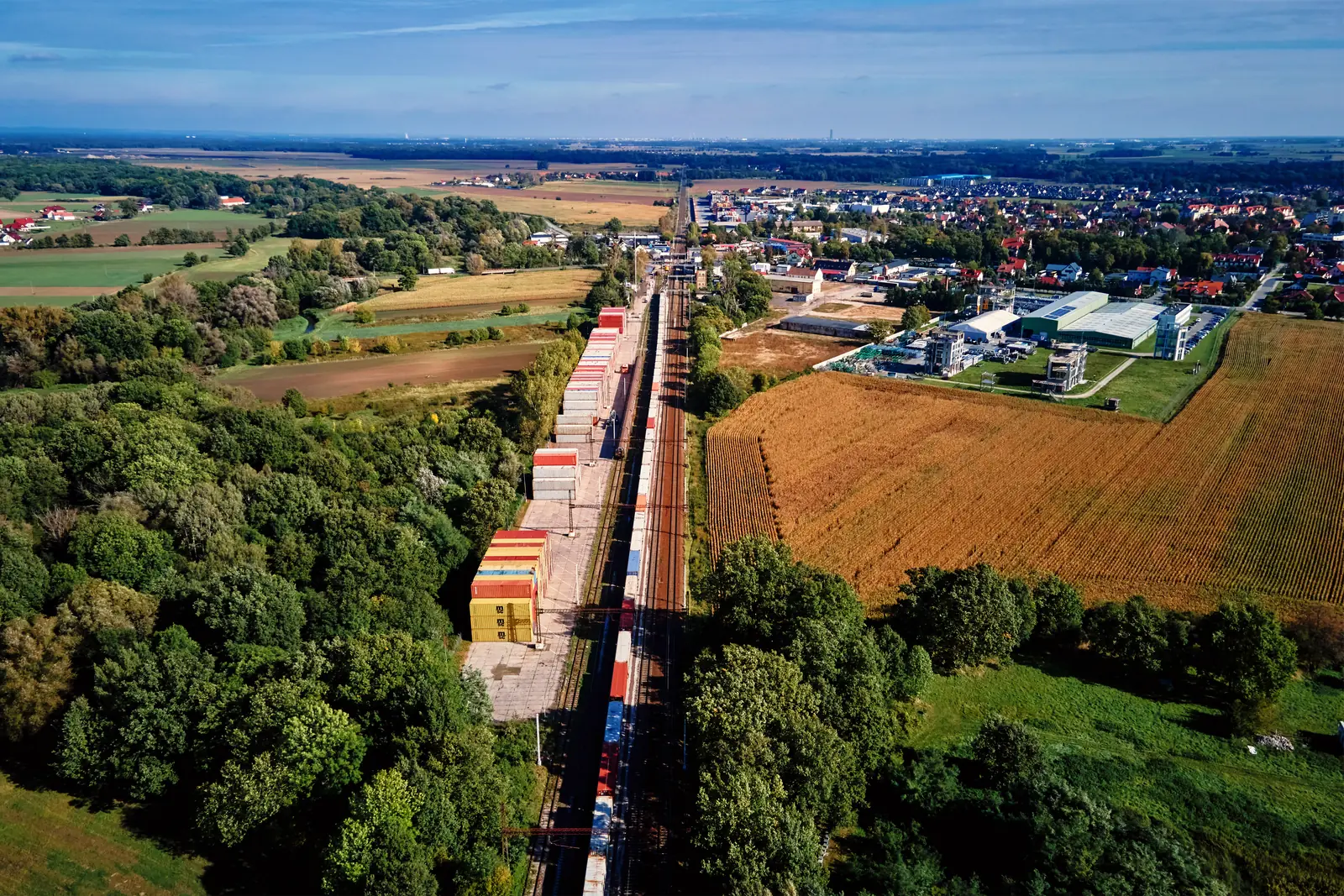
For large volumes, long routes and regular flows: the container or craneable semi-trailer travels by train between terminals, and the first and last mile are covered by road. For each request we check whether the train is justified.
- Volume, route, goods When rail makes sense Large volumes, regular flows and long distances between terminals.
- Containers Intermodal units Containers, swap bodies, craneable semi-trailers.
- Multimodal Road at both ends The truck covers the first and last mile.
- RID Dangerous goods On the railway RID applies, subject to the operator’s acceptance.
Options
Which rail freight option suits you
The train covers the long haul, the truck connects with the terminals. We choose the loading unit and the type of service according to volume and route.
-
Containers by rail
20′, 40′ and 45′ containers, including as a continuation of sea freight.
-
Intermodal and multimodal
The same loading unit, on the train and on the truck, without unloading.
-
Dangerous goods (RID)
Dangerous goods accepted by the operator under the RID regulations.
On this page
When it makes sense
When rail is justified: volume, route, goods
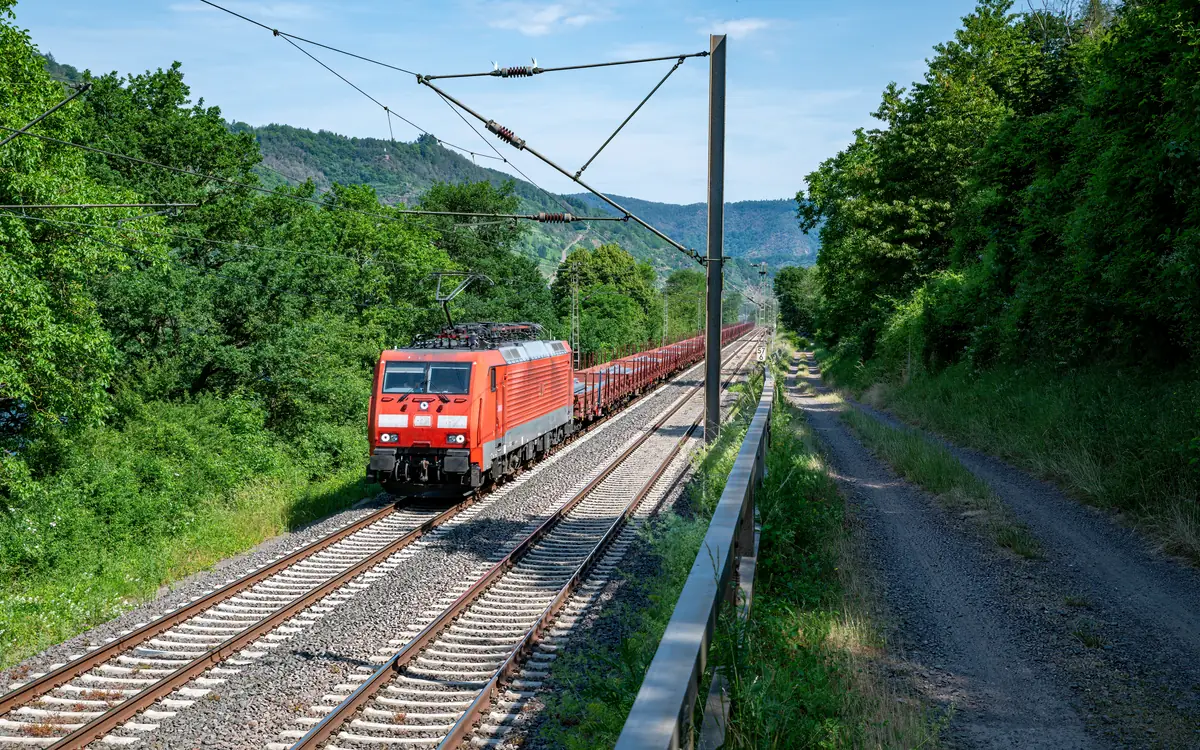
Rail is an option we look at when the volume, the route and the type of goods justify it. Over long distances, with steady flows, the train takes over most of the journey, and the truck connects with the terminals.
- Long distances, on routes with regular services between terminals
- Steady flows, for example several units a week, planned around the train timetables
- Heavy goods, where the train is less limited by the masses permitted on the road
- Continuation of sea freight: the container travels from the port to an inland terminal
When it is not justified: for urgent shipments, short distances or routes without regular services, a full truckload is usually simpler. To countries with a different track gauge, for example Ukraine and the Republic of Moldova, transshipment is needed.
Containers and multimodal
Containers, intermodal and multimodal transport
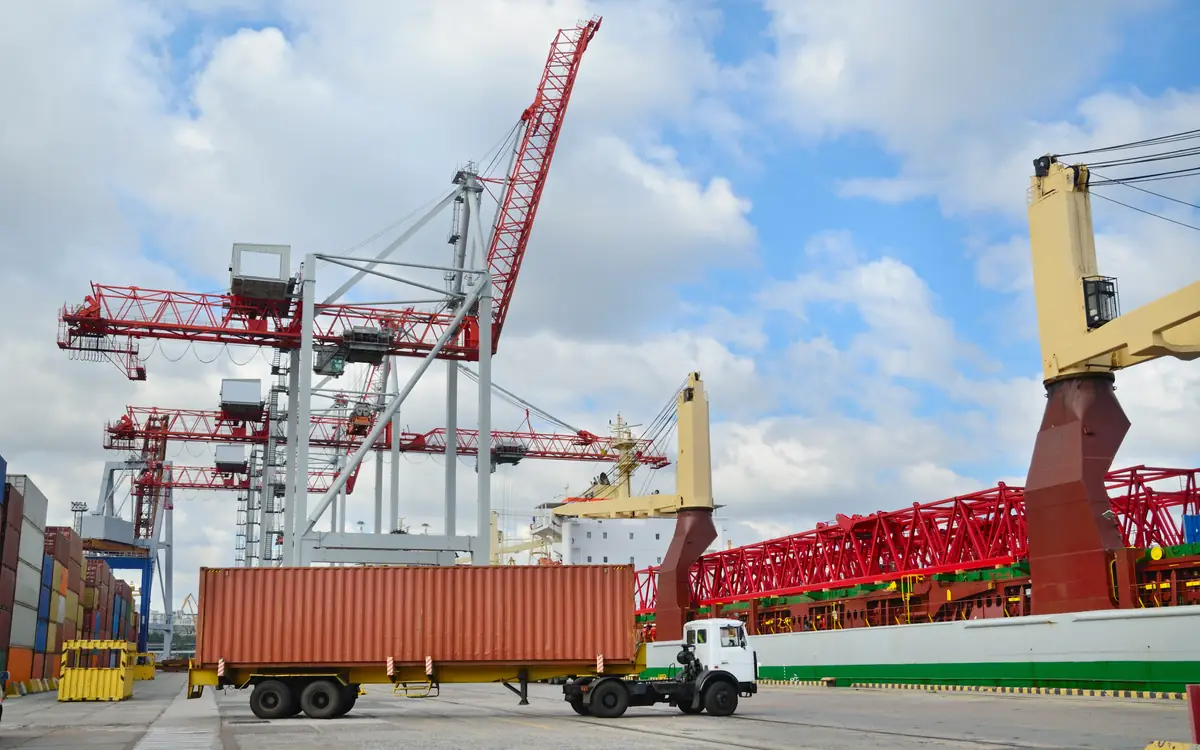
Containers of 20′, 40′ and 45′ travel on flat wagons between terminals. A common case: the container that arrives by sea at the port of Constanța continues by rail to an inland terminal, and from there by road to you. The container may belong to the shipping line or the operator, or be leased; we settle this in the quote.
Intermodal transport
The goods stay in the same unit — container, swap body or craneable semi-trailer — and only the mode of transport changes: truck, train, ship, without the goods being unloaded.
Multimodal transport
A single contract covers several modes of transport, from collection to delivery.
In practice, the train covers the long haul, and the truck the first and last mile. The HONEXPRES team checks the whole route, not just the rail leg.
-
Collection by road
-
Departure terminal
-
Train
-
Destination terminal
-
Delivery by road
RID
Dangerous goods by rail (RID)
RID is the regulation for the international carriage of dangerous goods by rail — the railway equivalent of ADR. The data required are the same: UN number, class, packing group, quantity and the safety data sheet (SDS). The rail operator confirms acceptance on the route in question.
How it works
How it works: from route to delivery
- Step 1
Route and loading unit
You tell us from where to where, with which loading unit and how often.
- Step 2
We check the connections
The HONEXPRES team looks for regular rail services between suitable terminals, and for their timetables.
- Step 3
The quote
The quote shows the rail leg, the handling at the terminals and the road transport at both ends.
- Step 4
The transport
The unit reaches the terminal by road, leaves by train on the agreed timetable and is handed over at the destination terminal.
- Step 5
Delivery
A truck takes it from the terminal to the consignee.
What we need for a quote
Information needed for a quote
The more accurate the details, the more precise the quote. Whatever you do not know, mark “I don’t know”: we will fill it in together.
- Origin and destination: terminals or addresses
- Type of unit: container (type and size), swap body, craneable semi-trailer or conventional wagon
- The goods, the gross mass per unit and whether they are dangerous (RID)
- The number of units per week or per month, and the period
- The date of the first shipment
- Customs formalities, if the route leaves the EU
Documents
Documents for rail freight
- CIM consignment note The document of the international rail transport contract.
- Common CIM/SMGS consignment note For traffic with countries in the SMGS area, without reissuing the document at the border.
- RID documents For dangerous goods by rail.
- CMR consignment note For the international road legs.
- Customs transit or export documents For routes outside the EU.
Restrictions
Restrictions we take into account
- Trains run on fixed timetables; the handover dates at the terminal must be respected.
- Only semi-trailers built for crane transshipment can be lifted onto a train.
- A different track gauge requires transshipment or a change of bogies.
- Rail freight is not door-to-door without the road legs to and from the terminal.
- Not every route has regular services; we check before the quote.
Cost factors
What affects the cost of rail freight
We do not publish rates: the cost depends on the route, the terminals and how regular the flow is. The quote shows the rail leg, the handling and the road transport separately.
-
01
The rail rate between terminals
-
02
The road distance to and from the terminals
-
03
Handling at the terminals
Lifting, storage
-
04
Type and mass of the loading unit
-
05
Volume and regularity of the flow
-
06
Customs formalities and any transshipments at a change of gauge
When is rail more advantageous than a truck?
Usually over long distances, with regular flows and with intermodal units. For a single urgent shipment or over short distances, the truck is almost always simpler.
Do I need my own container?
Not necessarily. The container may belong to the shipping line, as a continuation of a sea shipment, to the operator, or be leased; we settle this in the quote.
Can an ordinary semi-trailer go by rail?
Only if it is built for crane transshipment. Ordinary semi-trailers cannot be lifted onto a wagon.
Do you transport dangerous goods by rail?
Yes, if the rail operator accepts them on the route in question, under the RID regulations — the railway equivalent of ADR. The data required are the same as for ADR transport: UN number, class, packing group, quantity and the safety data sheet (SDS). Details in the RID section.
Guides
Useful guides and articles
Guides on dangerous goods by rail, Incoterms® and transport documents.
-
RID rail transport
RID is the international agreement that governs the carriage of dangerous goods in domestic and international traffic by rail. Find out…
-
The updated INCOTERMS delivery terms
The updated INCOTERMS delivery terms seem complicated and dense. However, once we have explained them in detail in this Honexpres article…
-
Other documents used in sea transport
So far we have discussed bills of lading and their role; today we will see what other documents are used in sea transport.

Related articles
More about intermodal transport
- The Port of Constanța: how important is it in Europe? Oct 10, 2022
- Transhipment of goods: what does it involve? Oct 7, 2022
- The contracts required in the freight forwarding process Apr 11, 2022
Related services
-
Container haulage
containers from the port or terminal, by road
-
Sea freight (FCL / LCL)
full containers (FCL) or groupage (LCL)
-
Full truckload (FTL)
a whole truck just for your goods
-
Customs formalities
import, export and transit
Suitable vehicles
-
Container chassis (20' / 40' / 45')
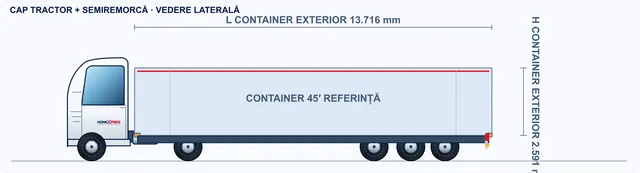
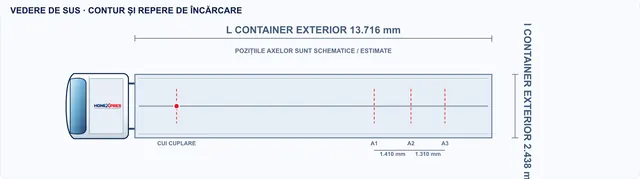
cargo of ~26 t in a 20' / ~22 t in a 40' HC (at 40 t)
Indicative Sketch: Container chassis
-
Mega trailer 13.6 m (3 m internal height)
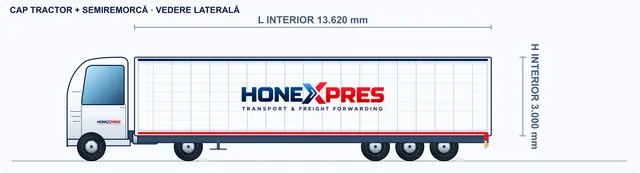
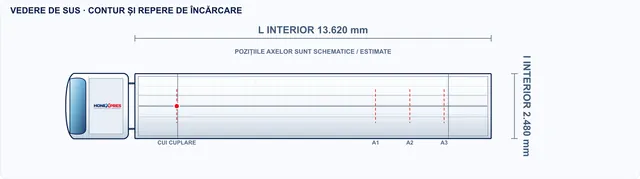
~13.6 m · ~2.48 m · ~3.0 m · 33 EUR pallets · 24 t
Indicative Sketch: MEGA curtainsider semi-trailer
Suitable containers
-
20' Dry Van
~5.9 m · ~2.35 m · ~2.39 m · ~33 m³ · 11 EUR pallets · ~26 t on the road (40 t)
-
40' Dry Van
~12.0 m · ~2.35 m · ~2.39 m · ~67 m³ · 25 EUR pallets · ~23 t on the road (40 t)
-
40' High Cube
~12.0 m · ~2.35 m · ~2.7 m · ~76 m³ · 25 EUR pallets · ~22 t on the road (40 t)
-
45' Pallet-Wide High Cube
~13.56 m · ~2.44 m · ~2.7 m · ~89 m³ · 33 EUR pallets · ~22 t on the road (40 t)
Practical reference values. We confirm the exact dimensions in the quote. Honexpres organises transport with this vehicle, on request.
Quote request
Do you have a regular flow of goods?
Tell us the route, the loading unit and the monthly volume. The HONEXPRES team checks the rail connections and tells you honestly whether the train is a good fit.
Automatic translation, automatically checked. This page was translated automatically from Romanian and passed the automatic checks for language, terminology, figures and links. If there is any difference, the Romanian version prevails. How we use automatic translation