ADR dangerous goods by road · Guides
Instructions in writing vs. the Safety data sheet
Article translated automatically from Romanian and checked automatically. If there is any difference, the original prevails. See the original in Romanian · How we use automatic translation
In short
Is the document “Instructions in writing in accordance with ADR” the same as the “Safety data sheet”? Or are they two completely different documents?
Contents
- Instructions in writing vs. the Safety data sheet
- Instructions in writing:
- Safety data sheet:
- Structure of the Instructions in writing in accordance with ADR:
- Structure of the SDS- Safety data sheet:
- Which of the two documents is required to be on board the transport unit used for the transport of goods or dangerous goods?
- Having the document “Instructions in writing in accordance with ADR” on board:
- In practice, how should this happen?
- Drawing up ADR documents – Honexpres
Is the document “Instructions in writing in accordance with ADR” the same as the “Safety data sheet”? Or are they two completely different documents?
Instructions in writing vs. the Safety data sheet
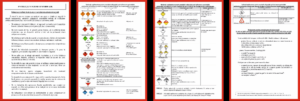
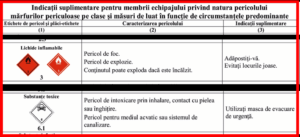
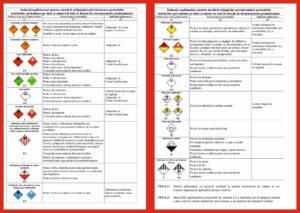
Let us look at them in pictures:
Instructions in writing:
Safety data sheet:
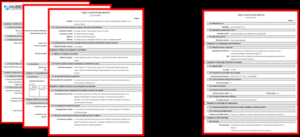
The form and content of the document “Instructions in writing in accordance with ADR” are completely different from the content of the “Product safety data sheets”.
Structure of the Instructions in writing in accordance with ADR:
-
General actions to be taken in the event of an incident or accident.
-
Additional guidance to members of the vehicle crew on the hazard characteristics of dangerous goods by class and on the actions to be taken subject to the prevailing circumstances.
-
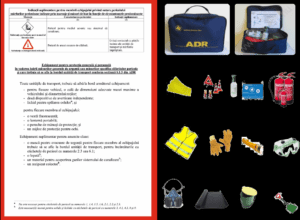
The equipment for general and personal protection needed to carry out general emergency actions or actions specific to the different hazards, which must be carried on board the transport unit.
Structure of the SDS- Safety data sheet:
-
Section 1: identification of the substance/mixture and of the company/undertaking.
-
Section 2: hazards identification.
-
Section 3: composition/information on ingredients.
-
Section 4: first aid measures.
-
Section 5: firefighting measures,
-
Section 6: accidental release measures,
-
Section 7: handling and storage,
-
Section 8: exposure controls/personal protection,
-
Section 9: physical and chemical properties,
-
Section 10: stability and reactivity,
-
Section 11: toxicological information,
-
Section 12: ecological information,
-
Section 13: disposal considerations,
-
Section 14: transport information,
-
Section 15: regulatory information,
-
Section 16: other information.
The “Instructions in writing in accordance with ADR” provide information and actions that can be applied immediately in the event of an incident or accident during the transport of dangerous goods. The “Safety data sheet” provides detailed data and information about the dangerous product.
To put it simply, we can say that the document “Instructions in writing in accordance with ADR” is intended for the people involved in transporting dangerous goods and in managing the events that arise during their transport. The “Safety data sheet” is a document drawn up by the manufacturer or the testing laboratory and is useful to the direct user of the product.
Which of the two documents is required to be on board the transport unit used for the transport of goods or dangerous goods?
Is this question really still being asked? YES, even more than 10 years after a single document was drawn up, with the same format and content in every language, we can still come across drivers or even transport operators who are not sure whether it is enough for that relatively simple document (which they have nevertheless never read) called “Instructions in writing in accordance with ADR” to be on board the vehicle they drive.
As you have already gathered, the “Instructions in writing in accordance with ADR” must be on board transport units when goods or dangerous goods are being carried.
But then what about the Safety Data Sheet?
Looking back: Until 2007, the ADR Agreement required that, for any transport of dangerous goods, instructions be carried on board the transport units, for each product, concerning: the name of the goods, the class, the UN number, the nature of the hazard, the general actions to be taken and the personal protective equipment, special instructions and the additional equipment.
This information had to be on board the transport unit in several languages: the language of the country of dispatch, of the transit countries and of the country of destination, and in the language that the members of the crew understood best.
Since manufacturers and/or consignors had the safety data sheet to hand, why should they “struggle” to draw up a document in accordance with ADR, entitled “Instructions in writing”, for each substance carried or each UN number? That is why they made available (or did not) to the driver the product's safety data sheet in all the languages required by the legislation.
It turned out that drivers do not study them, especially if they had several types of dangerous goods in the load, so the members of the committee responsible for updating the ADR Agreement drew up the document entitled “Instructions in writing in accordance with ADR”, which gives drivers information, guidance and special actions that can be applied immediately in the event of an incident or accident.
Having the document “Instructions in writing in accordance with ADR” on board:
-
It must be provided by the carrier (NOT by the consignor of the goods),
-
In the language/languages that the members of the crew understand best.
E.g.: Your company employs a Turkish driver who “stumbles along” in English but understands best in his mother tongue, that is, in Turkish, so you must provide him with the instructions in writing in Turkish.
Instructions in writing can be downloaded in several languages by following the link:
https://unece.org/linguistic-versions-adr-instructions-writing
-
In accordance with the four-page model, as regards both form and content.
Before the start of the journey, the members of the vehicle crew must inform themselves of the dangerous goods loaded. They must consult the instructions in writing for details of the actions to be taken in the event of an accident or emergency.
In practice, how should this happen?
-
The driver loads for the transport.
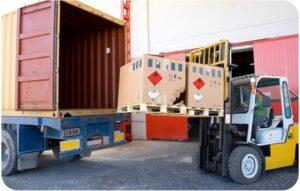
- Being present during loading, the driver identifies the danger labels affixed to each package.
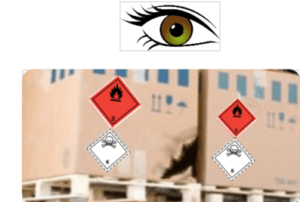
- Interprets the information and notes down the types of danger label.
Note: when several danger labels are affixed to a package, depending on their position (from top to bottom or from left to right). The first danger label from top to bottom or from left to right represents the primary hazard. The next one or ones – the subsidiary hazards.
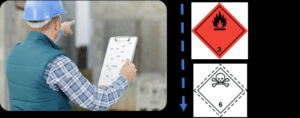
- (Re)reads the general actions on the first page of the instructions in writing.
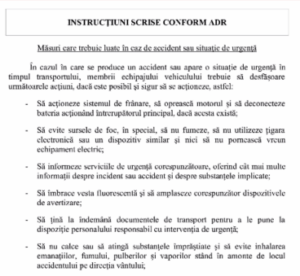
- Studies the additional guidance (pages 2-3) next to the danger labels identified on the goods loaded.
-
Checks the general and personal protective equipment (last page) with the help of the instructions in writing.
- If everything is in order, the driver can start the transport.

Drawing up ADR documents – Honexpres
If you want to be rid of all this headache, you always have the option of turning to a freight forwarder such as Honexpres. We take care of absolutely everything to do with the documentation for your freight transport. From the moment we sign the contract until your goods reach their destination, you have nothing to worry about. We and the professional drivers who carry out the trip make sure that everything runs perfectly. Your goods will reach the consignee quickly and safely. Contact us and ask today for the best price quotation for freight transport!
Have something similar to move? Request a quote →
All guides in ADR dangerous goods by road (22)
Related services