Guides
Practical guides on ADR, CMR, sea freight, insurance, logistics and the freight forwarder.
-
LDM: what a loading metre means and how it affects transport cost
LDM (loading metre) shows how much of the trailer floor length the goods take up, across the vehicle's full usable width. It is calculated…
-
Wide load trucking: width thresholds, signage, route planning and getting a quote
A wide load is cargo that makes the vehicle wider than the normal limits. In Great Britain, specific widths trigger police notice, an…
-
Ex Works (EXW) in Incoterms 2020: what it means and what it involves for the buyer
EXW (Ex Works) means that the seller places the goods at the buyer's disposal at its premises or at another agreed place, on the agreed…
-
Oversized transport permit (AST): when you need it, who issues it and how to prepare
You need an AST when the vehicle, loaded or empty, exceeds the maximum masses or dimensions permitted under annexes 2 and 3 to Government…
-
Special heavy-load transport: from taking over the goods to the quote
In special heavy-load transport, the exact data of the load, the right special vehicle and the permit in each country along the route…
-
Oversized transport: process, costs and what you need for a quote
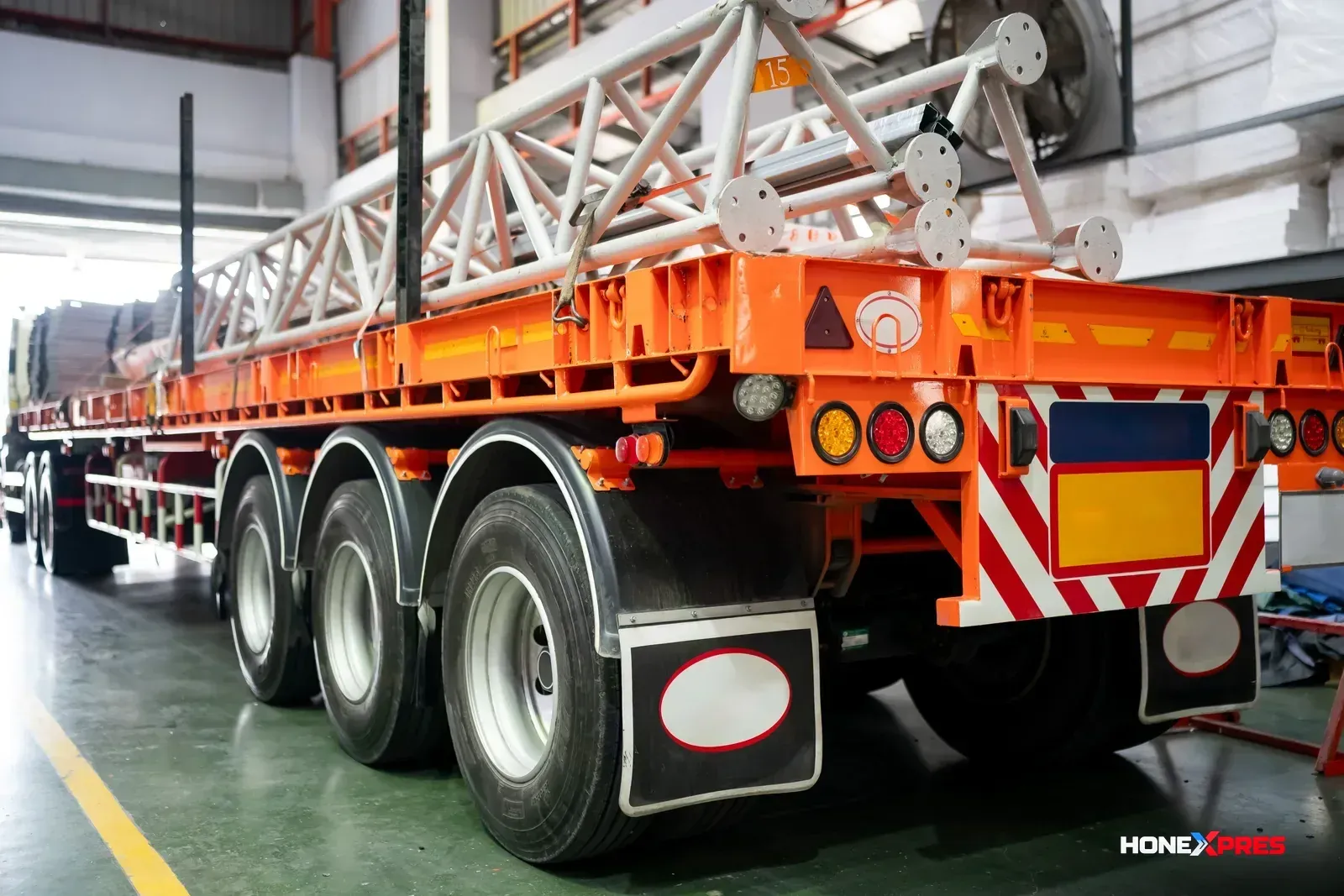
An oversized transport moves a load that exceeds the permitted dimensions or weights. It requires a verified route, a special permit from…
-
Heavy haulage escort: when attendants and escort vehicles are needed, and how to plan them
In Great Britain an attendant is required above set width, length and projection limits. No law makes an escort vehicle mandatory under…
-
What is CMR: the Convention and the International Road Consignment Note
CMR is the convention of 19 May 1956 governing the contract for the international carriage of goods by road. By extension, "CMR" also…
-
EORI code: what it is and why it matters for shippers
EORI is the number that identifies economic operators in their dealings with customs, required for example when lodging a customs…
-
T2L and T2LF: proof of the customs status of Union goods
This article presents the T2L and T2LF data, the PoUS system and its two phases, and how economic operators submit applications for goods…
-
ADR 1.1.3.6: exemption by quantity per transport unit, explained for consignors
The consignor is responsible for the classification, packing and marking of dangerous goods, and for drawing up the transport document.
-
The import customs declaration: what it is, who lodges it and what it contains
A customs declaration is an official document that provides details about goods. Goods enter free circulation on the basis of a customs…