
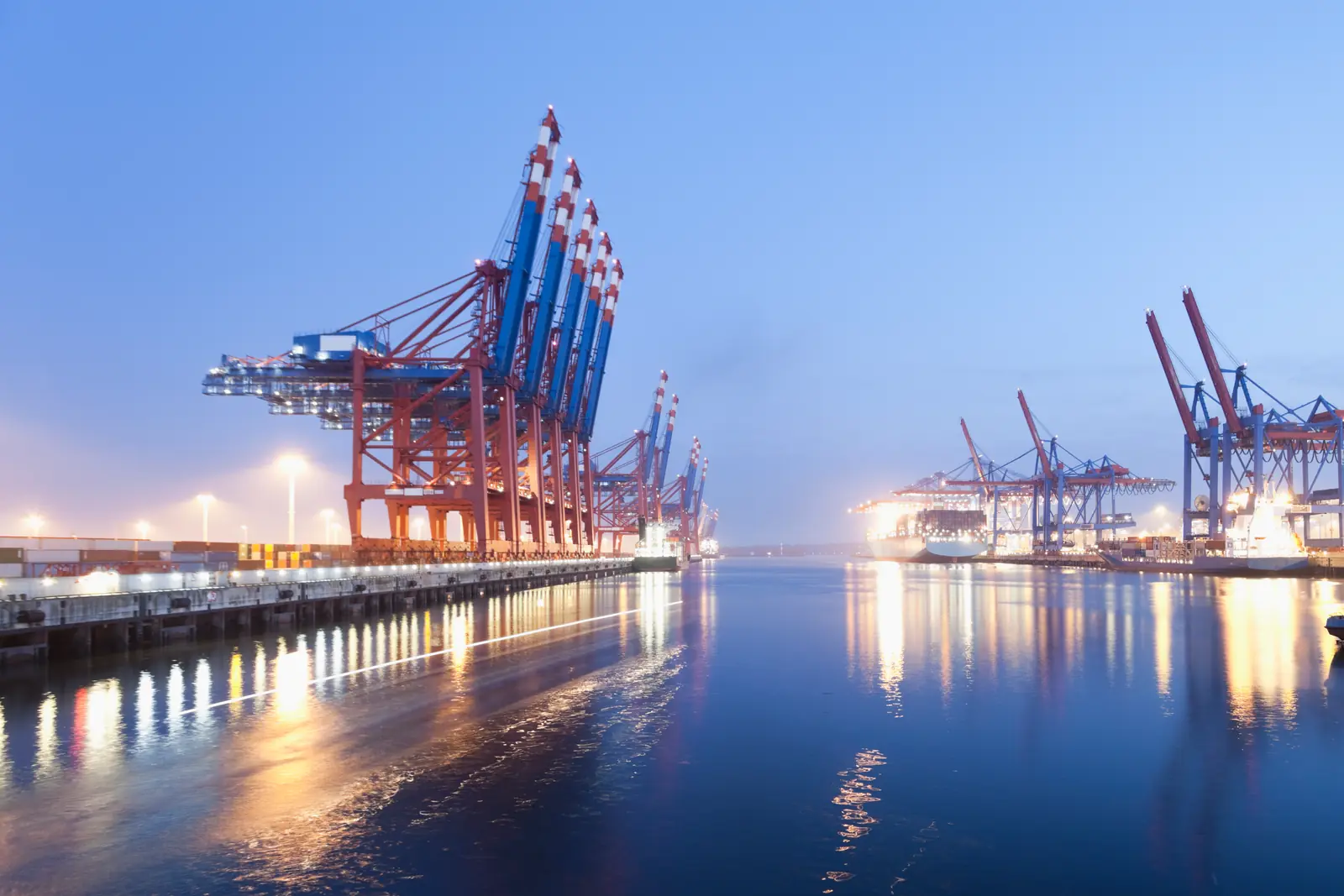
Import · export · transit
Customs formalities in transport organised by HONEXPRES
We coordinate import, export and transit (T1, T2) customs formalities for the goods we transport, with a customs broker or a specialised partner, so that the documents are checked before the goods leave.
- Import and export Outside the EU Import and export declarations (EX1) for the goods transported.
- Transit T1 and T2 The goods move under customs supervision to the office of destination.
- Customs broker With a specialised partner The declarations are prepared and lodged by the customs broker.
- Documents Checked before departure Invoice, packing list, proof of origin, EORI.
Customs formalities
Which customs formalities we coordinate
For goods entering or leaving the EU that we transport, by road, by sea or by air.
It is not a separate service. Customs formalities are part of the transport organised by the HONEXPRES team. HONEXPRES is not a customs broker: the declarations are prepared and lodged by the customs broker or specialised partner we work with, and we coordinate the documents, the deadlines and the transport.
-
Import
Release for free circulation of goods coming from outside the EU.
-
Export
The export declaration that proves the goods have left the EU.
-
Customs transit
The goods move under customs supervision to the office of destination.
-
Documents checked
Invoice, packing list, proof of origin, EORI — before departure.
On this page
Roles
Who does what in customs formalities
-
The HONEXPRES team
Organises the transport; requests and checks the documents (invoice, packing list, origin, EORI) before departure; coordinates the customs office, the deadlines and the transport with the customs broker; sends you the final documents. Does not prepare customs declarations.
-
The customs broker (partner)
Checks the tariff classification; prepares and lodges the import, export or transit declaration; represents you before the customs authority, directly or indirectly.
-
The customs authority
Checks the declaration and, sometimes, the goods; sets the customs duties, import VAT and excise duties; grants customs release.
-
You, the importer or exporter
You have an EORI number, give us the invoice and correct information about the goods, and pay the duties owed to the state.
Import
Import customs formalities
Goods coming from outside the EU — for example from China, Turkey, the United Kingdom or Serbia — are released for free circulation through an import customs declaration. The importer pays the customs duties and import VAT, set by the customs authority according to the tariff code, the value and the origin of the goods.
Import customs procedures can take place at the border or at an inland customs office, if the goods travel there under T1 transit.
Export
Export customs formalities (EX1)
On export, the export customs declaration (EX1) proves that the goods have left the EU — the document you need for the VAT exemption on the supply. The declaration is lodged before departure, and the exit is confirmed at the customs office of exit.
Transit
T1 and T2 customs transit
-
T1 transit
Non-EU goods move under customs supervision, with a guarantee, to the office where they are cleared; for example a container unloaded at the port and cleared closer to its destination.
-
T2 transit and the T2L document
Union goods passing through a common transit country keep their status; T2L is the proof of the Union status of the goods.
The transit document receives an MRN number in the NCTS system.
The customs procedure for T1 external Community transitThe customs procedure for T2 internal Community transit
Temporary admission · TIR
Temporary admission (ATA Carnet) and the TIR Convention
The ATA Carnet allows the temporary entry, without payment of duties, of samples, professional equipment or goods for trade fairs. The TIR Carnet allows international road transit through the countries that are parties to the TIR Convention, under a single guarantee document.
The ATA transit procedureSpecial customs procedures – the TIR Convention
Customs broker
The customs broker: who prepares the customs declaration
Customs declarations are prepared and lodged by a customs broker (also called a customs declarant or customs agent). HONEXPRES is not a customs broker: we coordinate the formalities with the customs broker or specialised partner we work with — documents, deadlines, transport — so that customs is not a separate step you have to deal with on your own.
- Direct or indirect representation — In direct representation the broker acts in your name; in indirect representation, in its own name but on your behalf, and it may also be liable for the customs debt. We discuss the type of representation before the operation.
Transport and duties
What is transport and what is customs duty
The cost of the transport and the cost of the formalities carried out through the customs broker appear in our quote. Customs duties, import VAT and any excise duties are set by the customs authority, based on the classification, the value and the origin of the goods; we cannot guarantee them in advance. We do not publish a customs duty calculator, because the result could be misleading.
Types of transport
For which shipments we coordinate customs
- Imports from outside the EU, by road, sea or air
- Exports to countries outside the EU, including machinery and equipment
- Goods in T1 transit to an inland customs office
- Exports with proof of origin for preferential duties (EUR.1)
- Regular shipments, with the same formalities every month
How it works
How it works: from documents to customs release
- Step 1
Type of operation
You tell us whether it is an import, export or transit and where the formalities should take place.
- Step 2
Document check
The HONEXPRES team checks the invoice, the packing list, the proof of origin and any licences before the goods leave.
- Step 3
The declaration
The customs broker prepares and lodges the declaration; for transit, the guarantee is provided.
- Step 4
Control and customs release
The customs authority may check the documents or the goods; once release is granted, the goods continue their journey.
- Step 5
Final documents
You receive the customs declaration and the documents that prove the import or export.
What we need for a quote
Information needed for a quote
The more accurate the details, the faster the check. Whatever you do not know, mark “I don’t know”: we will fill it in together.
- Type of operation: import, export, transit or “I don’t know”
- The customs office or the border crossing point
- Description of the goods and the tariff code, if you have it
- Value of the goods and the currency
- Country of origin of the goods
- The Incoterms® rule in the contract
- The EORI number of the importer or exporter
- Available documents: invoice, packing list, proof of origin, licences
- Frequency: one-off or recurring operation
EORI and documents
EORI number and required documents
For any customs operation in the EU you need an EORI number, assigned by the customs authority of the country where you are registered; you can check it in the European Commission’s official validation tool.
- Commercial invoice With the value, the currency, the delivery terms and the exact description of the goods.
- Packing list Number of packages, weights and contents.
- Transport document CMR, bill of lading or AWB, depending on the mode of transport.
- Proof of origin EUR.1 certificate, origin declaration or other proof required by the trade agreement.
- Import or export customs declaration (EX1) Prepared by the customs broker.
- T1 / T2 transit document With the MRN number, for goods in transit.
- Licences and certificates Phytosanitary, veterinary health, conformity, where required.
Restrictions
Restrictions we take into account
- We do not calculate or guarantee customs duties; they are set by the customs authority.
- Liability for the classification and the value depends on the type of representation; the customs broker explains it before the operation.
- Excise goods, dual-use goods and goods bound for countries or parties under sanctions are checked separately and may be refused.
- The importer’s own obligations, for example CBAM, remain with the importer and are not part of the formalities we coordinate.
- Clearance time depends on the documents, the checks and the opening hours of the customs office.
Cost factors
What affects the cost of customs formalities
We do not publish rates: the fee for the formalities depends on the operation and the documents. Customs duties and import VAT are separate and are set by the customs authority.
-
01
Type of operation
Import, export or transit
-
02
Number of tariff lines in the declaration
-
03
The guarantee for transit
-
04
The customs office and its opening hours
-
05
Physical checks and waiting time
-
06
Special procedures
Excise duties, licences, certificates
-
07
Urgency and monthly volume
Do you handle customs formalities without transport?
Not as a separate service. We coordinate customs formalities for the transport we organise, through the customs broker.
Who prepares the customs declaration?
The import, export or transit declaration is prepared and lodged by the customs broker (also called a customs declarant or customs agent), who represents you before the customs authority, directly or indirectly. HONEXPRES is not a customs broker: our team coordinates the documents, the deadlines and the transport.
Can you tell me how much I will pay in customs duties?
We do not calculate them or guarantee them in advance: customs duties, import VAT and any excise duties are set by the customs authority, based on the classification, the value and the origin of the goods. Our quote separates transport and formalities from the duties owed to the state.
What is EORI and where do I get it?
The registration number of economic operators in their dealings with customs, mandatory for any customs operation in the EU. It is assigned by the customs authority of the country where you are registered, and you can check it in the European Commission’s official validation tool.
What is T1 transit?
A procedure under which non-EU goods move under customs supervision, with a guarantee, to the office where they are cleared. It allows, for example, a container unloaded at the port to be cleared closer to its destination. The transit document receives an MRN number in the NCTS system.
What is the T2L document?
T2L is the proof of the Union status of the goods. This is how Union goods passing through a common transit country keep their status. Details in the T1 and T2 customs transit section.
Do goods from the United Kingdom go through customs?
Yes. The United Kingdom is no longer part of the EU customs union, so imports and exports need customs declarations, and proof of origin is needed for preferential duties.
Guides
Customs guides
Guides on T1 and T2 transit, temporary admission and special customs procedures.
-
The customs procedure for T1 external Community transit
Customs transit is a procedure under which goods are carried, under customs control, between two points of a customs territory through…
-
The customs procedure for T2 internal Community transit
There are two types of Community transit procedure: T1 (external transit) and T2 (internal transit). These procedures reflect the status…
-
The ATA transit procedure
The ATA transit procedure is a system that allows the free movement of goods across borders and their temporary admission into a customs…
Related articles
More about customs procedures
- Special customs procedures – the TIR Convention Apr 21, 2022
- The updated INCOTERMS delivery terms Apr 1, 2022
- What does FOB mean? Mar 11, 2024
- Concluding and performing a contract for the carriage of goods: the consignment note Sep 12, 2022
- Claims and actions in goods transport based on the consignment note Sep 12, 2022
Transport with coordinated customs
-
Road freight
full or part loads, Romania and the EU
-
Sea freight (FCL / LCL)
full containers (FCL) or groupage (LCL)
-
Air freight
urgent cargo, for tight deadlines
-
Container haulage
containers from the port or terminal, by road
-
Machinery transport
machines and industrial equipment
Quote request
Do you have goods entering or leaving the EU?
Tell us what you are transporting, from where and to where. The HONEXPRES team sends you a quote for the transport and the customs formalities, with the state’s duties shown separately.
Automatic translation, automatically checked. This page was translated automatically from Romanian and passed the automatic checks for language, terminology, figures and links. If there is any difference, the Romanian version prevails. How we use automatic translation