
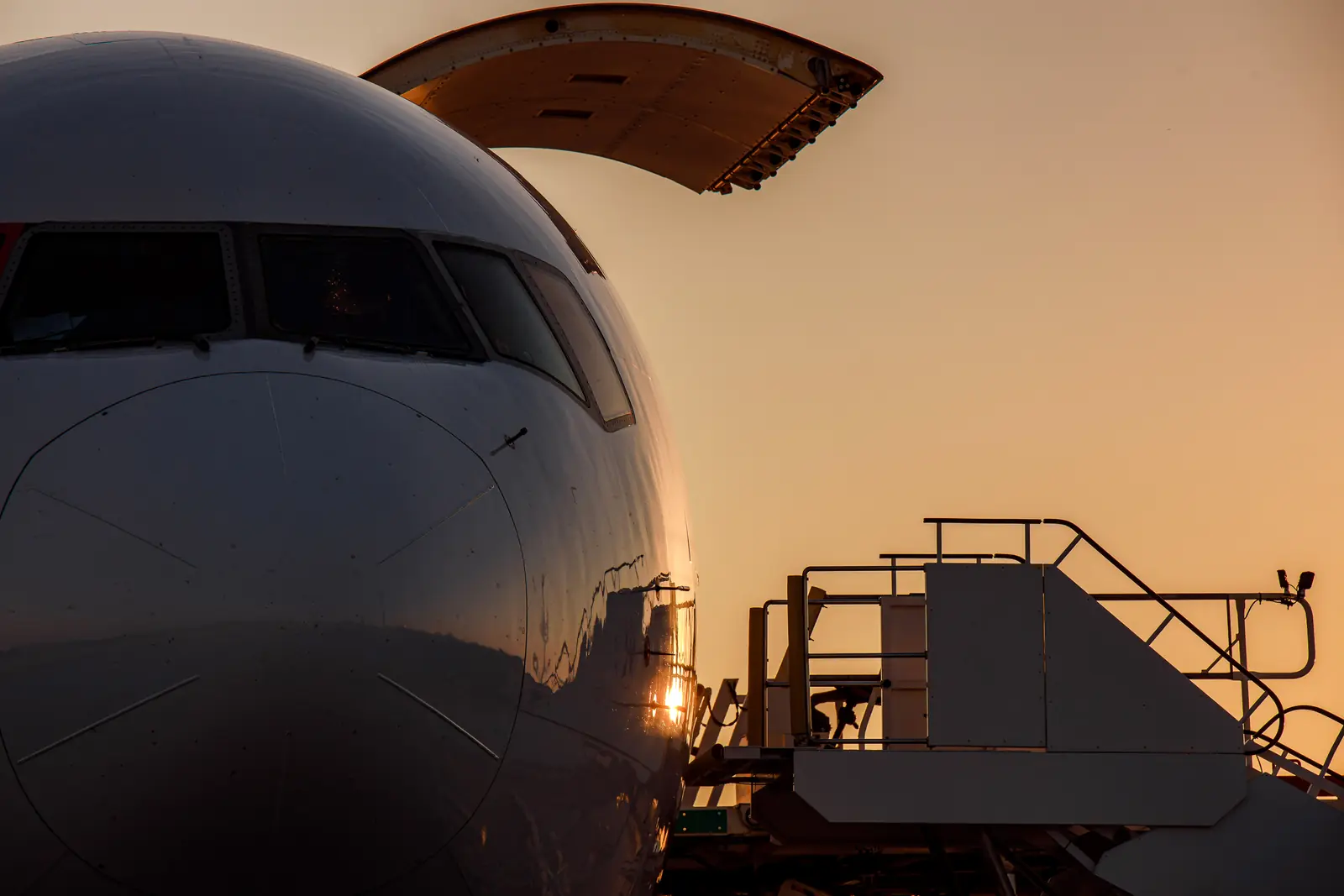
Air freight · cargo
Air freight, import and export
For urgent, light or valuable goods over long distances: collection from you, the flight and delivery to the consignee, with air cargo agents and coordinated customs formalities.
- General and special cargo General, perishable, dangerous Dangerous goods under IATA DGR, with the airline’s acceptance.
- Urgent shipments Urgent air freight When the goods cannot wait, we look for the first suitable flight available.
- Door-to-door Or airport-to-airport Collection, flight and delivery, with air cargo agents.
- Chargeable weight Actual or volumetric The rate is calculated on the higher of the two.
Options
Which air freight option suits you
We start from the goods and the urgency. Each option has its own rules, which we check before booking.
-
General cargo
Packages, pallets, spare parts, samples and trade fair equipment.
-
Perishable and refrigerated
Pharma, samples and sensitive food, at controlled temperature.
-
Dangerous goods
Lithium batteries, aerosols, chemicals, under the IATA DGR rules.
-
Urgent transport
Direct flight and dedicated collection, when the goods cannot wait.
On this page
General cargo
Air freight for general cargo
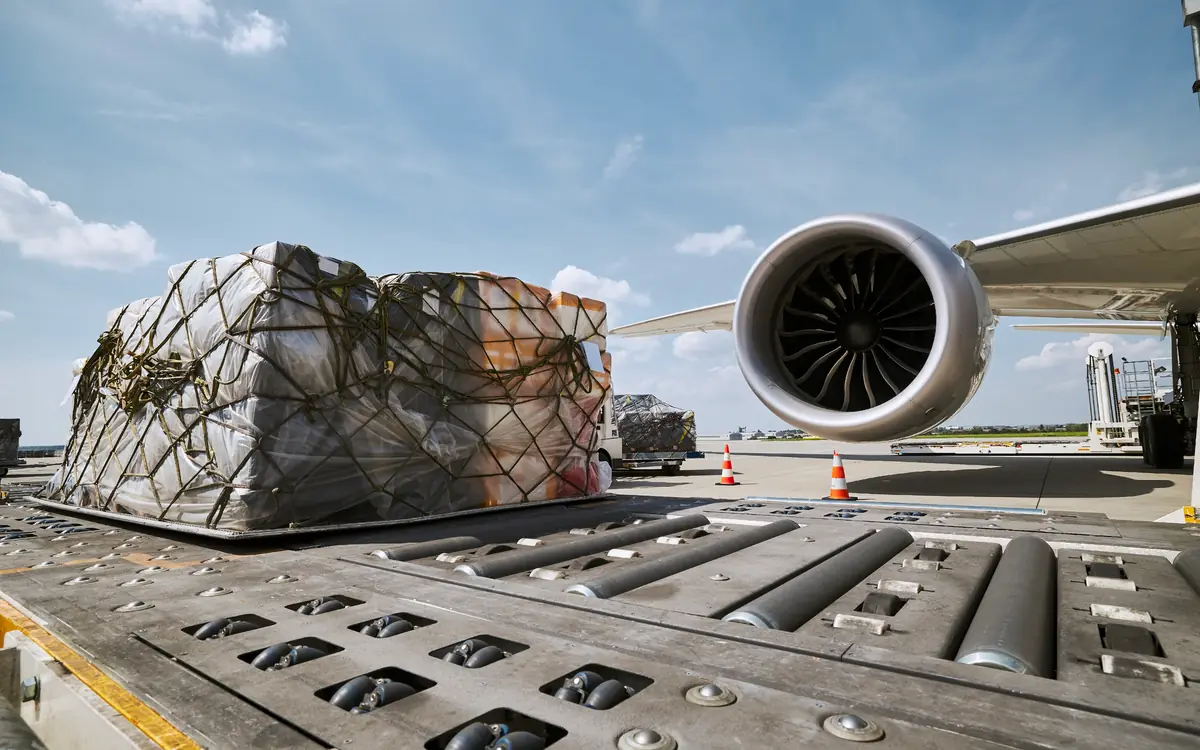
Packages, pallets, spare parts, samples, trade fair equipment, electronics. By air, it is not only the total weight that matters: the aircraft’s doors and holds limit the dimensions and mass of each package, and tall pallets or heavy packages fly only on cargo aircraft.
- The practical rule — Send us the actual dimensions of each package, not just the total weight: from them we calculate the chargeable weight and see which aircraft are possible.
Perishable · refrigerated
Perishable and refrigerated goods by air
Pharmaceutical products, samples, sensitive food, flowers: temperature-controlled goods fly with specialised operators, in packaging or a container suited to the required range. We confirm the specific option and availability in the quote.
- What to tell us from the start — The temperature range (for example 2–8 °C or 15–25 °C), how long the goods can stay outside it and which documents the consignee requires.
Controlled temperature by road, within Europe: refrigerated transport
Dangerous goods
Dangerous goods by air (IATA DGR)
Lithium batteries, aerosols, paints and many chemicals are dangerous goods by air as well. The IATA DGR rules are stricter than on the road: some goods are forbidden, others are accepted only on cargo aircraft and only when correctly packed, marked and declared.
- What we need — The UN number, the class, the quantity and the safety data sheet (SDS). The dangerous goods declaration is signed by the shipper.
Urgent shipments
Urgent air freight
When a part stops a production line or a delivery can no longer wait, we look for the most direct option available: a direct flight instead of consolidation, dedicated collection to the airport and delivery right after customs clearance.
For an urgent shipment we need from the outset:
- The time the goods are ready for collection
- The exact dimensions and weight of each package
- Who handles customs at departure and at arrival
- The delivery address and who receives the goods
- No promised times — Flights, security screening and customs have their own schedules. In the quote we tell you which options exist and the estimated transit time of each. Within Europe, express road transport with a dedicated vehicle often arrives just as quickly.
Airport-to-airport
Airport-to-airport
We handle only the air leg: you hand over the goods at the departure airport, and the consignee or their agent collects them from the destination airport. Suitable when you already have transport and customs organised at both ends.
-
Door-to-airport
We collect the goods from you, and the consignee picks them up at the destination airport.
-
Airport-to-door
You hand the goods over at the departure airport, and we deliver them to the consignee.
Door-to-door
Door-to-door
We organise the whole journey: collection from the shipper, road transport to the airport, security screening, the flight, customs formalities and delivery to the consignee’s address. You receive a quote covering all the stages and confirmation of each stage along the way.
-
Collection from the shipper
-
Departure airport
-
Security and flight
-
Customs at destination
-
Delivery to the consignee
Chargeable weight
Chargeable weight in brief
Airlines invoice the higher of the actual weight and the volumetric weight. The usual convention in air cargo: 6,000 cm³ = 1 kg.
- Example — A package of 120 × 80 × 100 cm has 960,000 cm³, i.e. 160 kg volumetric. If the actual weight is 90 kg, 160 kg is invoiced. The exact rule is applied by the air carrier.
Cargo types
What goods usually go by air
- Urgent spare parts and components for production
- Samples, prototypes and trade fair equipment
- Electronics and high-value, low-weight goods
- Temperature-controlled pharmaceutical products
- Dangerous goods accepted under the IATA DGR rules, including some lithium batteries
How it works
How it works: from packages to delivery
- Step 1
Package details
The number of packages, the dimensions and weight of each, the goods, their value and the urgency.
- Step 2
Chargeable weight and options
The HONEXPRES team calculates the chargeable weight and proposes options: consolidation (more economical) or a direct flight (faster).
- Step 3
Booking and security
The air cargo agent books the flight; the goods go through the mandatory security screening.
- Step 4
The flight
The goods fly under the air waybill (AWB); we confirm departure and arrival.
- Step 5
Customs and delivery
At destination the customs formalities are completed, and the goods are delivered to the consignee’s address.
What we need for a quote
Information needed for a quote
The more accurate the details, the more precise the quote. Whatever you do not know, mark “I don’t know”: we will fill it in together.
- The airport or address for collection and for delivery
- The number of packages, the dimensions and weight of each
- Description of the goods and their value
- Lithium batteries, liquids or other dangerous goods
- Controlled temperature, if needed
- Urgency: as fast as possible or the economy option
- The Incoterms® rule and who handles customs at departure and at arrival
- Whether you are a “known consignor” for aviation security (or “I don’t know”)
Documents
Documents for air freight
- Air waybill (AWB) The document of the air transport contract; with consolidation there is a master AWB and a house AWB issued by the agent.
- Commercial invoice and packing list Required for customs.
- Dangerous goods declaration (IATA DGR) Only for dangerous goods; signed by the shipper.
- Consignment security declaration Issued by the authorised agent, after the security screening.
- Export customs declaration For goods leaving the EU.
Restrictions
Restrictions we take into account
- Some dangerous goods are forbidden by air or are accepted only on cargo aircraft.
- Lithium batteries are accepted only when packed and declared under the IATA rules.
- The dimensions and mass of packages are limited by the aircraft type and its doors.
- All air cargo goes through security screening before the flight.
- Flight times and dates are set by the airlines and may change.
Cost factors
What affects the cost of air freight
We do not publish air freight prices: the rate depends on the chargeable weight, the route and the flight. The quote shows each component separately.
-
01
Chargeable weight
Actual or volumetric, whichever is higher
-
02
The service option
Consolidation or direct flight
-
03
Fuel and security surcharges
-
04
Airport handling charges
-
05
Road transport to and from the airport
-
06
Dangerous goods and temperature requirements
-
07
Customs formalities at departure and at arrival
What is chargeable weight?
The higher of the actual weight and the volumetric weight (the volume converted into kilograms using the usual convention, 6,000 cm³ = 1 kg). Large, light packages are invoiced by volume.
Is air freight always the quickest option?
Not always. The flight is fast, but transport to the airport, security screening, handling and customs are added to it, and flights have their own schedules. Within Europe, express transport by road with a dedicated vehicle often arrives just as quickly; over long distances, to other continents, air remains the option for urgent shipments.
How much does air freight cost?
We do not publish prices: the rate depends on the chargeable weight, the route and the flight. Added to it are fuel and security surcharges, airport handling charges, road transport to and from the airport and customs formalities. For your packages you receive a quote that shows each component separately; see what affects the cost.
What do airport-to-airport and door-to-door mean?
Airport-to-airport means only the air leg: you hand over the goods at the departure airport, and the consignee or their agent collects them from the destination airport. Door-to-door means the whole journey, from collection from the shipper to delivery to the consignee’s address, with road transport, security screening, the flight and customs formalities. There are also the intermediate options door-to-airport and airport-to-door.
Can I send lithium batteries?
Yes, if they are packed, marked and declared under the IATA rules. Some configurations are accepted only on cargo aircraft. Tell us the type of batteries and send us the safety data sheet (SDS); the dangerous goods declaration is signed by the shipper. Details under dangerous goods by air.
Can pallets be sent by air?
Yes, if the dimensions and mass of each pallet are within the limits of the aircraft used: the aircraft’s doors and holds limit the dimensions and mass of each package. Tall or heavy pallets fly only on cargo aircraft; we check this in the quote, from the actual dimensions of each pallet.
Who handles import customs?
We coordinate import customs formalities through a customs broker; HONEXPRES is not a customs broker. Customs duties and import VAT are set by the customs authority and are separate from the cost of transport. Details on the customs formalities page.
Guides
Useful guides and articles
Guides on dangerous goods, cargo insurance and Incoterms® in air freight.
-
Air transport of dangerous goods – IATA/ICAO
The air transport of dangerous goods (by aircraft) is regulated and described in the instructions on the air transport of dangerous goods…
-
CARGO insurance – why is it important?
Freight transport is never free of risk, whether we mean domestic or international transport. CARGO insurance is the type in which the…
-
The updated INCOTERMS delivery terms
The updated INCOTERMS delivery terms seem complicated and dense. However, once we have explained them in detail in this Honexpres article…

Related articles
More about air freight
- What does FOB mean? Mar 11, 2024
- The contracts required in the freight forwarding process Apr 11, 2022
Related services
-
Express transport
urgent loads, with a dedicated vehicle
-
Sea freight (FCL / LCL)
full containers (FCL) or groupage (LCL)
-
Temperature-controlled transport
controlled temperature all the way
-
Dangerous goods transport (ADR)
dangerous goods, with ADR-authorised carriers
-
Customs formalities
import, export and transit
Suitable vehicles
-
3.5 t panel van (Sprinter/Crafter class, long, high roof)
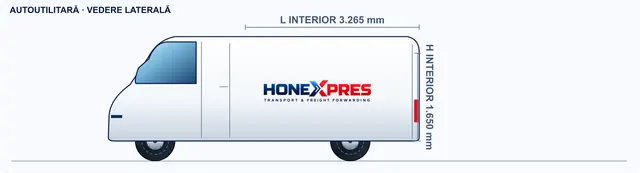
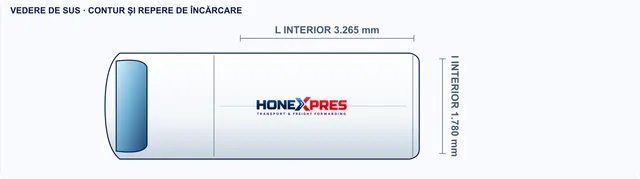
~4.3 m · ~1.8 m (1.35–1.38 m between the wheel arches) · ~1.9 m · 6 EUR pallets (not stacked) · ~1 t
Visual only Sketch: Panel van
-
7.5 t rigid truck (curtain or box)

~6.1 m · ~2.45 m · ~2.4 m · 15 EUR pallets · ~2.5 t
Indicative Sketch: 7.5 t rigid truck with closed body
Practical reference values. We confirm the exact dimensions in the quote. Honexpres organises transport with this vehicle, on request.
Quote request
Do you have urgent goods to send by air?
Send us the number of packages, the dimensions, the weight and the time the goods will be ready. The HONEXPRES team replies with the flight options and the estimated transit time.
Automatic translation, automatically checked. This page was translated automatically from Romanian and passed the automatic checks for language, terminology, figures and links. If there is any difference, the Romanian version prevails. How we use automatic translation