
Road transport · machinery
Transport of agricultural, construction and industrial machinery
From a forklift on a flatbed to an excavator on a semi-low loader: we start from the actual data of the machine and choose the vehicle, the loading method and, if needed, the permits.
- Dimensions Within limits or oversized We check the dimensions in transport position and choose the option.
- Loading Ramp, crane, side, top The “Machine” form tells us how the machine gets onto the vehicle.
- Vehicles Flatbed, semi-low loader, low bed Chosen according to the dimensions, the weight and the loading method.
- Routes Romania, Europe, export Including machinery bought in another country.
Within limits or oversized
Machinery within the permitted dimensions or oversized machinery
A machine is not palletised cargo: it has irregular dimensions, a high centre of gravity, specific lashing points and often has to be driven up ramps or lifted by crane. Choosing the wrong vehicle means a truck that leaves empty or a transport that exceeds the permitted dimensions without a permit. That is why we start from the actual data of the machine.
-
The machine fits within the permitted dimensions
Forklifts, mini excavators, machine tools, generators: they travel on a flatbed or a standard semi-trailer, without special permits.
-
The machine exceeds the permitted dimensions
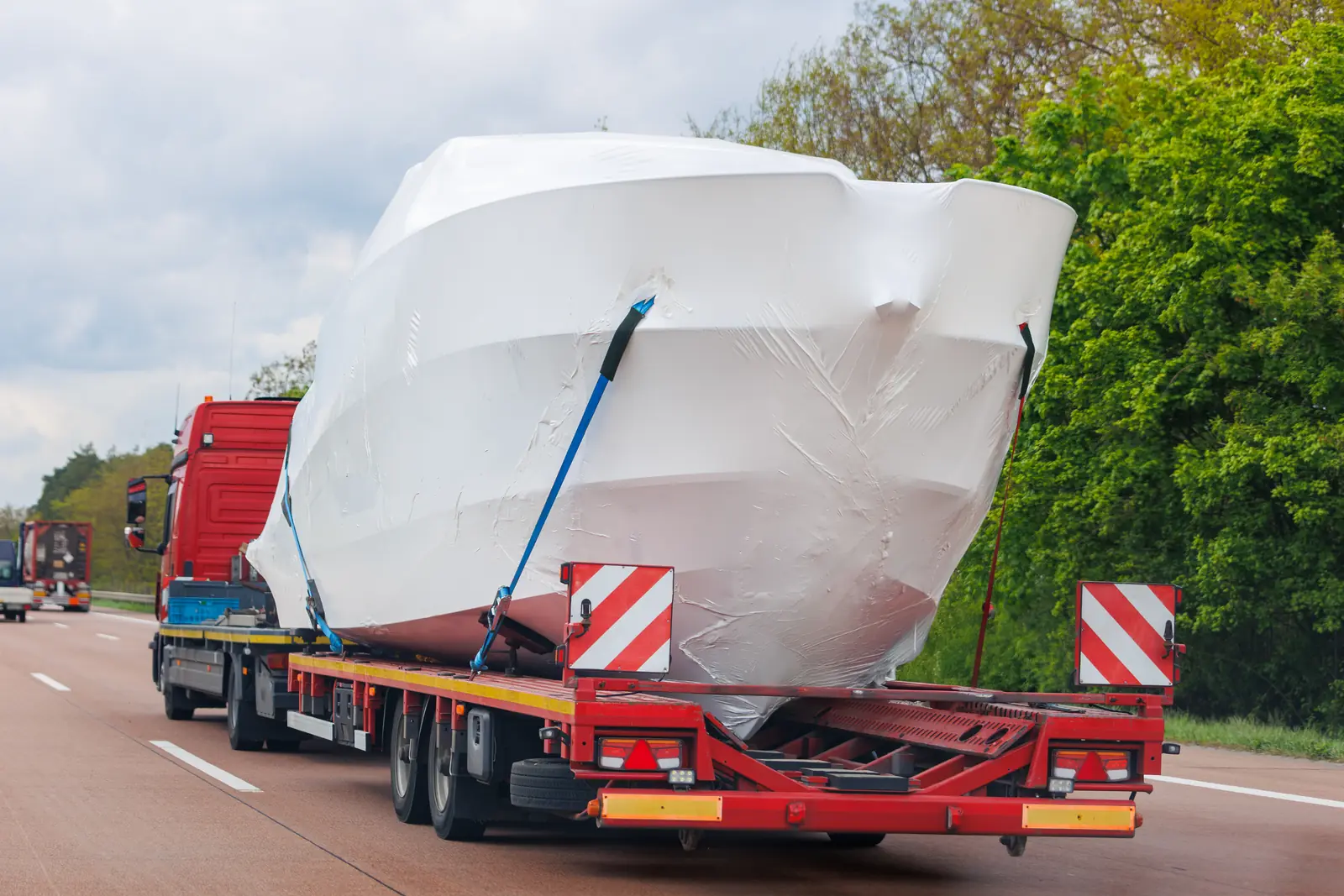
Combine harvesters, large excavators, very tall machines: a semi-low loader or a low bed and permits are needed.
Sometimes removing a bucket, a boom or a cab brings the machine within the permitted dimensions and greatly reduces the cost. We look at this option before quoting.
On this page
Types of machinery
What machinery we transport
-
Agricultural
Agricultural machinery
Tractors, combine harvesters, harvesting and soil cultivation equipment.
-
Construction
Construction machinery
Excavators, backhoe loaders, bulldozers, wheel loaders, compactor rollers.
-
Industrial
Industrial machinery and equipment
Machine tools (CNC, lathes, presses), production lines moved between factories, generators, compressors.
-
Small machinery
Forklifts, aerial lifts, work platforms
Small machines, often within the permitted dimensions; sometimes several on the same flatbed.
New or second-hand machinery, bought abroad or sold for export.
Loading
How a machine is loaded: ramp, crane, side or top loading
The loading method determines the vehicle and what must be available at both ends. We set it in the quote.
-
Ramp
By ramp
Self-propelled machines, on wheels or tracks, drive up the ramps of the flatbed or the semi-low loader on their own.
-
Crane
By crane
Lifting only at the machine’s lifting points, with equipment suited to its weight. Tell us whether there is a crane at loading and at unloading.
-
Side
Side loading
With a forklift or a crane, from the side, onto a flatbed — useful when loading from the rear is not possible.
-
From above
Top loading
With a crane, onto a flatbed or, for sea transport, into an open top container.
-
Non-operational machine
The machine does not start?
It is loaded by crane or with a winch — tick “non-operational” in the request. Securing, with chains or straps, is done by the carrier at the points designated by the manufacturer. If there is no crane at loading, we check whether we can arrange one.
Vehicles
Vehicles used
The vehicles belong to carriers experienced in securing machinery; we choose the type according to the dimensions, the weight and the loading method.
-
Flatbed
Flatbed
Machinery within the permitted dimensions; loading from above or from the side.
-
Semi-low loader
Semi-low loader
Tall machinery that does not fit on a standard flatbed; almost always oversized transport.
-
Low bed
Low bed
Very heavy and very tall machinery, only with a route survey and permits.
-
By sea
Flat rack or open top
For export by sea, machinery travels on flat rack or open top containers.
Not sure which vehicle fits?
How it works
How it works: from the machine data to handover
- Step 1
We identify the machine
The make, model, year and dimensions in transport position; photos help us see the lashing points.
- Step 2
We choose the vehicle
Flatbed, semi-low loader or low bed, according to the dimensions, the weight and the loading method; we check whether it is oversized.
- Step 3
The quote
The quote includes the vehicle, any permits and who provides loading and unloading.
- Step 4
Loading and securing
The machine drives up the ramps or is lifted by crane and is secured with chains or straps at the designated points.
- Step 5
Transport and handover
We notify you at loading and at delivery; at the destination the machine is unloaded with the same agreed means.
What we need for a quote
Information needed for a quote: the “Machine” form
A machine is not described in Euro pallets or loading metres, but by its dimensions, its weight and the way it is loaded. The same data appears in the quote request, in the “Machine” branch.
- The type of machine, the make, the model and the year
- The dimensions in transport position (length, width, height) and the weight
- Whether it is self-propelled, on wheels or on tracks, and whether it can drive up ramps on its own
- What can be removed for transport (bucket, boom, cab, attachments)
- The lifting and lashing points
- How it is loaded and unloaded (ramp, crane, side, top) and what equipment is available at both ends
- Whether the machine contains fuel, batteries or other fluids
- Photos from the side, the front and the rear
- For export outside the EU: the country of destination and who handles the customs formalities
Request a quote for a machineMachine over the permitted dimensions? See Oversized transport
Documents
The documents for a machinery transport
- CMR consignment note For international transport.
- Invoice or pro forma invoice for the machine Also needed for customs, for export or import.
- Special transport permit (AST) Only if the transport is oversized.
- Export customs declaration (EX1) For machinery leaving the EU; see the customs formalities related to transport.
- Machine identification documents Useful for second-hand sales (serial number, certificates).
Export outside the EU: customs formalities related to transport
Restrictions
Restrictions we take into account
- Many agricultural machines and large excavators exceed the permitted width or height and become oversized transport.
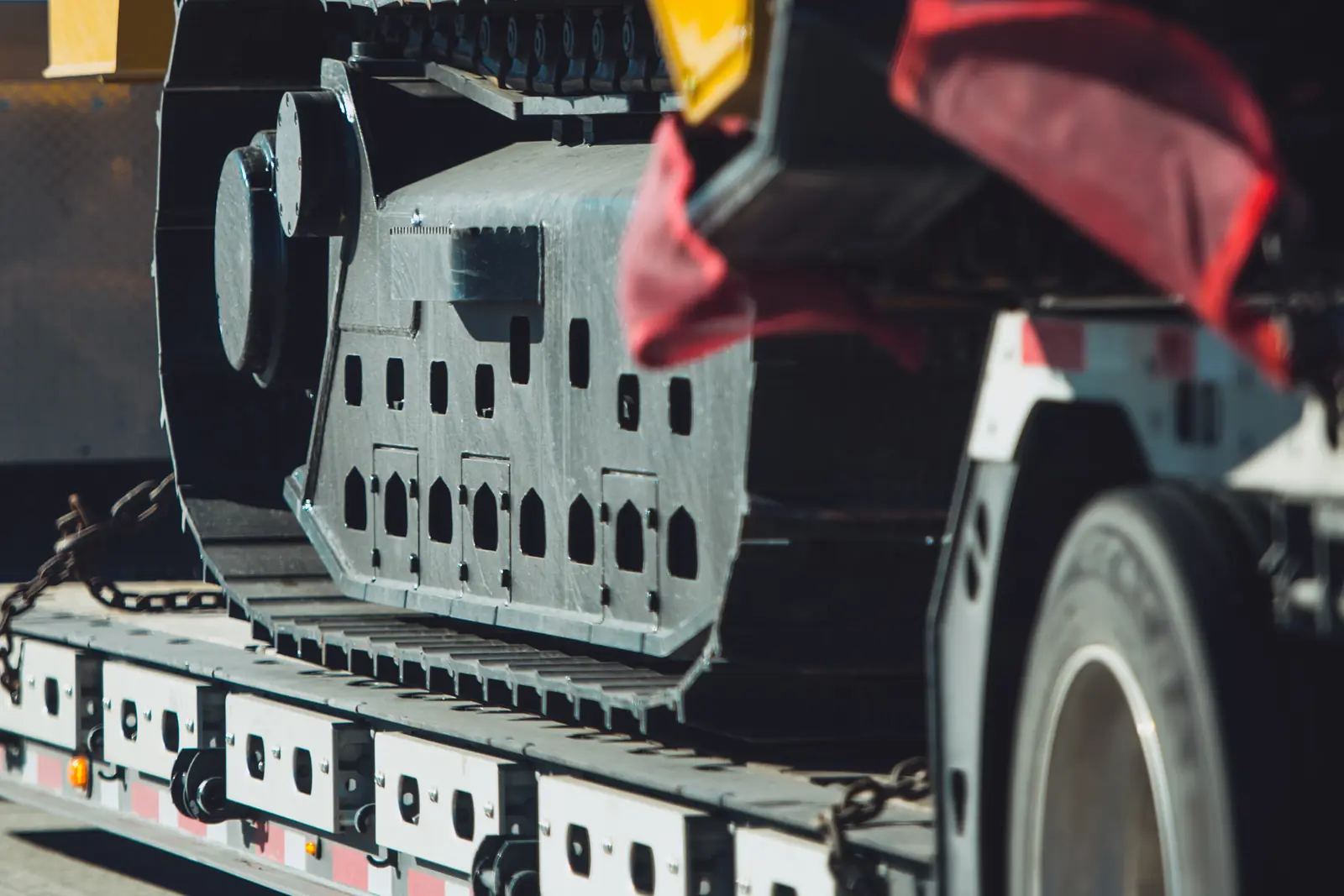
- Tracked machines must be transported on suitable decks and secured so that they cannot slide.
- Loading by crane is done only at the machine’s lifting points and with equipment suited to its weight.
- Machines with fuel or batteries may fall under special transport rules; tell us in advance.
- Transport to or from a construction site depends on access for a long and heavy vehicle.
Costs
What affects the cost of machinery transport
We do not publish fixed rates: the quote for a machine is calculated on its dimensions, weight, loading method and route, and is sent by the HONEXPRES team.
-
01
The dimensions and weight
Standard vehicle or oversized
-
02
The type of vehicle (flatbed, semi-low loader, low bed)
-
03
Permits and escort, if applicable
-
04
Loading and unloading
Ramps, crane, dismantling
-
05
The distance and the empty run of the special vehicle
-
06
Customs formalities for export or import
How much does freight transport cost in 2026? Prices per kilometre and calculation factors
Is my machine oversized?
It depends on the dimensions in transport position and on the weight. Send them to us and we will check; if it exceeds the permitted dimensions, we also take care of the permits. See also the page on oversized transport.
Can I reduce the cost by dismantling the machine?
Sometimes, yes. If, after removing the bucket, the boom, the cab or some attachments, the machine fits within the permitted dimensions, permits and an escort are no longer needed. Send us the dimensions for both versions: we look at this option before quoting.
Can a machine that does not start be transported?
Yes. A machine that does not start is loaded by crane or with a winch; tick “non-operational” in the request. Securing is done by the carrier, and if there is no crane at loading, we check whether we can arrange one.
Do you transport machinery bought abroad?
Yes, new or second-hand machinery. We need the seller’s address, a contact person there and confirmation that the machine can be loaded (by ramp or by crane). We coordinate the collection and the documents.
Who secures the machine?
Securing is done by the carrier, with suitable chains or straps, at the points designated by the manufacturer. The loading itself (driving up the ramps or lifting by crane) is agreed in the quote.
Do you export machinery outside the EU?
Yes. Machinery leaving the EU needs an export customs declaration (EX1); we coordinate the formalities through a customs broker, because HONEXPRES is not a customs broker. By sea, machinery travels on flat rack or open top containers. See customs formalities related to transport.
Can a mini excavator travel as groupage?
Rarely. Small machines usually travel on a dedicated flatbed or together with other machinery, not in pallet groupage networks. We tell you the right option in the quote.
Guides
Useful guides and articles
Useful guides when you transport large or heavy machinery: technical conditions, preparing the transport, choosing the vehicle.
-
Oversized freight transport: a guide to shipping oversized goods
Shipping or transporting oversized goods can be more difficult than shipping standard goods.
-
Technical requirements for oversized freight transport
Oversized goods: technical requirements you need to take into account
-
How to choose the right vehicle for road freight transport
There are many ways in which companies can access road freight transport.
Relevant articles
More useful articles
Related services
-
Oversized / abnormal load transport
very large or heavy cargo, with permits
-
Road freight
full or part loads, Romania and the EU
-
Customs formalities related to transport
import, export and transit
-
Sea freight · flat rack, open top
-
Semi-low loader (vehicle sheet)
-
Low bed (vehicle sheet)
Suitable vehicles
-
Semi low-loader
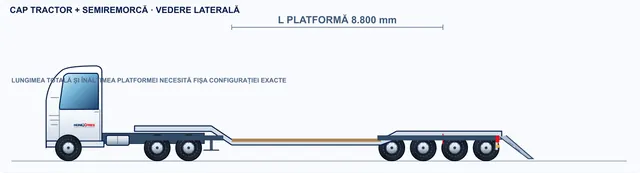
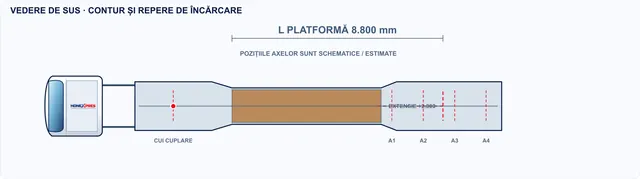
~9 m low deck (UNVERIFIED) · 2.55 m (can be widened to ~3.2 m, with an AST permit)
Indicative Sketch: Semi low-loader trailer for oversize cargo
-
Low-bed / low loader
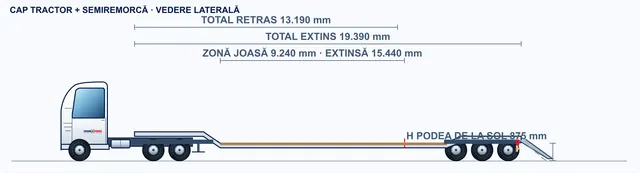
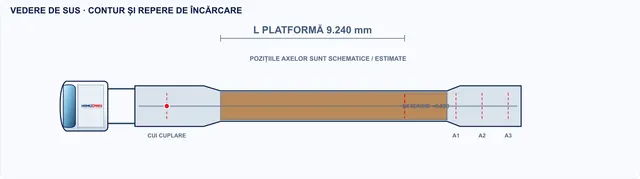
well of 6–14 m, depending on the configuration · 2.55 m (can be widened, with an AST permit) · on request (as a rule with an AST permit)
Visual only Sketch: Extendable low-bed semi-trailer
-
Flatbed semi-trailer 13.6 m
Sketch missing The library has no sketch for this type yet; we do not use another vehicle's drawing.~13.6 m · ~2.5 m · 33 EUR pallets · 24 t
-
Extendable flatbed (telescopic)
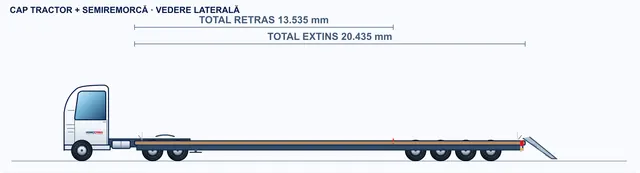
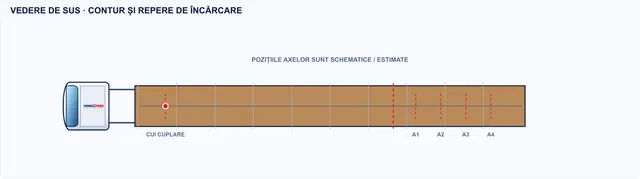
13.6 m closed → ~30 m extended · ~2.5 m
Indicative Sketch: Extendable platform semi-trailer
Suitable containers
-
40' Flat Rack
~11.7 m (between the corner posts) · ~2.2 m (between the posts) · ~2.2 m (end walls; ~2.4 m on HC) · n/a · not relevant (OOG cargo) · ~21 t on the road (40 t)
-
40' Open Top
~12.0 m · ~2.35 m · ~2.35 m · ~66 m³ · 25 EUR pallets · ~22 t on the road (40 t)
Practical reference values. We confirm the exact dimensions in the quote. Honexpres organises transport with this vehicle, on request.
Quote request
Do you have a machine to transport?
Send the type, dimensions and weight of the machine; the HONEXPRES team chooses the vehicle and sends you the quote.
Automatic translation, automatically checked. This page was translated automatically from Romanian and passed the automatic checks for language, terminology, figures and links. If there is any difference, the Romanian version prevails. How we use automatic translation