ADR dangerous goods by road · Guides
General and personal protective equipment
Article translated automatically from Romanian and checked automatically. If there is any difference, the original prevails. See the original in Romanian · How we use automatic translation
In short
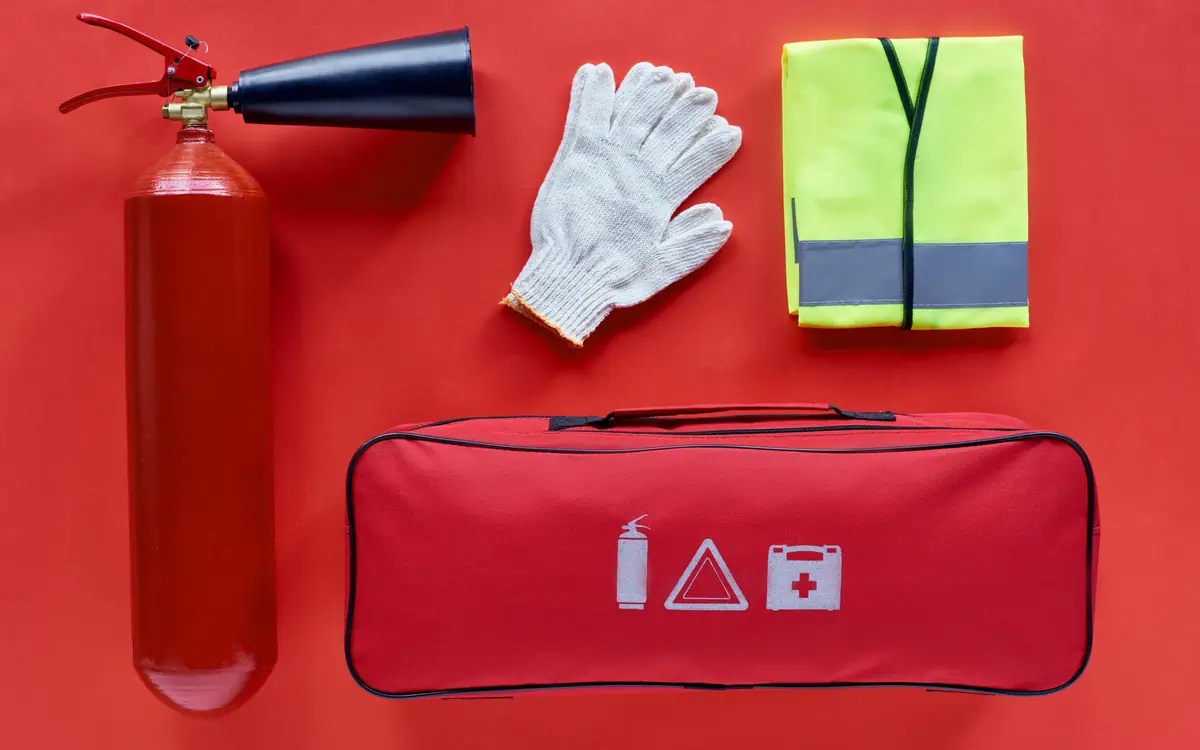
This article describes, on the basis of the ADR Agreement, the ADR protective equipment that is necessary and mandatory for the carriage of dangerous goods.
Contents
- Protective equipment for the transport unit regardless of the number of crew members.
- Fire extinguisher/extinguishers
- First aid kit
- Types of warning devices - protective equipment:
- Additional equipment:
- Personal protective equipment for the members of the crew.
- Choose Honexpres for the transport of goods!
This article describes, on the basis of the ADR Agreement, the ADR protective equipment that is necessary and mandatory for the carriage of dangerous goods.
This equipment is required when dangerous goods are carried in quantities above the quantity limit that is exempted from the provisions of the ADR Agreement.
In other words, you must make sure that, when the transport unit is marked with orange-coloured plates, you have the equipment listed below on board the transport unit.
Protective equipment for the transport unit regardless of the number of crew members.
-
Fire extinguisher/extinguishers
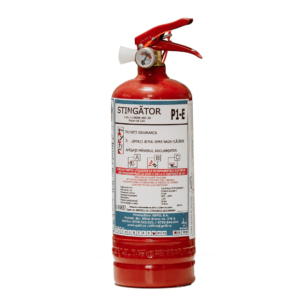
Every transport unit must be fitted with protective equipment according to its maximum permissible mass. It must be equipped with fire extinguishers.
The minimum number of fire extinguishers on any transport unit is at least 2.
The total capacity in kilograms of the fire extinguishers on the unit depends on the maximum permissible mass.
MPM < 3.5 tonnes 4 kg
3.5t < MPM < 7.5 tonnes 8 kg
MPM > 7.5 tonnes 12 kg
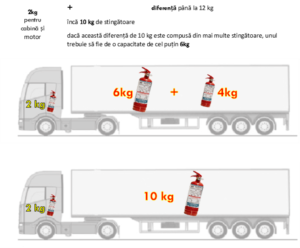
out of the minimum total quantity of 4, 8 or 12 kg, you must make sure that there is one extinguisher of at least 2 kg in the cab, intended for fighting an incipient fire in the cab or the engine.
The difference up to the minimum total capacity per transport unit must be provided for the rest of the transport unit and fixed outside the cab of the transport unit.
In the case of transport units with an MPM of more than 3.5 tonnes, when there are several fire extinguishers besides the one in the cab, one of them must have a capacity of at least 6 kg.
Example: vehicle combination with an MPM of 40t
-
First aid kit
– you must make sure that the first aid kits are within their
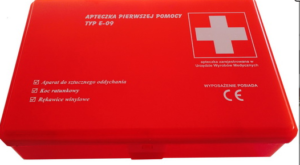 period of validity, bearing in mind that these kits have a validity set by the manufacturer. The items in the kit that have an expiry date may be replaced only with other sterile items. These must be bought from manufacturers. The manufacturers, who guarantee the conformity of the items in the medical kit, must be checked.
- Wheel chock of a size suited to the wheels
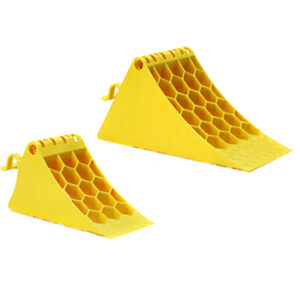 Wheel chocks (wedges) come in different sizes depending on the type and size of the wheel on which they are used.
So, when fitting transport units with a wheel chock/chocks, you must make sure that the wheel chock is suitable for the wheels of the vehicle for which it will be used.
When the wheel chock is damaged, it cannot be accepted as safety equipment. In that case it must be replaced.
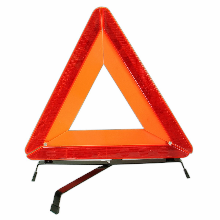
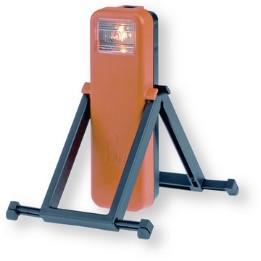
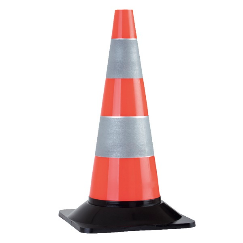
- Two warning devices
The ADR Agreement does not specify the type and model of the warning devices. However, the enforcement bodies “expect” transport units to be equipped with two pairs of warning devices of two models.
Types of warning devices - protective equipment:
- Reflective triangles
- Battery-powered flashing light
- Warning cones
- Eye rinsing liquid
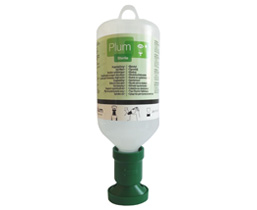
This is a medical liquid with special properties for rinsing and cleaning the eyes if dangerous substances have splashed onto or got into the eyes.
It has an expiry date, and at the start of the transport you must make sure that it will not expire before the transport is completed.
This liquid does not have to be part of the ADR equipment when substances with the following danger labels are carried:
Additional equipment:
When certain dangerous substances are carried, certain special equipment must additionally be on board the transport unit.
This equipment is mandatory when the transport unit is placarded or the packages are labelled with the following danger labels:
- Shovel – NOT a dustpan
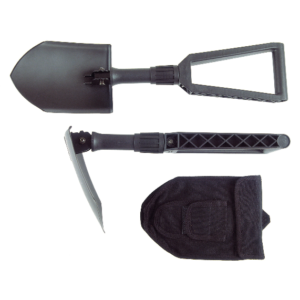 There are many kits in the shops meant to meet the requirement of the ADR Agreement that transport units be equipped with a shovel. These contain a dustpan, which does not meet the expectations of those who decided that there should be a shovel in the ADR equipment.
The ADR Agreement does not, admittedly, specify the type and material of the shovel. Its purpose is that, in the event of substance leaks, a channel can be dug to prevent leaks into the aquatic environment or into underground sewers. In addition, it also serves to spread the absorbent materials.
- Collecting container
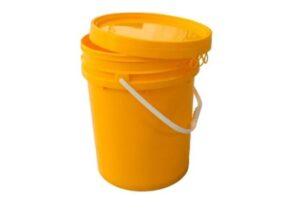
A container with a lid is recommended. The material is not (yet) regulated. It must be strong enough to collect small quantities of dangerous substances in the case of slightly damaged packagings or in the case of minor leaks.
- Material for covering drain openings.
Without clear specifications in ADR, this is a material capable of covering the openings of sewerage systems, which may be a sheet or a rubber mat.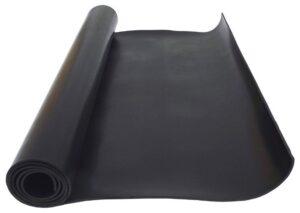
If the equipment includes a thin sheet that is not heavy enough to seal the drain opening tightly, a material (granules, sand, etc…) is needed. This is needed as additional weight to seal the opening tightly.
ADR kits often contain a rubber mat heavy enough to seal tightly. In addition, leaking dangerous substances cannot move it out of place, so the drain opening stays closed.
Personal protective equipment for the members of the crew.
This equipment is required individually for each member of the crew.
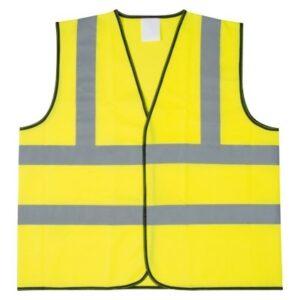
- A fluorescent vest – in accordance with standard EN ISO 20471
- A portable torch
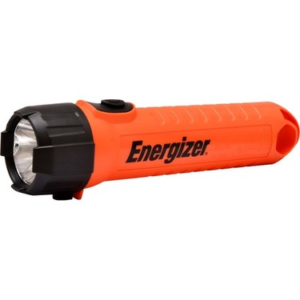
Portable lighting apparatus must not have any metal surface liable to produce sparks.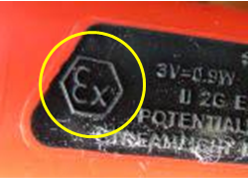
When special provision S2 is indicated in column (20) of Table A of Chapter 3.2, for the carriage of flammable liquids with a flash-point not exceeding 60 °C or in the case of flammable substances of class 2, the portable lighting apparatus used in the ADR kit must be designed and constructed in such a way that it cannot ignite the flammable vapours or gases which may have spread inside the vehicle.
This portable lighting apparatus must be certified as explosion-proof and marked on the outside with the Ex mark.
- A pair of protective gloves – appropriate to the goods carried.

Resistant to high temperature (e.g. for the transport of bitumen), resistant to acids or other corrosive substances, resistant to fuels or flammable liquids, etc., as the case may be.
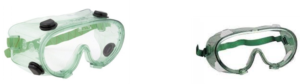
- Eye protection (for example: protective goggles)
- Additionally: emergency escape mask
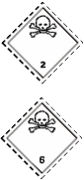
When toxic goods or gases are carried, regardless of whether toxicity is the primary or subsidiary hazard, the members of the crew must be equipped with an emergency escape mask with a combined gas/dust filter. This must be of type A1B1E1K1-P1 or A2B2E2K2-P2, which is similar to that described in standard EN 14387:2004+A1:2008
Choose Honexpres for the transport of goods!
Honexpres is an experienced freight forwarder. We offer complete freight forwarding services and make sure your goods arrive safely and quickly, anywhere. We have the connections needed to organise any kind of domestic or international transport. We also offer the complete package of related services you need, plus professional advice. Your business is in good hands with Honexpres!
Have something similar to move? Request a quote →
All guides in ADR dangerous goods by road (22)
Related services