Sea freight · Guides
Transhipment of goods: what does it involve?
Article translated automatically from Romanian and checked automatically. If there is any difference, the original prevails. See the original in Romanian · How we use automatic translation
In short
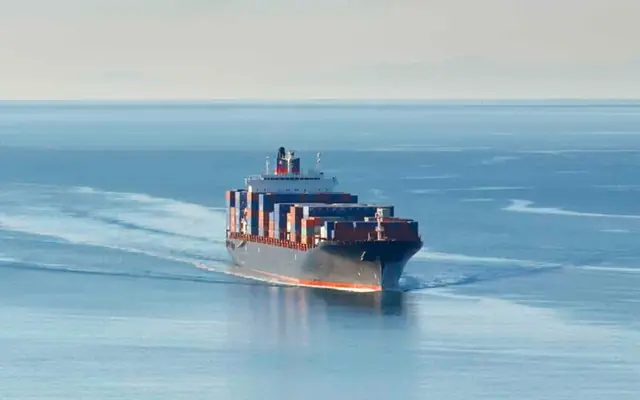
Maritime transport is the backbone of international trade and even of the global economy. More than 90% of the goods traded worldwide are carried by sea, and a key point in the process is the transhipment of goods.
Contents
- What is the transhipment of goods?
- The hinterland is the organised and developed land area connected to a port by transport lines. It receives or dispatches goods from/through that port.
- Where does the transhipment of goods take place?
- What is the difference between transit and transhipment?
- Honexpres offers complete services in maritime transport: from the shipper's door to your door, including land transport and customs procedures.
Maritime transport is the backbone of international trade and even of the global economy. More than 90% of the goods traded worldwide are carried by sea, and a key point in the process is the transhipment of goods.
What is the transhipment of goods?
Transhipment is the operation of transferring goods from seagoing vessels to land and vice versa. It is currently the main port function. It is carried out in two directions: to and from the port towards land – by water, towards other ports of the world, or towards the continental hinterland.
The hinterland is the organised and developed land area connected to a port by transport lines. It receives or dispatches goods from/through that port.
The carriage of goods on sea and ocean routes, including in coastal navigation, is performed with: liner vessels, tramp vessels and specialised vessels (oil tankers, RO-RO vessels, ferry boats).
Liner vessels involve the carriage of goods on regular lines. Tramp vessels are used to carry various goods over any distance.
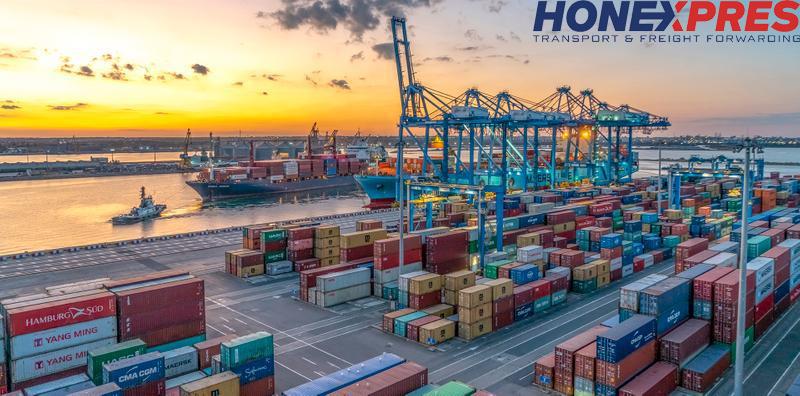
Towards the continental hinterland, goods are carried by the traditional transport routes. These comprise inland waterways, roads and railways, and pipelines.
Where does the transhipment of goods take place?
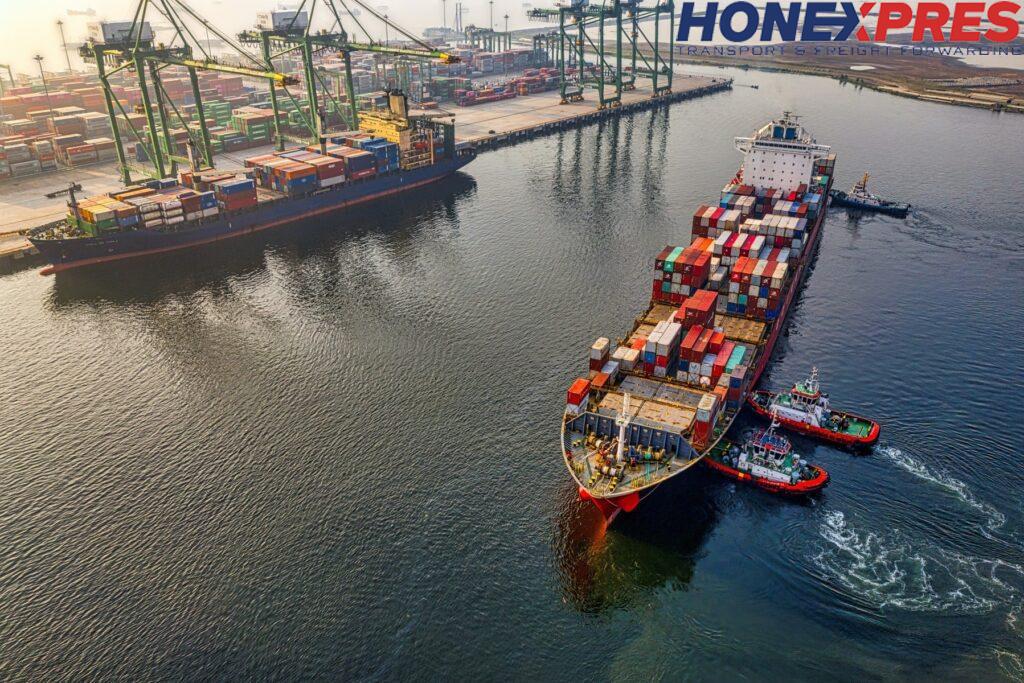
Transhipment takes place in the port's water area. As a rule, it is carried out along the berthing front. The optimal organisation of this function thus determines the efficiency of the infrastructure works. The efficiency of the superstructure works (the transhipment equipment located along the berthing front) is also ensured.
This function is performed using the ships' own loading / unloading gear or the appropriate port equipment (installations, machinery and port operating equipment).
What is the difference between transit and transhipment?
In the case of transhipment, the goods are transferred from one vessel to another at an intermediate port.
When we speak of transit, we mean that the goods on board a vessel that has arrived at a port do not have to be unloaded at that port.
Honexpres offers complete services in maritime transport: from the shipper's door to your door, including land transport and customs procedures.
We are not only a freight forwarder providing professional services in organising domestic and international transport and advice on insurance. Honexpres also brings you essential information and relevant news from the world of freight transport!
Have something similar to move? Request a quote →
All guides in Sea freight (18)
Related services