Sea freight · Guides
The Port of Constanța: how important is it in Europe?
Article translated automatically from Romanian and checked automatically. If there is any difference, the original prevails. See the original in Romanian · How we use automatic translation
In short
The Port of Constanța is located at the crossroads of the trade routes linking inland markets with countries in Central and Eastern Europe, and Eastern Europe with Transcaucasia, Central Asia and even the Far East.
Contents
- The Port of Constanța – beginnings
- The functions of the Port of Constanța
- The storage function
- The transit function
- The industrial function
- The commercial function
- The importance of the Port of Constanța
- The influence of the war in Ukraine
- Honexpres offers complete sea freight services. From the shipper’s door to your door, including inland transport and customs procedures.
The Port of Constanța is located at the crossroads of the trade routes linking inland markets with countries in Central and Eastern Europe, and Eastern Europe with Transcaucasia, Central Asia and even the Far East.
The Port of Constanța (with the Constanța area and the Midia area), the port of Mangalia and the Tomis marina are public-private seaports owned by the Romanian state, which ensures their regulation and operation.
Compania Națională Administrația Porturilor Maritime S.A. Constanța (APM, the National Company “Maritime Ports Administration”) is an institution under the authority of the Ministry of Transport and Infrastructure. Services for cargo and for vessels in the Port of Constanța are provided mainly by
private companies, in a competitive environment in which free-market principles apply.
The Port of Constanța – beginnings
It is considered perhaps the largest commercial gateway for grain exports in Europe. According to the archives, construction work on the port began in 1896.
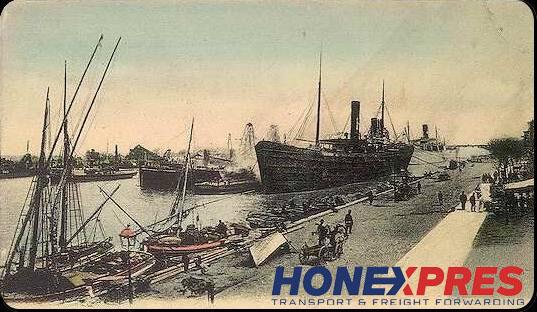
The cartography of the period nevertheless records the existence of port facilities at Constanța as early as 1311. The port's development is marked by the linking of the Danube to Constanța and, implicitly, to the Black Sea. This was done by building a bridge at Cernavodă, for a railway line.
The Cernavodă-Constanța railway route was brought into use in 1864. The bridge over the Danube was completed in 1895, under the direction of Anghel Saligny. Drawing up the project for laying out and developing the port of Constanța took 13 years. It was inaugurated on 27 September 1909, in the presence of King Carol I and members of the Government.
The functions of the Port of Constanța
The storage function
This function is of great economic importance. It makes the seaport an immense reservoir of goods, tied to the major interests of the country's economy or of the hinterland area.
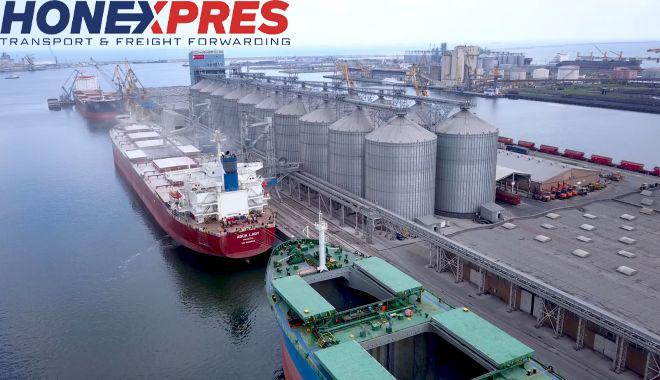
The storage function takes two forms: transit storage and warehousing storage. In the port of Constanța, goods can be stored for transit purposes. This is done by creating stocks that balance the large quantities of goods discharged from vessels and the possibility of processing them. Depending on the nature of the goods, storage takes place on platforms, within the port precinct, in specially equipped warehouses, in silos or in other suitable structures.
The transit function
This is linked to bringing goods into the port from the hinterland area or from more distant areas. Its purpose is loading onto vessels and dispatch to all corners of the world, or the distribution of goods in the hinterland area or in more distant inland areas.
The industrial function
This is determined by a strong industry, either in the hinterland area or in inland areas. That industry depends on the raw materials and supplies brought into the port by ship. Through the Constanța Shipyard, the industrial function is represented by the shipbuilding and ship repair industry, as well as by other repair firms within the port.
The commercial function
This is determined by the activity of exchanging, storing and selling goods. It may involve either goods from the hinterland area or goods in transit. The Port of Constanța plays an active role in the national, regional and international transport system and in the development of national and international markets.
The development of the port's commercial function has also been underpinned by the emergence of other forms of trade, such as the trade carried on within the Constanța Free Zone.
The importance of the Port of Constanța
Romania is a major grain producer at European and world level. This has led to an increase in exports. Around 15 million tonnes of grain take to the sea through the Port of Constanța, bound in particular for countries in the Mediterranean basin.
Half of that quantity comes from other countries in the East, including the Republic of Moldova and Russia. This shows the importance of the Romanian port in the region for grain-producing states.
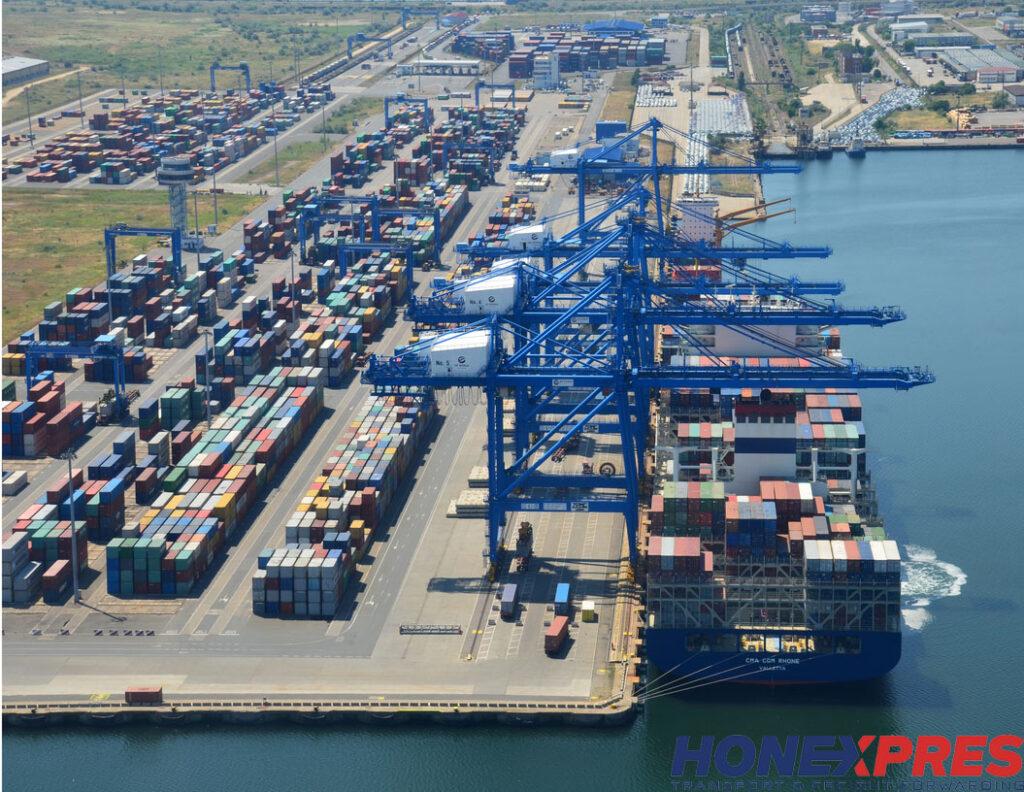
All categories of agricultural and non-agricultural goods, raw materials, components and finished products are loaded and unloaded in the Port of Constanța. Being a deep-water port, it can receive large-tonnage vessels with a maximum length of 300 metres.
The strategic role that the Port of Constanța has in the region has been regarded as an asset for expanding collaboration and cooperation with similar ports in countries concerned with developing maritime transport projects.
The influence of the war in Ukraine
With the closure of the Ukrainian ports, exporters and freight forwarders from Ukraine were forced to use the port of Constanța as a route for sending goods, especially grain, to countries in Africa, Asia, etc.
Since the start of the war, more than 1.73 million tonnes of cargo from Ukraine have transited the Port of Constanța. Of these, 1,165,319 tonnes were grain. The cargo flows redirected to Constanța have led to congestion in the Romanian port. The stakes are enormous: a food crisis is threatening the world. Avoiding it depends, to a certain extent, on how quickly or slowly things move in the port of Constanța.
Honexpres offers complete sea freight services. From the shipper’s door to your door, including inland transport and customs procedures.
We are not only a freight forwarder providing professional services in organising domestic and international transport and advice on insurance. Honexpres also brings you essential information and relevant news from the world of freight transport!
Have something similar to move? Request a quote →
All guides in Sea freight (18)
Related services