Customs procedures · Legislation and customs
The customs procedure for T2 internal Community transit
Article translated automatically from Romanian and checked automatically. If there is any difference, the original prevails. See the original in Romanian · How we use automatic translation
In short
There are two types of Community transit procedure: T1 (external transit) and T2 (internal transit). These procedures reflect the status of the goods in circulation. Find out from this Honexpres article everything you want to know about the customs procedure for T2 internal Community transit!
Contents
- T2 internal Community transit
- Note: T2 does not apply to transport carried out exclusively by air or by sea.
- The customs procedure for T2 internal Community transit
- What are the T2L and T2LF documents?
- When is T2L/T2LF used?
- T2L countries
- T2LF countries
- The freight forwarder Honexpres helps you with all customs procedures
There are two types of Community transit procedure: T1 (external transit) and T2 (internal transit). These procedures reflect the status of the goods in circulation. Find out from this Honexpres article everything you want to know about the customs procedure for T2 internal Community transit!
T2 internal Community transit
The T1 external transit procedure usually applies to goods that come from outside the EU. When goods are carried under the T1 procedure, payment of duties is suspended until the goods reach their destination and are cleared through customs.
The T2 internal transit procedure, by contrast, usually applies to goods that come from within the EU. When goods are carried under the T2 procedure, you can temporarily take those goods outside the EU and then bring them back into the EU without having to clear them through customs again.
So, by means of the T2 procedure, the goods keep their EU customs status. At first sight this does not seem very important, because import duties do not have to be paid on goods carried from the EU to the EU. But what happens if you have to leave the EU border temporarily during transport? Certain import duties would have to be paid in that situation. However, the T2 procedure allows import into and export from a third country without duties. The only requirement for this is that the third country takes part in the agreement known as EFTA (the European Free Trade Association).
If, for example, you carry goods from Germany to Italy and the transport passes through Switzerland (which is not an EU Member State), there will be no customs clearance and no payment of import duty, thanks to the T2 procedure. We must mention one important point – namely that Switzerland takes part in this EFTA agreement.
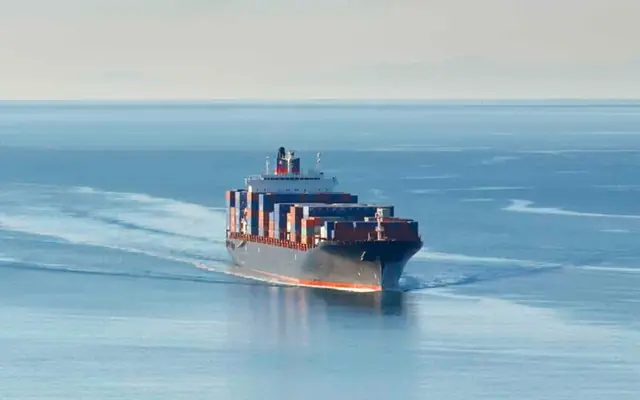
Note: T2 does not apply to transport carried out exclusively by air or by sea.
So, the T2 internal Community transit procedure applies to Community goods when they are dispatched from one point to another of the customs territory of the Community, crossing the territory of one or more EFTA countries.
T2 also applies to transport to the following customs territories of the EU:
- the Canary Islands,
- French overseas departments and territories (French Guiana, Martinique, Réunion),
- the Channel Islands,
- Athos,
- the Åland Islands,
- San Marino,
- Andorra.
The customs procedure for T2 internal Community transit
The T2 transit procedure can be started at the place of departure of the goods. Certain information is needed to start the procedure, such as the number and total weight of the packages or the number of labels affixed. Information about the consignor and the consignee is also mandatory, as is the customs tariff. This procedure makes it possible to track T2 goods.
After applying for this customs procedure, a period of seven days is granted for presenting the goods to customs. There, the information on the goods to be carried will be checked. This transit procedure requires a deposit by way of guarantee. This guarantee represents the value of the estimated import duties of the country of destination. If you work with a customs broker, the broker will cover the costs of the guarantee.
The T2 transit procedure will be regarded as closed in the country of destination.
What are the T2L and T2LF documents?
T2L and T2LF are important transit procedures for carrying goods to the country of destination. These transport documents also serve as certificates of the EU status of the goods. With these certificates you can prove that the transport you are carrying out is from the EU. As a result, no duties have to be paid on these goods when crossing the border or borders. Customs duties therefore do not have to be paid until arrival in the country of destination.
So, the T2L and T2LF documents are in themselves certificates attesting the EU status of the goods. However, besides the T2L and T2LF forms, other documents can also be used to prove the EU status of the goods carried. For example, the commercial documents for the goods can be presented to customs as proof. These documents will be marked either “T2L” or “T2LF”. Another document that can be used is the shipping manifest, which will be marked “C” (equivalent to T2L) or “F” (equivalent to T2LF).
When is T2L/T2LF used?
The T2L document is used when the goods do not leave the fiscal territory of the EU. This is the case, for example, for countries such as Malta, Cyprus or San Marino. It is therefore used only if, for example, the goods are carried across international waters from one EU country to another.
The T2LF document is used in a similar way to T2L. However, it applies if the country from which you export and/or the country of destination, as well as parts of the transport route, lie within the customs territory of the EU but not within its fiscal territory.
T2L countries
For all countries of destination that are part of the fiscal territory of the EU, a T2L will be issued. The countries for which this document is valid are the following:
- Belgium,
- Bulgaria,
- Denmark,
- Germany,
- Estonia,
- Finland,
- France, including Monaco,
- Greece,
- the United Kingdom of Great Britain and Northern Ireland, including the Isle of Man,
- the Republic of Ireland,
- Italy,
- Croatia,
- Latvia,
- Lithuania,
- Malta,
- the Netherlands,
- Poland,
- Portugal, including the Azores and Madeira islands,
- Romania,
- Sweden,
- Slovenia,
- Spain,
- Cyprus, including the sovereign base areas of Akrotiri and Dhekelia.
T2LF countries
For countries that belong to the customs territory of the EU but not to its fiscal territory, T2LF applies. Here is the list of all the countries for which this document is used:
- the Åland Islands,
- French Guiana, Guadeloupe, Martinique, Mayotte, Réunion, Saint Martin,
- Mount Athos,
- the Channel Islands: Alderney, Guernsey, Herm, Jersey, Sark,
- the Canary Islands: El Hierro, Fuerteventura, Gran Canaria, La Gomera, Lanzarote, La Palma, Tenerife.
The freight forwarder Honexpres helps you with all customs procedures
When you have goods to transport, you have to take into account a great many aspects of customs and transport legislation. For someone who does not specialise in transport, it is very easy to make costly mistakes. That is why we recommend that you leave all these customs matters to the professionals!
The Honexpres team is always up to date with all the latest legislative changes and is professional, dedicated and experienced. We help you with everything that organising transport and customs procedures involves. We offer you fast transit times, safety and the friendliest rates. Contact us whenever you need a reliable freight forwarder!
Photo source: svn.taxud.gefeg.com
Have something similar to move? Request a quote →
Sources (1)
All guides in Customs procedures (6)
Related services