Logistics · Guides
What is a consignment note/waybill
Article translated automatically from Romanian and checked automatically. If there is any difference, the original prevails. See the original in Romanian · How we use automatic translation

In short
The CMR, also called a consignment note or waybill, is an international agreement on contracts of carriage.
Contents
The CMR, also called a consignment note or waybill, is an international agreement on contracts of carriage.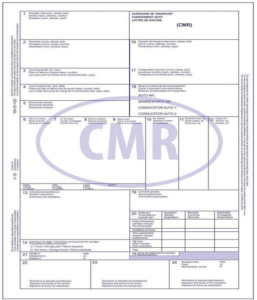
The details recorded in the CMR consignment note are: the consignor, the consignee, the accompanying documents, the type and quantity of the goods carried, the registration number of the vehicle, the carrier.
As regards its evidential value, art. 9 lays down that the consignment note is, until the contrary is proved, evidence of the conditions of the contract and of the receipt of the goods by the carrier.
What a consignment note must contain
As follows from art. 6 of the CMR Convention, a consignment note must contain mandatory, circumstantial and optional particulars.
The mandatory particulars include:
a) the place and date on which the consignment note is made out;
b) the name and address of the consignor;
c) also the name and address of the carrier;
d) the place and date of taking over the goods and the place designated for their delivery;
e) the name and address of the consignee;
f) the description in common use of the nature of the goods and the method of packing and, in the case of dangerous goods, their
generally recognised description;
g) the number of packages and their special marks and numbers;
h) the gross weight of the goods or their quantity otherwise expressed;
i) the charges relating to the carriage (carriage charges, supplementary charges, customs duties and other charges
incurred from the making of the contract to the time of delivery);
j) the requisite instructions for customs and other formalities;
k) a statement that the carriage is subject to the regime established by the CMR Convention, notwithstanding any clause
to the contrary.
The number of copies
According to art. 5, the consignment note is made out in three original copies, signed by the consignor and by the carrier; the signatures may be printed or replaced by the stamps of the consignor and the carrier if the law of the country in which the consignment note is made out so permits.
The first copy is handed to the consignor, the second accompanies the goods and the third is retained by the carrier.
As regards its evidential value, art. 9 lays down that the consignment note is, until the contrary
is proved, evidence of the conditions of the contract and of the receipt of the goods by the carrier.
How to complete a CMR consignment note
The International Road Transport Union (IRU) periodically revises the model of the CMR consignment note.
It is important to point out that there is no standard CMR format accepted by all carriers; the one that follows must be taken as an example.
The CMR consignment note is printed in 3 copies:
- red (the copy for the consignor of the goods);
- blue (the copy for the consignee, which accompanies the goods throughout the transport);
- green (the copy for the carrier)
Are you looking for a transport company?
Choose Honexpres for the transport of goods!
Honexpres is an experienced freight forwarder. We offer complete freight forwarding services and make sure your goods arrive safely and quickly, anywhere. We have the connections needed to organise any kind of domestic or international transport. We also offer the complete package of related services you need, plus professional advice. Your business is in good hands with Honexpres!
Have something similar to move? Request a quote →
Related services