Sea freight · Guides
Maritime transport – introduction and advantages
Article translated automatically from Romanian and checked automatically. If there is any difference, the original prevails. See the original in Romanian · How we use automatic translation
In short
International maritime transport has developed and modernised constantly. Today it is an extremely complex activity that interacts with all the logistics segments relating to port activity.
Contents
- The purpose of maritime transport
- What goods can be transported?
- What advantages does maritime transport offer?
- Are there also disadvantages to maritime transport?
- Honexpres offers complete services in maritime transport: from the shipper's door to your door, including land transport and customs procedures.
International maritime transport has developed and modernised constantly. Today it is an extremely complex activity that interacts with all the logistics segments relating to port activity.
The purpose of maritime transport
Maritime transport technology has been perfected in step with the technology of producing goods. The main aim, from the dispatch and receipt of goods to the commercial, legal, organisational and managerial operations along the entire logistics flow, is to preserve the qualitative and quantitative integrity of the goods. Thus, each category of goods has led to the refinement of a particular transport technology.
What goods can be transported?
The main categories of goods carried by ship are the following:
- packaged general cargo (break bulk cargo) – sacks, bundles, boxes, cartons, barrels, drums, crates, bales, rolls, etc.;
- goods in bulk, liquid and solid (bulk cargoes) – hydrocarbons, ores, grain, coal, etc.;
- unitised (unitized cargo) – palletised, packaged, containerised;
- wheeled (ro/ro);
- chilled and frozen (refrigerated and frozen cargo) – meat, fish, fresh fruit, miscellaneous food products, etc.;
- dangerous (dangerous goods) – explosives, gases, flammable goods, oxides, etc.;
- live animals (livestock);
- large indivisible weights (heavy indivisible loads) – installations, tanks, girders, etc.
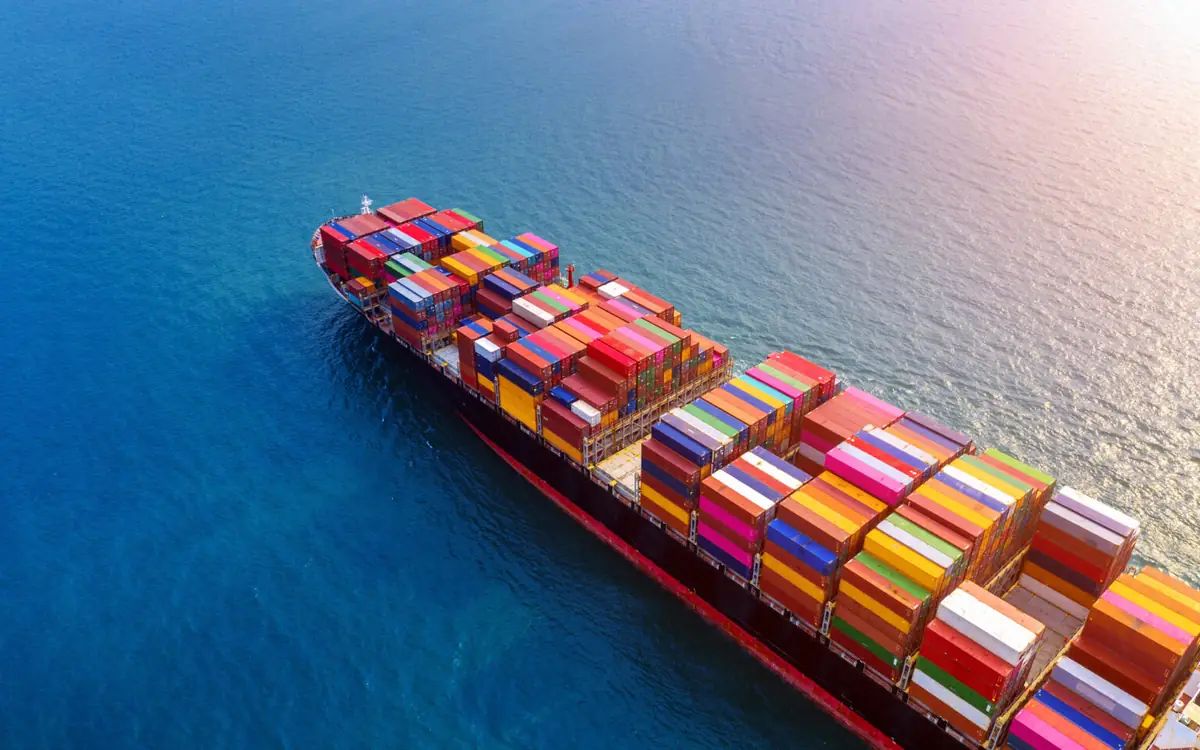
Sea freight is an option that offers customers transport services at an advantageous price. Being one of the oldest options for transporting goods, it is also one of the most widely available. Oceans and waterways cover most of our planet.
In fact, more than 90 % of the goods transported in the world are carried by the international shipping industry.
What advantages does maritime transport offer?
- cost – which is more affordable compared with rail, road or air transport, with fewer maintenance expenses;
- the ability of shipping companies to handle oversized, heavy or bulky cargo – often referred to as breakbulk or Not in Trailer (NIT) loads
- heavy goods can be moved easily, because ships are suited to carrying machinery and industrial parts that are unacceptable for air or road transport;
- ecology – lower fuel consumption makes maritime transport the preferred choice for many organisations, as reducing the carbon footprint becomes more and more important;
- safety guarantees – as maritime security increases and containers are built to be sealed and locked during the voyage, cargo losses are significantly reduced;
- ships are designed to carry hazardous materials and dangerous goods safely, and the industry is well regulated in the handling of such goods in order to ensure the safety of the ship, the crew, the cargo and the environment;
- foreign trade contacts – connecting global trading markets is an essential part of maritime transport;
- flexibility – smaller shipments can be grouped together with other goods to fill a container, allowing the costs of transport services to be shared, while larger cargo can fill one or more containers, offering shippers unrivalled bulk options.
Are there also disadvantages to maritime transport?
The main disadvantage is the time needed to carry the goods from one location to another. It can take weeks for the goods to be delivered to their final destination.
Delays and obstacles during the voyage can be caused by unfavourable weather conditions. This can lead to damage to the goods. Basic freight rates can also change because of rises in the price of fuel and in the exchange rate.
In addition:
- routes and schedules are usually inflexible;
- tracking the movement of your goods is difficult;
- port charges;
- if the ship travels through relatively unexplored territories, there is a small possibility of an attack by pirates;
- to reach the final destination, the goods will also have to be loaded onto another, land-based means of transport.
Honexpres offers complete services in maritime transport: from the shipper's door to your door, including land transport and customs procedures.
Not only are we a freight forwarder offering professional services in organising domestic and international transport and advice on insurance, but Honexpres also brings you basic information and relevant news from the field of freight transport!
Have something similar to move? Request a quote →
All guides in Sea freight (18)
Related services