Guides
Modular building transport: how wide and tall modules get from factory to site
AI Text written with AI assistance and checked by the editorial team. How we work with AI
Article translated automatically from Romanian and checked automatically. If there is any difference, the original prevails. See the original in Romanian · How we use automatic translation
In short
Modular building transport depends on four things: the module's width and height, the permits along the route, lifting at both ends and site access. Wide modules usually need police notice, attendants or special authorisation, and rules differ by country. Send exact dimensions, weight, lifting points and both addresses to get a realistic quote.
Contents
- Why modular buildings are a load of their own
- Choosing the vehicle: flatbed, extendable, semi low-loader or low-bed
- Width rules for modular building transport in Great Britain
- Ireland and Northern Ireland: check before you plan
- Leaving continental Europe: the Romanian example
- Lifting, securing and site access
- Cost factors in modular building transport
- Data we need for a quote
- Frequently asked questions
- Does every modular building transport need a permit?
- Can a portable cabin go on a standard truck?
- Is an escort vehicle always required for prefab building transport?
- Can several modules travel together?
- Who handles the notifications to the authorities?
- Request a quote for your modular building transport
- Official sources consulted
Modular building transport is the movement of volumetric modules, portable cabins and prefab building sections from the factory to the site. These loads are often wider or taller than a standard truck allows. A move is realistic once four points are settled: the exact width and height of each unit, the permits or notifications along the route, how the unit is lifted at loading and unloading, and whether the vehicle can physically reach the set-down point. HONEXPRES, a freight forwarder in Oradea, organises these moves with partner carriers that run the right trailers. We do not operate our own fleet. This guide covers what shippers sending units to Great Britain and Ireland need to prepare, and what drives the price.
Why modular buildings are a load of their own
A volumetric module is light for its size but very bulky. It is a finished room with windows, cladding and sometimes installed services, so it can be damaged by twisting or point loads that would not harm a steel beam. Portable cabins are smaller, and some fit within normal vehicle limits. Whether yours do depends on their real dimensions compared with the legal maxima of each country on the route. Flat-pack prefab panels are a different case again. They can usually be stacked and shipped like ordinary cargo on a full truckload.
The legal question that matters is whether the load can be divided. In Great Britain, an abnormal indivisible load is defined as a load that cannot be divided into two or more loads for road transport [1]. The same guidance warns that a large load which can easily be split by undoing a few bolts must be split for transport [1]. Romanian rules use a similar idea: an indivisible load is one that cannot be divided into two or more loads without unnecessary cost or risk of damage [2]. In practice, a finished module usually travels whole. A unit that ships in bolted halves may have to travel as two loads, and that changes the vehicle, the permits and the cost.
Choosing the vehicle: flatbed, extendable, semi low-loader or low-bed
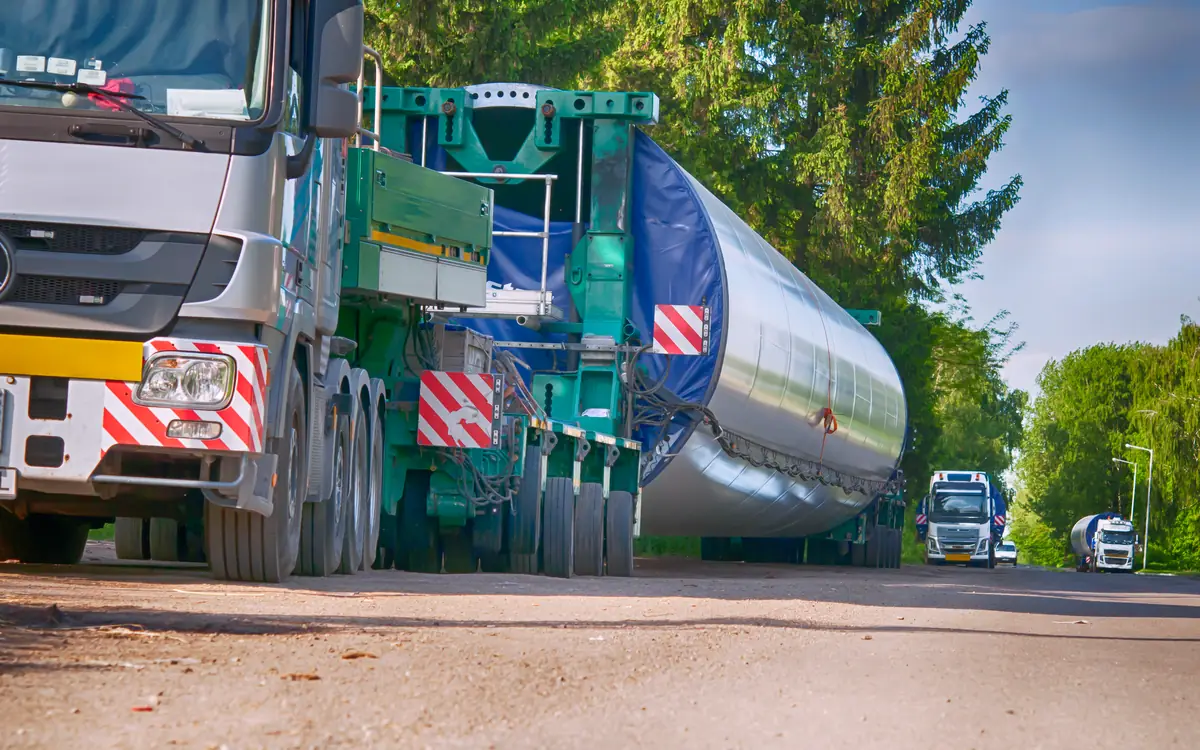
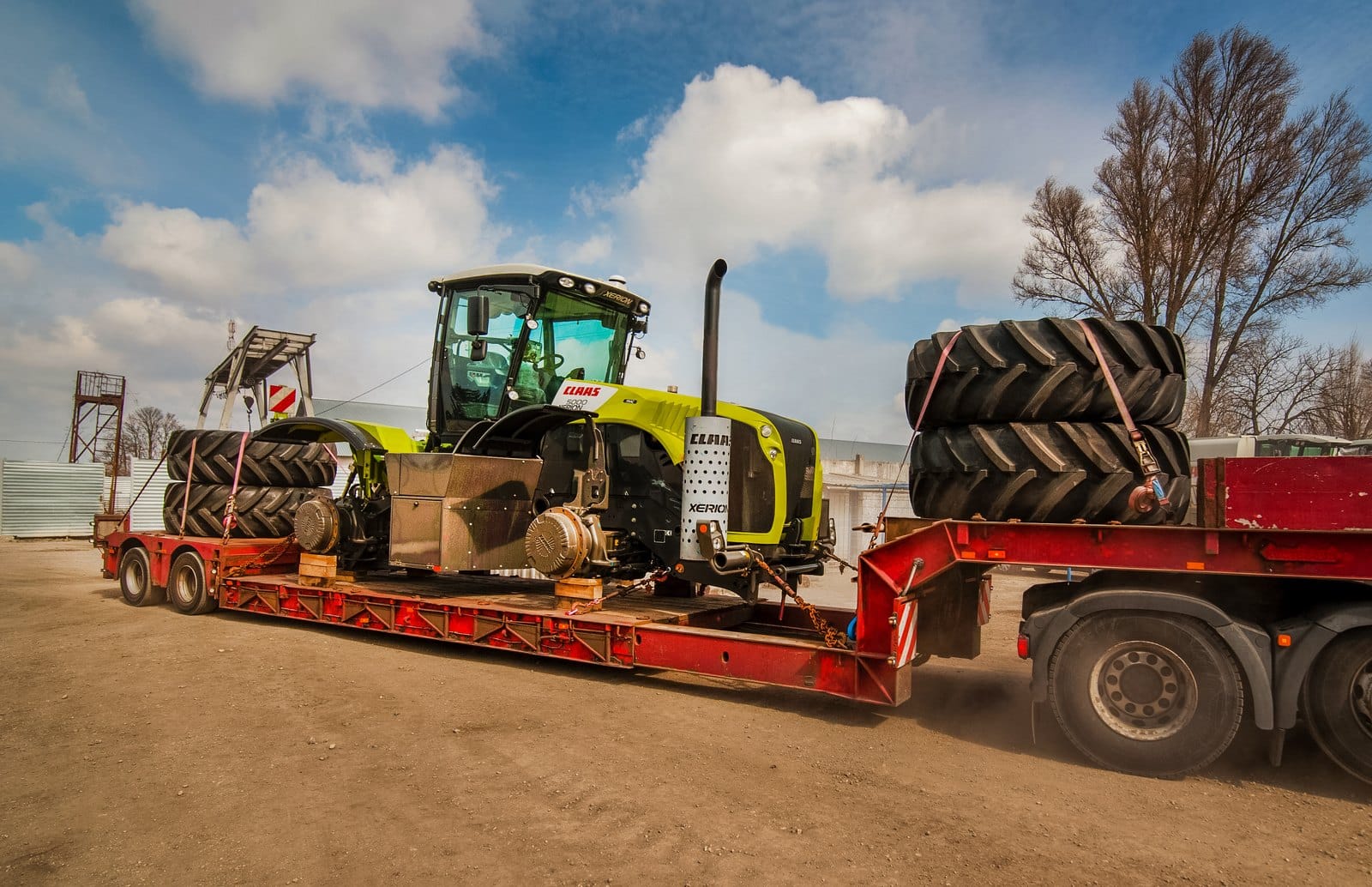
Height usually decides the trailer. The lower the deck, the more module height you can carry before hitting bridge and overhead-line limits. That is why tall modules often go on a semi low-loader or a low-bed trailer. Shorter cabins can often go on a standard flatbed. In Great Britain, a normal-sized vehicle must be used where this is possible and safe, even if the load overhangs at the front, rear or sides [1]. A special trailer is therefore not a free choice. It has to be justified by the load.
Ask the manufacturer for three things before booking: the overall dimensions including any protrusions, the weight and centre of gravity, and drawings of the lifting points. Without them, nobody can confirm the vehicle or the permits.
Width rules for modular building transport in Great Britain
In Great Britain, vehicle dimensions and weights are governed by the Road Vehicles (Construction & Use) Regulations 1986 and the Road Vehicles (Authorised Weight) Regulations [1]. Vehicles outside those limits can run under the Road Vehicles (Authorisation of Special Types) (General) Order 2003, known as STGO [1]. The DVSA enforcement guide summarised below applies to England, Scotland and Wales [1]. It was last updated in 2018, so check the current version on gov.uk before planning.
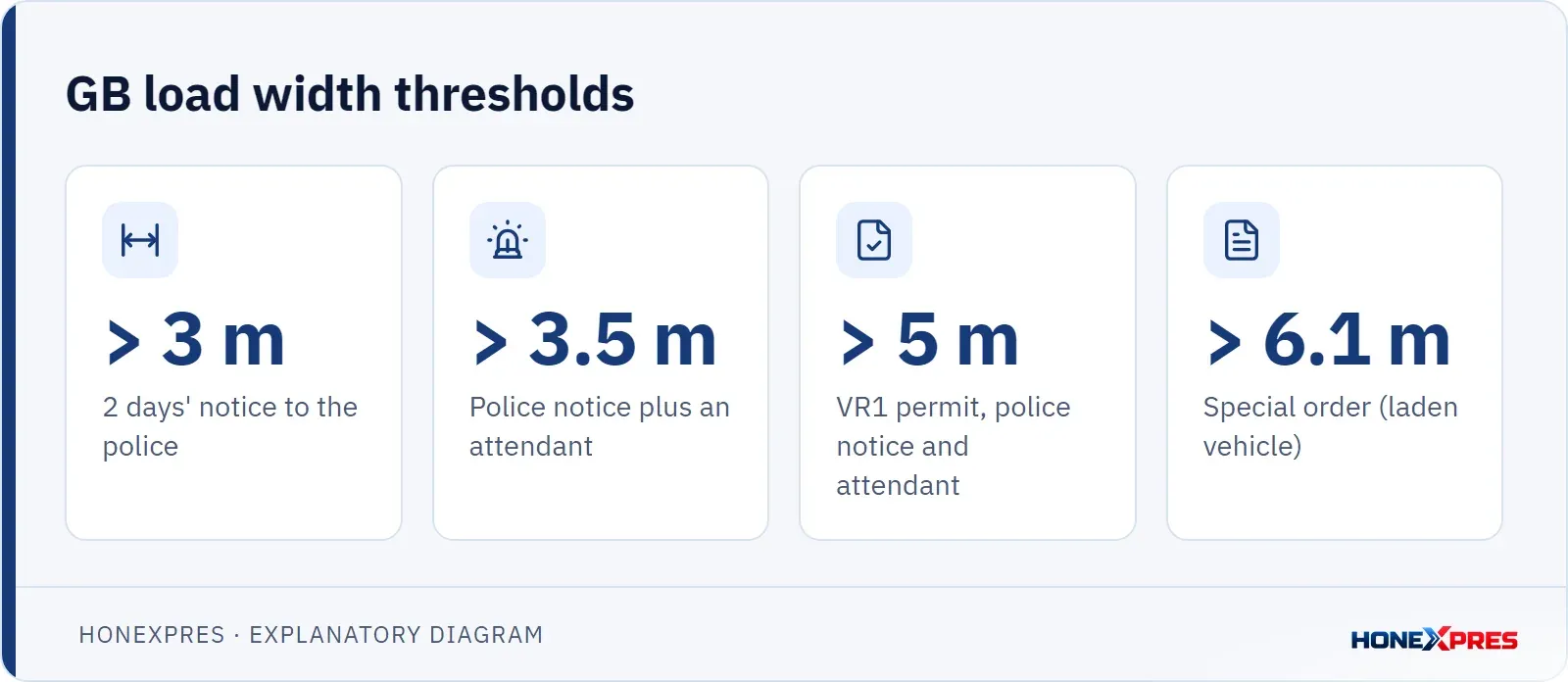
| Load width, including projections | What the guidance requires |
|---|---|
| More than 3 m | 2 days' notice to the police [3] |
| More than 3.5 m | 2 days' notice to the police and an attendant [3] |
| More than 5 m | Secretary of State approval (VR1 permit), 2 days' notice to the police and an attendant [3] |
| More than 6.1 m (laden) | Special order [3] |
Any projection wider than 305 mm must be marked with side markers visible from the front and the rear [4]. No law requires an escort vehicle under STGO, but the police can insist on one where they consider it necessary [4]. Vehicles registered outside GB follow the same rules on dimensions and weights [4]. They can also use the STGO exemptions under the same conditions [4].
Two points matter for anyone booking through a forwarder:
- The notice to the authorities is specific to the operator. A move cannot be subcontracted without the consent of the relevant authority [5]. Notifications are therefore made by the partner carrier that will actually run the vehicle, and that carrier must not change at the last minute.
- If the rules of the relevant STGO category or special order are not followed, the exemptions no longer apply and the normal limits apply instead [5]. A wrong width figure on the notice is therefore a real operational risk, not a paperwork detail.
Ireland and Northern Ireland: check before you plan
The GB guidance above does not cover Northern Ireland or the Republic of Ireland. Thresholds, permit procedures and notice periods there must be confirmed with the competent road and police authorities of each jurisdiction before the route is fixed. When we organise a move to Ireland, the partner carrier and its local permit contacts verify these requirements for the specific dimensions. We do not assume they match the GB figures.
Leaving continental Europe: the Romanian example
Every country on the route applies its own oversize regime. In Romania, the special transport authorisation (AST) is the document by which the road administrator sets the route, the travel conditions and the tariffs due [2]. It is valid only for the stated registration numbers, technical characteristics, route, direction, period and conditions [2]. The administrator imposes the authorised route according to origin, destination and the vehicle's actual masses and dimensions [6]. Where needed, a route study checks whether an over-dimension vehicle can travel at all and what preparatory works are required [6].
Three Romanian rules have a direct effect on cost and planning:
- Over-dimension surcharges are based on the difference between the real and the maximum permitted dimension [7]. The width surcharge is charged per distance travelled [8]. Where more than one dimension is exceeded, the surcharges add up [7].
- If a vehicle is found to exceed the masses or dimensions written in the AST, a complementary AST is issued for the measured values [9]. This is why measurements must be exact from the start.
- Several over-dimension vehicles travelling in convoy are limited to 200 m in length and a maximum of 3 vehicles [10]. Such a convoy needs authorised escort vehicles in front of and behind each vehicle, plus a traffic police crew [10].
Other transit countries have their own systems. We confirm them route by route. Our guide to technical requirements for oversized transport explains the general logic.
Lifting, securing and site access
Before the truck leaves, agree on these points:
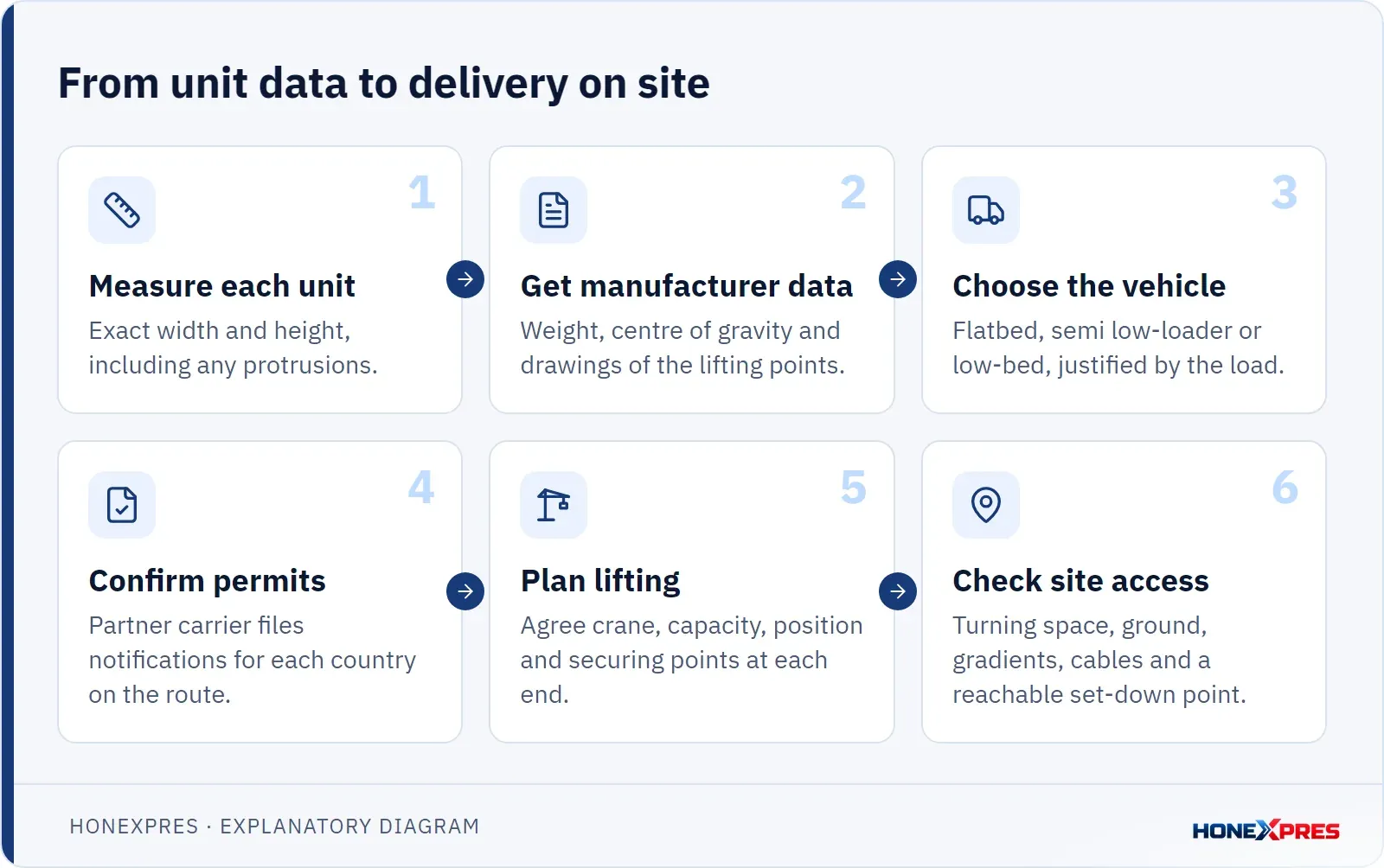
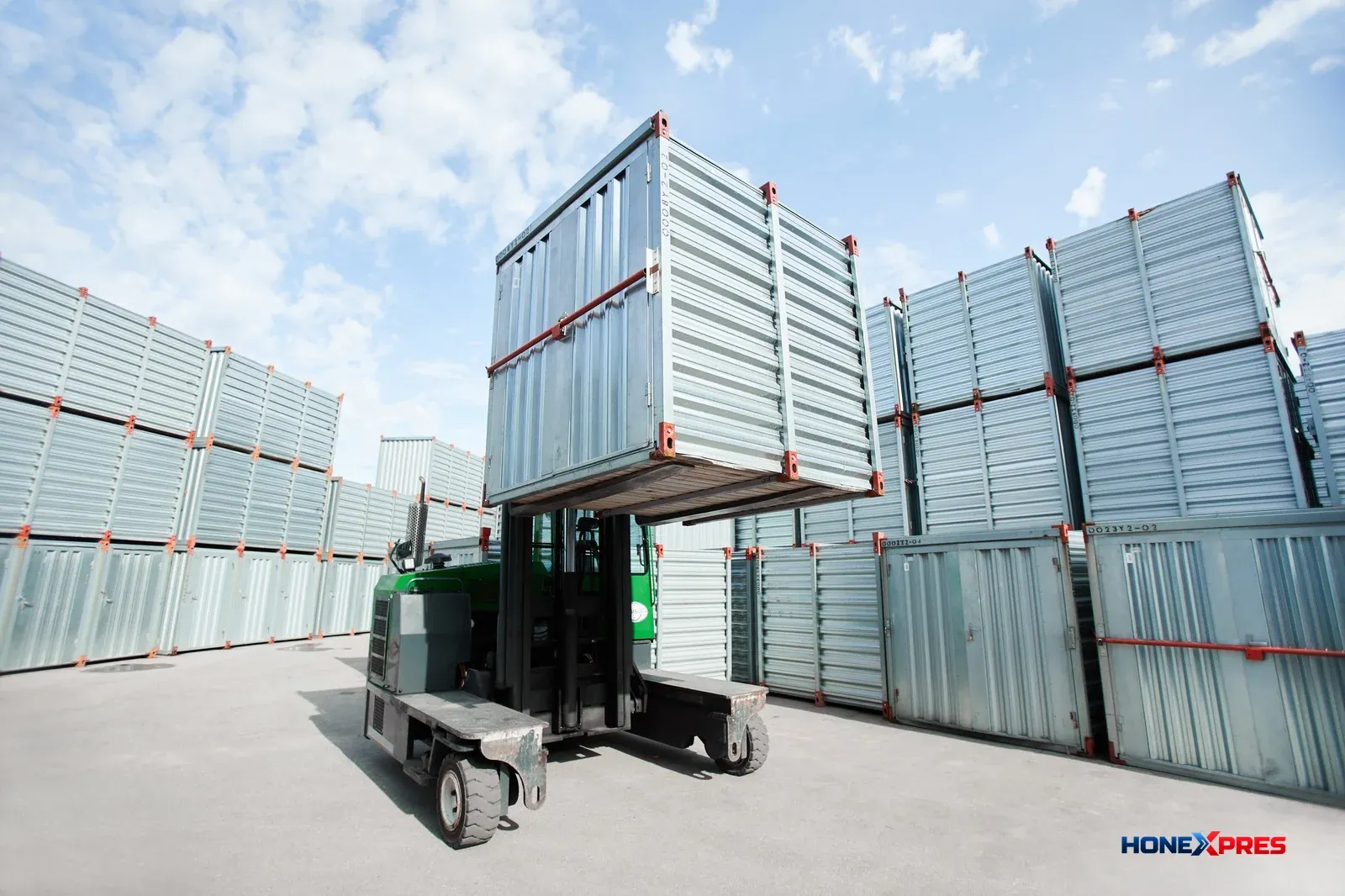
- Who books the crane at each end, its capacity and position, and the lifting gear that matches the module's designated lifting points.
- Access route on site: turning space for a long low-loader, ground bearing capacity, gradients, overhead cables, trees and parked vehicles.
- Delivery sequence: modules arrive in installation order, timed to the crane slot, so no unit waits on the road.
- Weather protection for open sides and finished interiors, and edge protection where straps touch cladding.
The GB guidance expects operators to make a separate plan for every abnormal load movement and to secure the load appropriately [11]. It also requires reasonably practicable steps to secure abnormal loads [11]. Lashing points and permitted strap positions should come from the module manufacturer, because the structure, not the trailer, sets the limits.
Cost factors in modular building transport
We do not publish price lists, because two modules that look alike can cost very different amounts to move. The main cost drivers are:
- Width and height: each threshold can add notifications, attendants, escorts, special authorisations or a lower trailer.
- Route length and detours forced by bridges, low structures or authorised-route conditions.
- Permit surcharges, which in countries such as Romania depend on the excess dimensions and the distance.
- Escort and attendant time, and any travel-time windows the permits impose.
- Number of modules and the convoy limits, which decide how many trips and how much escort time a project needs.
- Waiting time at the crane, the site gate or a ferry crossing, plus the empty return of a specialised trailer.
- Cargo insurance: check what the carrier's liability covers under the applicable contract and current rules, and whether separate cover is advisable. See why cargo insurance matters.
Data we need for a quote
- Length, width and height of each unit, including protrusions, plus its weight.
- Number of units and whether they can be split or nested.
- Lifting points, centre of gravity and the manufacturer's securing instructions.
- Exact loading and delivery addresses, site access constraints and who provides the cranes.
- Required delivery dates or installation sequence, and the Incoterms rule of the sale.
- Whether customs formalities apply on your route. We can arrange these through our customs services.
Frequently asked questions
Does every modular building transport need a permit?
No. It depends on the unit's dimensions and weight compared with the limits in each country on the route. In Great Britain, the thresholds above set when police notice, attendants, a VR1 or a special order are required [3].
Can a portable cabin go on a standard truck?
Often it can, if it stays within normal dimensions. GB guidance expects a normal-sized vehicle to be used where possible and safe [1]. Send the exact dimensions and we will confirm.
Is an escort vehicle always required for prefab building transport?
Not by default in Great Britain, although the police can require one [4]. In Romania, a convoy of over-dimension vehicles must be escorted [10]. Other countries set their own rules.
Can several modules travel together?
Within limits. Under Romanian rules, a convoy may include a maximum of 3 over-dimension vehicles [10]. Plan larger projects as a sequence of deliveries.
Who handles the notifications to the authorities?
In GB, the notice belongs to the operator that runs the vehicle [5]. For this reason, the partner carrier we arrange files it for the confirmed vehicle and movement.
Request a quote for your modular building transport
If you are planning to deliver modules, cabins or prefab sections to Great Britain, Ireland or elsewhere in Europe, send us the unit data listed above. We will organise the route, the trailer type and the permit checks with partner carriers. You can read more on our oversized transport service page, or go straight to the quote request form.
Official sources consulted
- [1] Special types enforcement guide (DVSA, gov.uk), section 1.1 – definition of abnormal indivisible load
- [2] Norms approved by Order no. 1.236/6.509/126/2018 (Romania), Article 2 point 11 – indivisible load
- [3] Special types enforcement guide (DVSA, gov.uk), section 5.2 – Over-width projections (more than 3 m)
- [4] Special types enforcement guide (DVSA, gov.uk), section 5.4 – Projection markers (lateral)
- [5] Special types enforcement guide (DVSA, gov.uk), section 9 – Documentation
- [6] Norms approved by Order no. 1.236/6.509/126/2018 (Romania), Article 2 point 26 – authorised route
- [7] Order of the Minister of Transport no. 1.836/2018 (Romania), Annex 1, Part 2, letter H point 1 – tariffs for exceeding maximum dimensions
- [8] Order of the Minister of Transport no. 1.836/2018 (Romania), Annex 1, Part 1, tariff table, item 6.2 – exceeding maximum width
- [9] Norms approved by Order no. 1.236/6.509/126/2018 (Romania), provision on the complementary AST, paragraph (3)
- [10] Government Ordinance no. 43/1997 on the road regime (Romania), Article 41 paragraph (27), as amended by Government Ordinance no. 15/2025
- [11] Special types enforcement guide (DVSA, gov.uk), section 1.10 – Securing loads (movement plan)
Send us the module dimensions, weight and both addresses, and we will arrange a quote with partner carriers for your modular building transport.
Have something similar to move? Request a quote →
Sources (1)
Related services