Guides
EORI code: what it is and why it matters for shippers
AI Text written with AI assistance and checked by the editorial team. How we work with AI
Article translated automatically from Romanian and checked automatically. If there is any difference, the original prevails. See the original in Romanian · How we use automatic translation

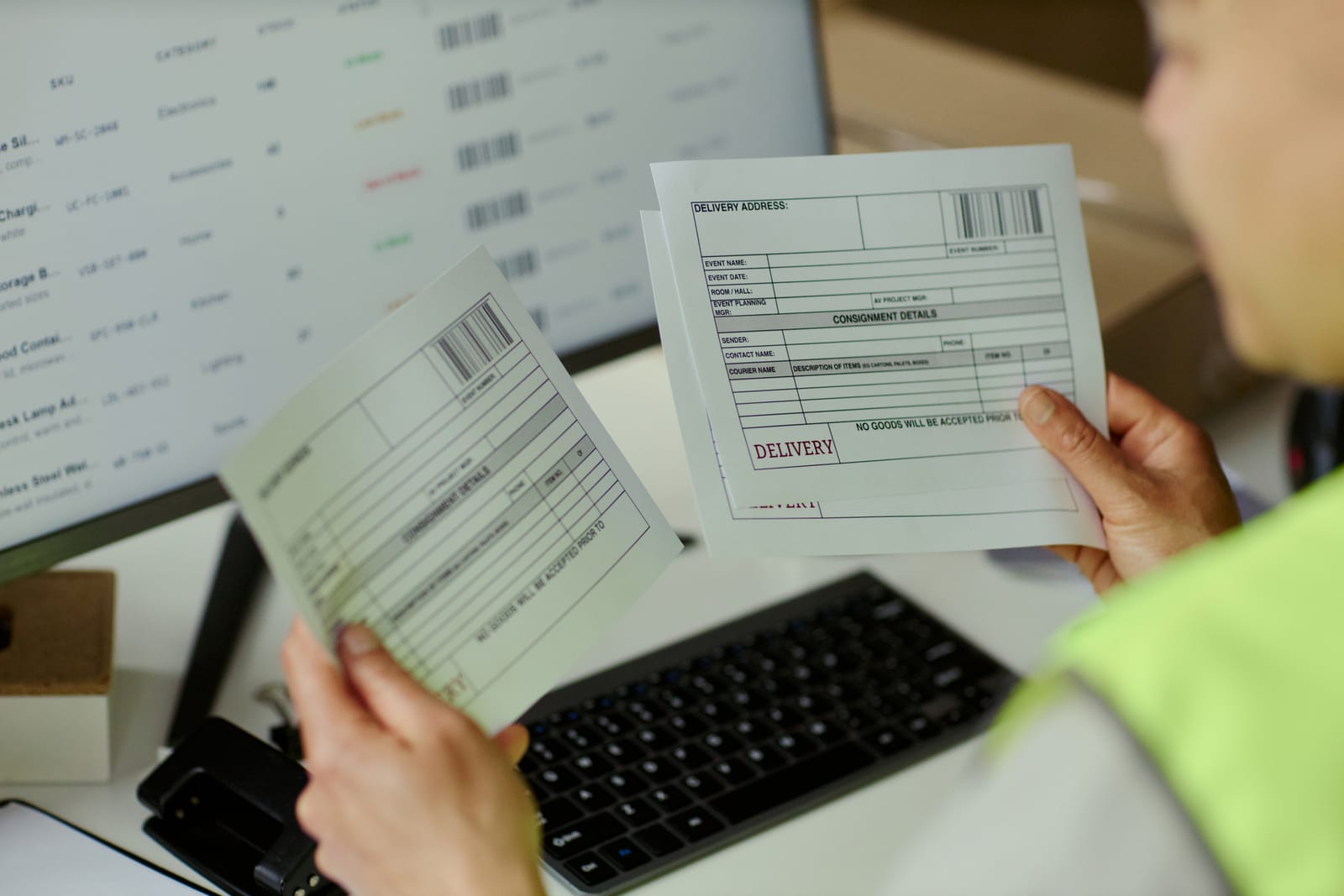
Illustrative photograph: driver checking the transport documents before customs.
In short
EORI is the number that identifies economic operators in their dealings with customs, required for example when lodging a customs declaration. Traders established in the customs territory of the Union need an EORI number for customs purposes, for example to lodge a customs declaration. To obtain one, ask the customs authority.
Contents
Short answer
The EORI code is the number used to register and identify economic operators for customs purposes. Traders established in the customs territory of the Union need one, for example to lodge a customs declaration. Traders outside the Union may also need an EORI number in certain situations. Businesses and individuals engaged in trade use this number as an identifier when communicating with customs administrations, across all customs procedures.
Regulation (EU) No 952/2013 establishes the Union Customs Code. The practical steps for obtaining the code (forms, deadlines, any fees) are handled by the customs authority, and this guide does not describe them.
Why it matters for customs declarations
- The EORI code identifies the operator in the exchange of information with customs.
- A missing or incorrect EORI code in a consignment's documents can cause delays in customs clearance until the matter is clarified.
- For shippers and carriers, checking the EORI at the start of working with a customer prevents blockages on import or export.
What details the customer must send us
- The EORI number of the importer or the exporter, as applicable.
- The company's full name and identification details, exactly as they appear in the EORI registration.
- Whether the company is established in the customs territory of the Union or outside it.
- The details of the other parties to the consignment (consignor, consignee) and, if they have them, their EORI numbers.
- The type of operation: import, export or transit.
What affects the cost of the service
- Whether the parties are established in the Union or outside it.
- The type and complexity of the customs procedure.
- The quality and completeness of the documents received.
- The number of declarations and of parties involved in a consignment.
Practical steps
- Ask the customer for the EORI code before the consignment is confirmed.
- Check that the company name in the documents matches the EORI registration.
- If the customer does not have an EORI code, refer them to the customs authority for information about registration.
- For partners outside the Union, clarify with the customs authority whether their situation requires an EORI number.
- Keep the EORI code in the customer's record so that you can use it for all future customs declarations.
Next step
Preparing a consignment with customs formalities? To obtain or change the EORI code, contact the customs authority.

The information in this article is for information purposes only and does not constitute legal advice. For a specific situation, check the requirements in the official texts in force.
Read also
Have something similar to move? Request a quote →
Frequently asked questions
What is the EORI code?
The EORI code is the number used to register and identify economic operators for customs purposes. It is used as an identifier when communicating with customs administrations.
Who needs an EORI number?
Traders established in the customs territory of the Union need one, for example to lodge a customs declaration. Traders outside the Union may also need an EORI number in certain situations.
What happens if the EORI code is missing from a consignment's documents?
A missing or incorrect EORI code can cause delays in customs clearance until the matter is clarified.
What details must the customer send us besides the EORI code?
The company's full name exactly as it appears in the EORI registration, whether the company is established in the Union or outside it, the details of the other parties to the consignment, and the type of operation: import, export or transit.
Where can an EORI code be obtained or changed?
The practical steps, forms, deadlines and any fees are handled by the customs authority. The guide does not describe them, and to obtain or change a code you should contact that authority.
What regulation underlies the EORI code?
The general framework is the Union Customs Code, established by Regulation (EU) No 952/2013.
Sources (2)
- Numărul EORI · accessed 2026-10-24
- L_2013269RO.01000101.xml · accessed 2026-10-22
Related services