Road freight · Guides
The CMR Convention simplified – Chapters 2 & 3
Article translated automatically from Romanian and checked automatically. If there is any difference, the original prevails. See the original in Romanian · How we use automatic translation

In short
This material, created by the forwarding company Honexpres, offers a simplified and accessible explanation of some essential articles of the Convention on the Contract for the International Carriage of Goods by Road (the CMR Convention).
The CMR Convention – The Carrier's Liability and the Performance of the Contract of Carriage by Road
This material, created by the forwarding company Honexpres, offers a simplified and accessible explanation of some essential articles of the Convention on the Contract for the International Carriage of Goods by Road (the CMR Convention).
What is the purpose of this article?
To inform professionals in the field of road freight transport – whether senders, carriers, consignees or logistics staff.
The article details the essential aspects under the CMR Convention.
- the carrier's responsibilities.
- the process of concluding and performing the contract of carriage.
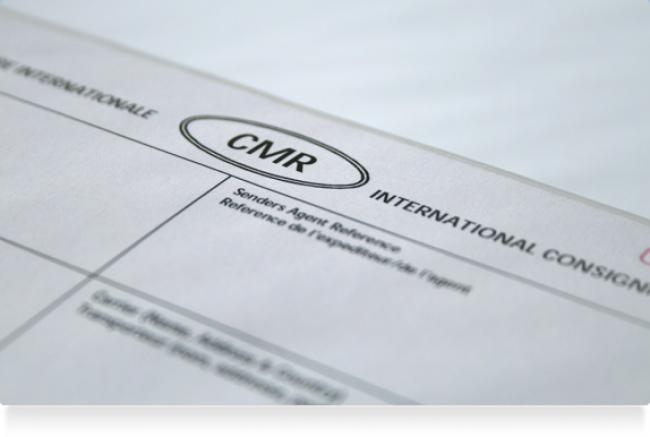
This information can help you to understand easily the responsibilities and rights you have. Knowledge of the CMR Convention can also help you to avoid possible disputes, as you will be prepared to deal with the challenges relating to documentation, transport conditions and legal obligations.
CMR Convention Chapter II in brief. Persons for whom the carrier is responsible
The carrier is responsible for its own acts and omissions, those of its servants and those of any other persons involved in performing the carriage. This includes responsibility for handling the goods, loading, unloading and complying with the terms set out in the contract of carriage.
CMR Convention Chapter III in brief. Conclusion and performance of the contract of carriage
Article 4
- The contract of carriage is evidenced by the consignment note.
- Its loss does not affect the validity of the contract.
Article 5
- The consignment note is made out in three copies.
- The sender receives one, the second travels with the goods and the third is retained by the carrier.
- Several consignment notes may be issued where the goods have to be loaded in different vehicles.
Article 6
The consignment note must contain this essential information:
- The delivery details.
- Details of the goods.
- The gross weight.
- The carriage charges.
- The customs formalities.
- Additional statements such as – a ban on transhipment or the insurance of the goods.
Article 7
- The sender is liable for any damage or expenses caused by incorrect or insufficient information.
Article 8
- The carrier has a duty to check the accuracy of the goods on taking them over (e.g. the number of packages, marks, condition of the packaging, etc.).
- Where these aspects cannot be checked, it must record this in the consignment note.
Article 9
- The consignment note evidences the contract and the receipt of the goods by the carrier.
- Where no reservations are recorded, the goods and the packaging are deemed to have been in good condition when taken over.
Article 10
- The sender is liable to the carrier for damage and expenses caused by defective packing of the goods, unless the defect was apparent or known to the carrier at the time when he took over the goods and he made no reservations concerning it.
Pay attention to this!
Article 11
- The sender is obliged to provide the documents necessary for customs formalities and other legal requirements.
- The carrier is not obliged to check the accuracy of the documents received (but is liable if it loses them or uses them incorrectly).
Article 12
- The sender may change the transport instructions (including stopping the goods or changing the place of delivery) until the moment when the consignee receives the second copy of the consignment note.
Article 13
- The consignee may request delivery of the goods against a receipt after they arrive at destination.
- Where the goods have not arrived or are lost, the consignee may enforce the rights provided for in the contract of carriage.
Article 14
- Where the carrier cannot perform the contract in accordance with the instructions, it must ask for further instructions from the person entitled to dispose of the goods.
Article 15
- If obstacles arise to the delivery of the goods, the carrier has a duty to ask the sender for instructions.
- Where the goods are not accepted by the consignee, the sender decides what is to be done with the goods.
Article 16
- The carrier is entitled to reimbursement of the expenses arising from the further instructions.
- Where the goods cannot be delivered, the carrier may unload the goods and may sell them under certain conditions (e.g. perishable goods).
Understanding the provisions of the CMR Convention gives you the assurance that every transport is carried out correctly, legally and without unpleasant surprises.
For well-organised transport and logistics services, contact Honexpres.
We are here to offer you tailored and prompt solutions.
Do not hesitate to contact us here: https://www.honexpres.ro/contact
Have something similar to move? Request a quote →
Sources (1)
All guides in Road freight (28)
Related services